The proper little mountain above Derwentwater — the fell almost everyone climbs first. A short, steep, hands-on ridge with a big view, best reached by boat across the lake from Keswick. Voted fourth in ITV's Britain's Favourite Walks (2018).
Height · 1,480 ft
Circular · 6 km
~380 m ascent
Brief hands-on scramble
Keswick's first fell
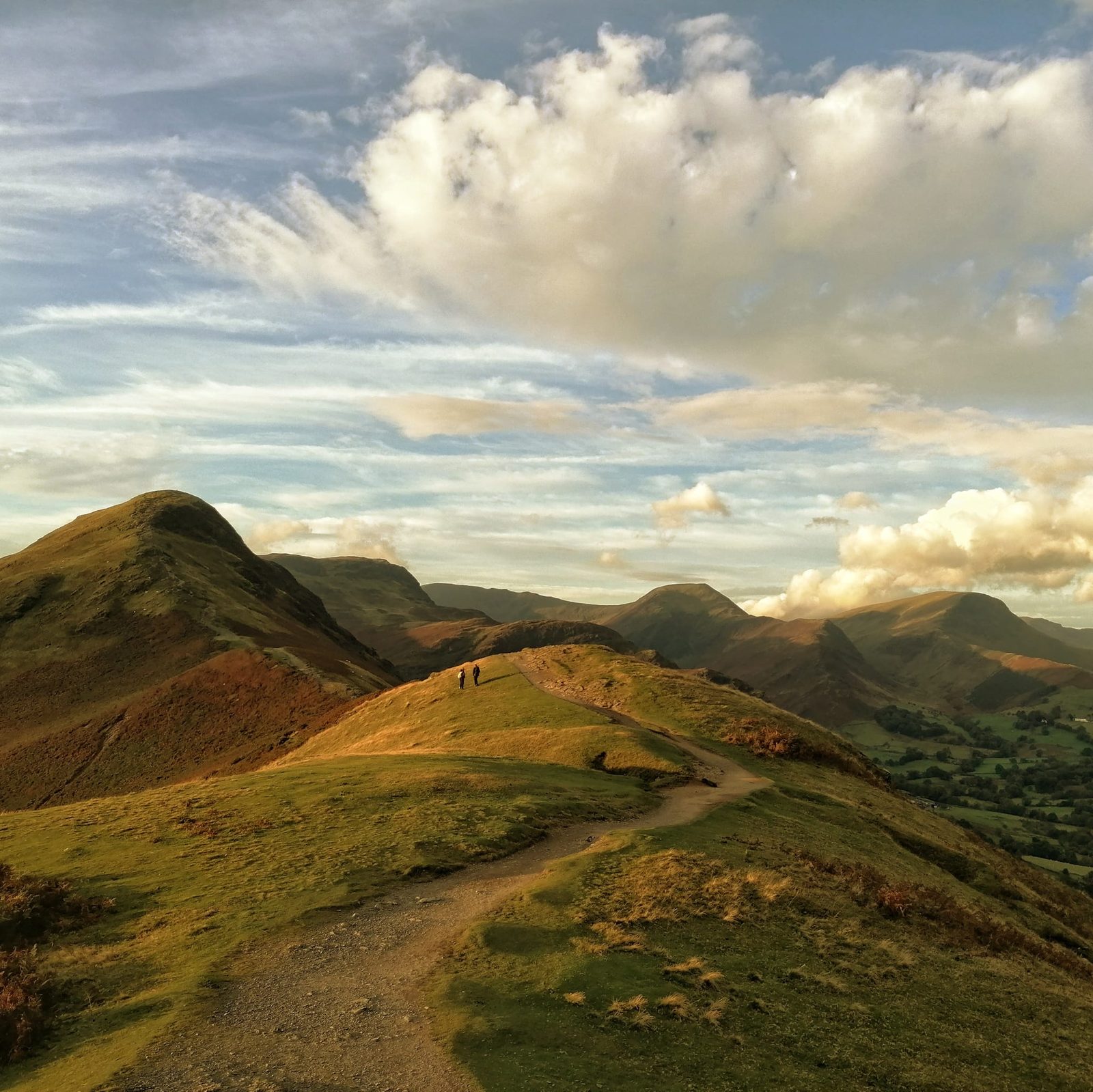
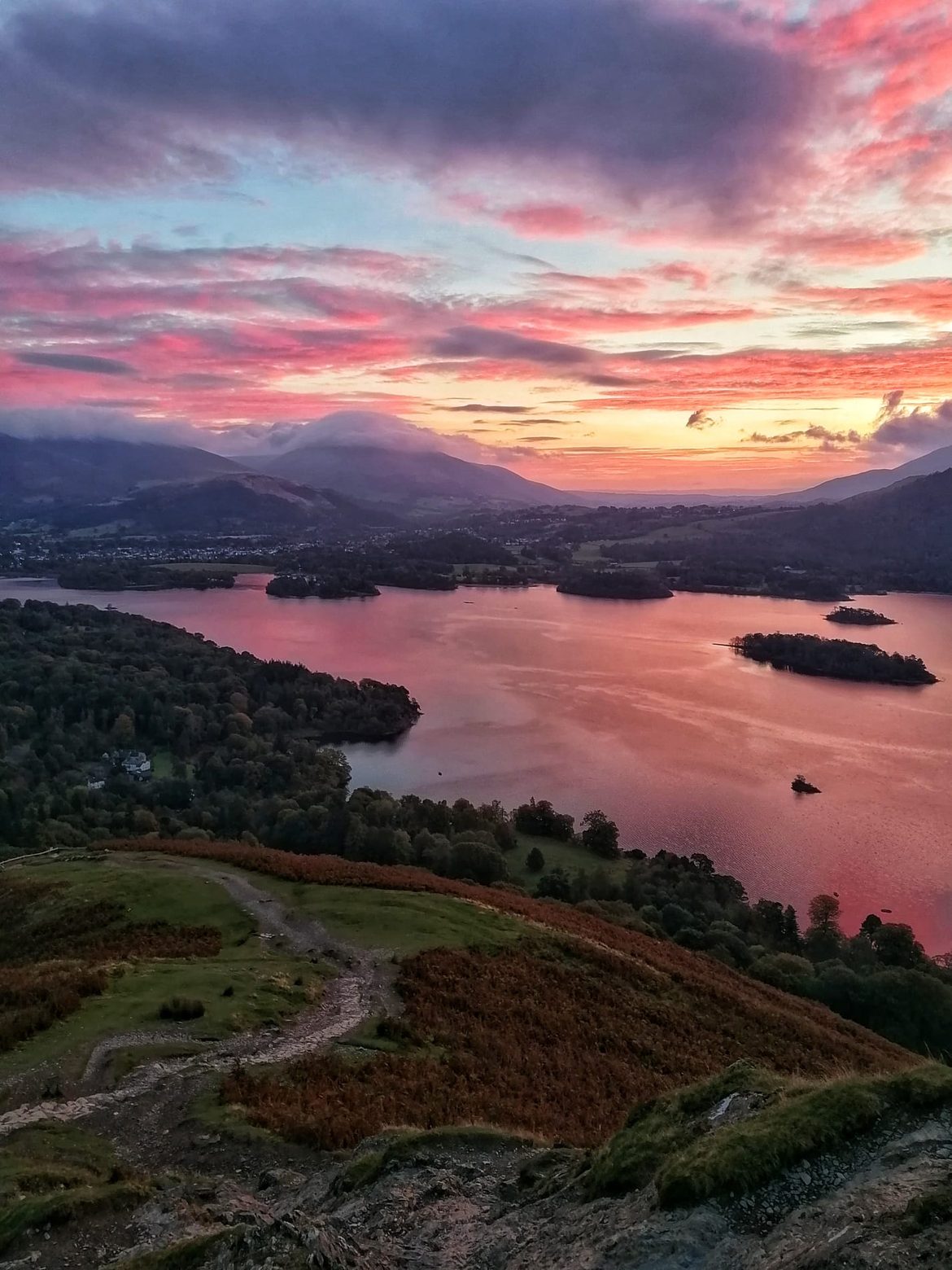
Catbells is the shapely green-and-grey ridge that rises straight out of the western shore of Derwentwater, dividing the lake from the quiet Newlands Valley behind. At 451 m (1,480 ft) it's a modest North-Western Fell, but it has everything a big mountain has — a clean ridge line, a hands-on step to the top, and a summit view that genuinely punches above its weight. That's why it's the fell so many people climb first, and keep coming back to.
The summit comes in two steps: a lower top at Skelgill Bank, then the final little pull to the cairn. It's steeper than photos suggest, and there's a brief, easy scramble just below the top — nothing technical, but real hands-on ground with drops either side. Treat it as a small mountain, not a stroll, and it rewards you completely. Below, our own photos give you a sense of the ridge and the view you're walking up for; two of them are by Glen Morton.
Getting there — do this first
Catbells has a real parking problem and a lovely solution. The single best way to do this walk is to leave the car in Keswick and cross the lake by boat — it's quicker than fighting for a space, and it turns the day into a proper little adventure.
Take a Keswick Launch Co. boat from Keswick to the Hawse End jetty — about 10 minutes across the lake, right at the foot of the ridge. There's a direct early launch for walkers to Hawse End; check times on Keswick Launch Co.'s site. Dogs travel too. It's the honest answer to "where do I park?" — you don't.
The seasonal 77/77A Honister Rambler from Keswick stops near Catbells (check dates on Stagecoach's site) — another car-free way in that avoids the parking scramble entirely.
If you must drive, know before you go: the Hawse End roadside spaces are few and fill early. See the honest parking rundown below.
The route
One classic loop, with a lovely boat-assisted variant. Either way it's a circular, not an out-and-back.
From Hawse End, climb the north ridge over Skelgill Bank to the summit, then continue south and drop back to the lower terrace path that runs above Derwentwater, returning to the start. About 3.5 miles / 6 km, ~380 m of ascent, 2.5–3 hours. Steep in places with a short scramble near the top.
Up the ridge · back along the terrace
Take the launch from Keswick to Hawse End, do the same ridge loop, then either catch the boat back or walk the shore path round to Keswick to finish. The most relaxed way to enjoy Catbells — and the one that ignores the car park completely.
~10 min boat each way
See Keswick walks for how Catbells sits alongside Friar's Crag, Walla Crag and Latrigg.
The scramble & summit
Just below the top, the path steepens into a short rocky step where you'll want to use your hands. It's minor scrambling, not a formal Grade 1 — most reasonably fit walkers and confident children manage it fine — but there are drops to the side, so take it steadily and keep an eye on younger children. In the wet the rock gets slippery; there's no shame in picking your line carefully. The summit itself is a small, airy cairn perched right above the lake.
Catbells is on the Fix the Fells patch — please keep to the official paths to help stop erosion of the ridge.
Catbells is a wonderful family fell and a great first summit for children — Wainwright himself pictured grandmothers and infants on it. Be realistic, though: the zig-zags are steep, there's that brief hands-on scramble near the top, and edges to mind. It suits confident families who'll take it at a child's pace, hold hands on the scramble, and turn back if the weather turns. Dogs are fine on the route and travel on the launch — keep them close on the steep sections and near livestock.
Parking, honestly
There is no big Catbells car park. If you're set on driving, here's the honest picture — but our genuine advice is to take the launch or the bus.
On-road spaces right by the ridge — but it's a small roadside area that fills early on any fine day. The National Park lists a Hawse End field car park that opens on a few peak-season days only, and it charges; see the National Park's car parks page. No facilities.
There's no formal car-park address — use the map link and arrive very early.
The named alternative just up the lane from Hawse End — an even smaller cluster of roadside spaces. Same story: tiny and gone early. Don't count on it.
Park in Keswick, at the Lakeside car park by the Theatre by the Lake or at Keswick Rugby Club's car park, and take the boat across. The National Park's car parks page lists the Rugby Club car park's #parkNsail offer: leave your car there and "get 15% off tickets for Keswick Launch". Check current charges and the offer on that page before you go. Reliable, quick, and the nicest start.
Keswick parking in full
A hill full of stories
Catbells has a literary pedigree that few little fells can match. Beatrix Potter set the home of Mrs Tiggy-Winkle, the washerwoman hedgehog, on its slopes above Newlands. The novelist Hugh Walpole lived at Brackenburn on the lake side of the fell and called his patch "a little paradise on Cat Bells," writing much of his Herries saga within sight of the ridge. A memorial to Thomas Arthur Leonard, "father of the open-air movement," also stands on the hill. It's a lot of history for a short walk.
If the scramble sounds like a bit much for your group, its gentle Keswick neighbour Latrigg gives you a similar big view for a fraction of the effort — a ten-minute grass stroll from the top car park, with no hands-on ground at all. Do Latrigg first, then step up to Catbells when you're ready.
The Latrigg walk
"...a family fell where grandmothers and infants can climb the heights together."
— Alfred Wainwright, The North Western Fells
Wainwright loved Catbells for being a proper mountain in miniature — a shapely little top with an obvious, honest ridge to its summit. It's exactly why it remains the fell so many people climb first.
Make a day of it
Common questions