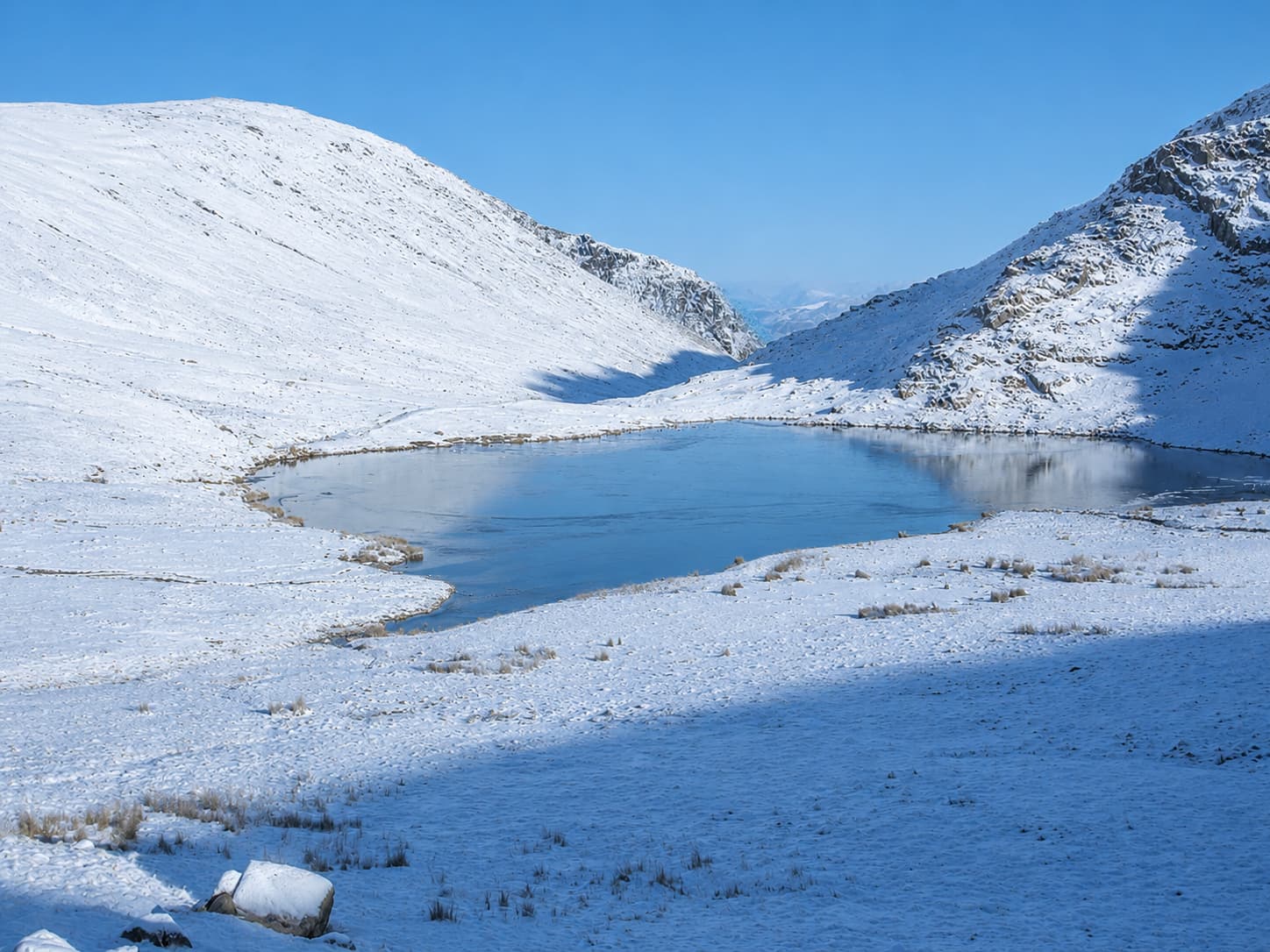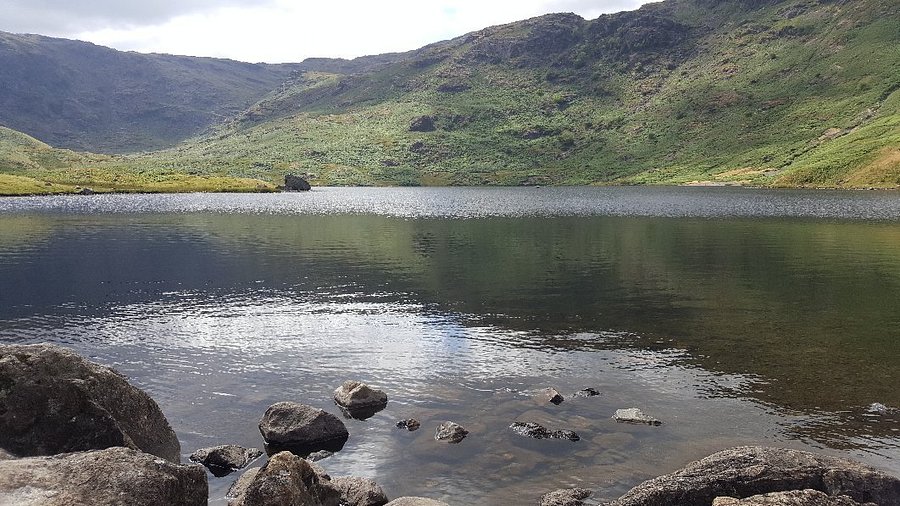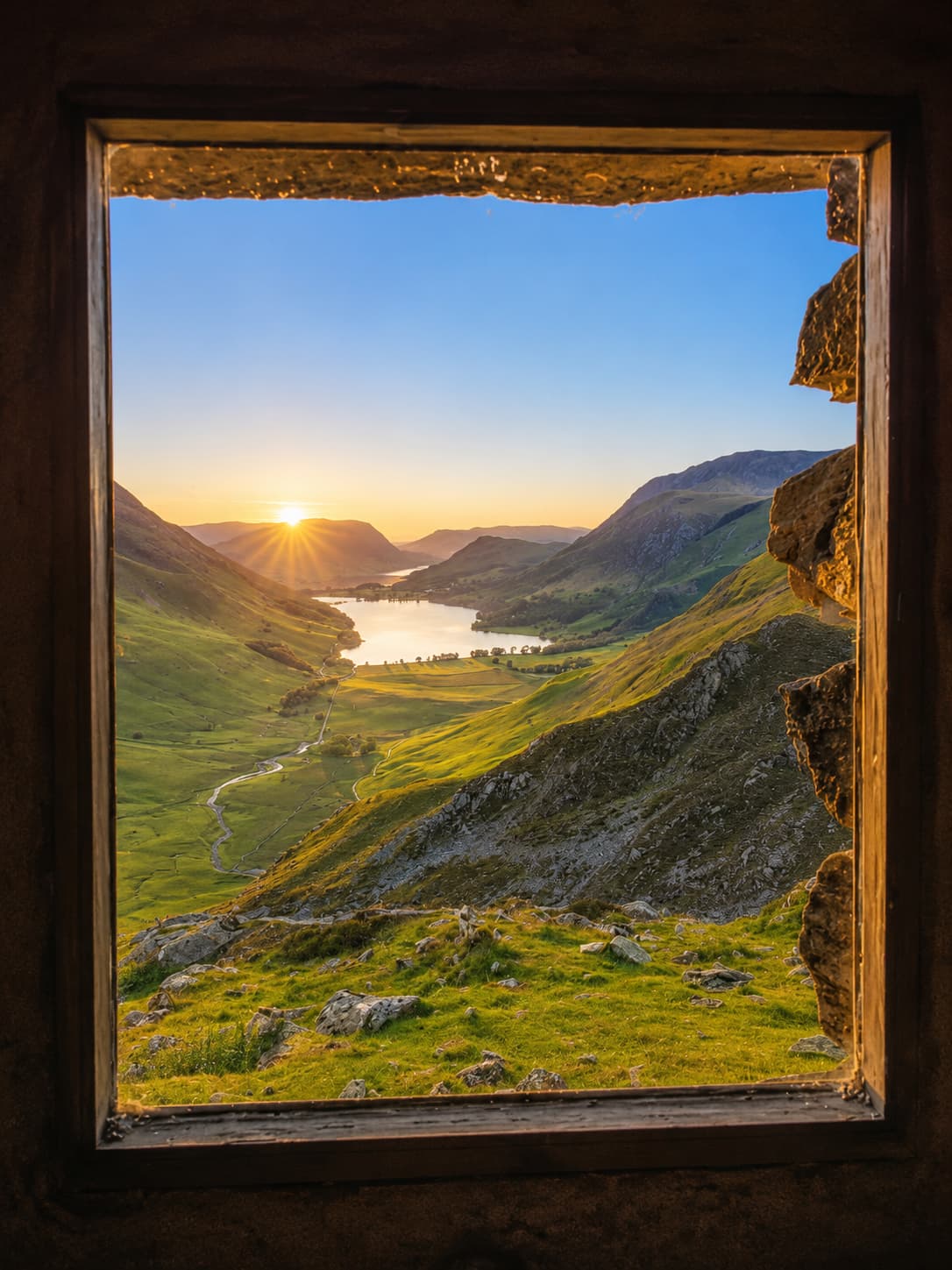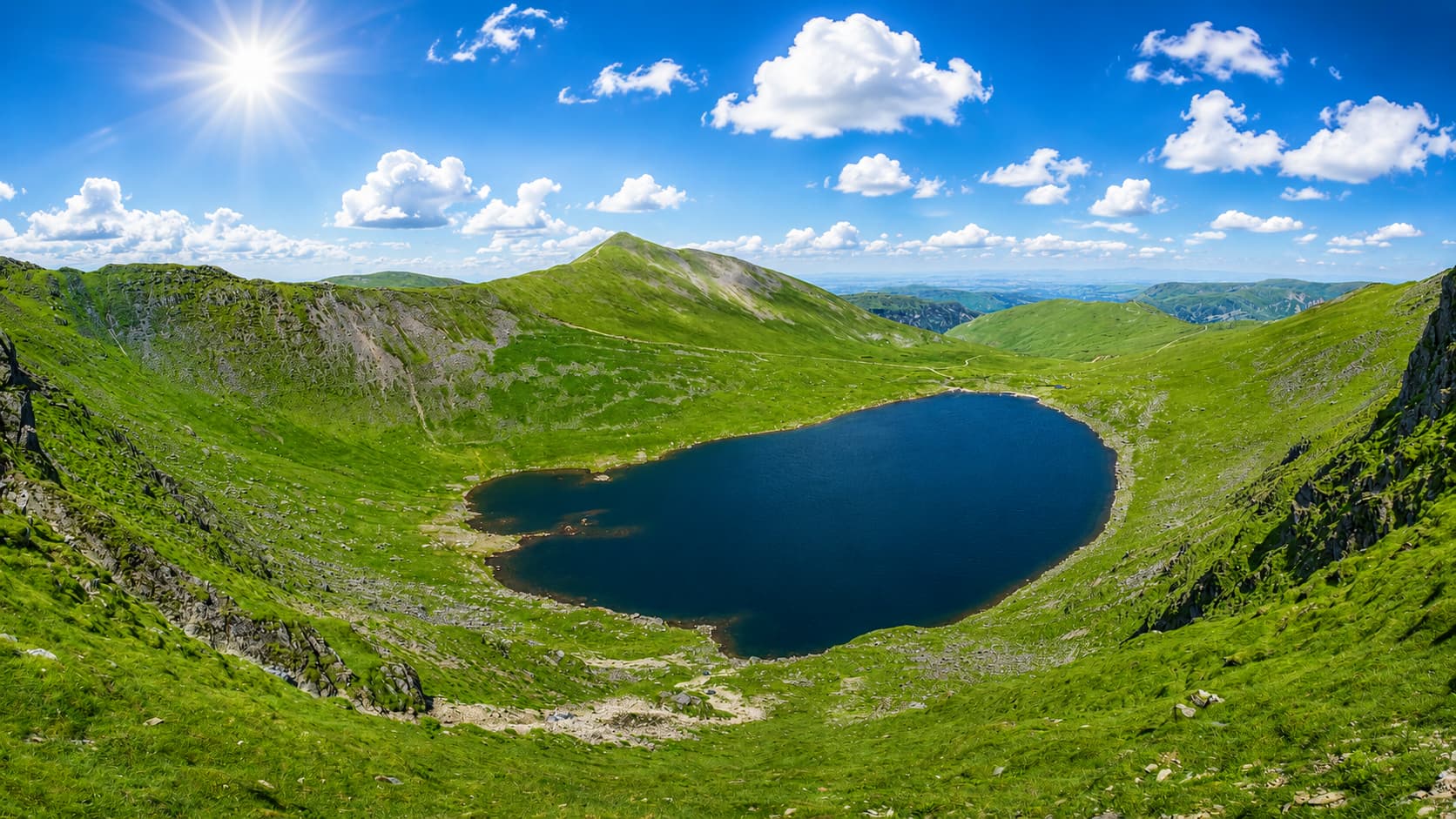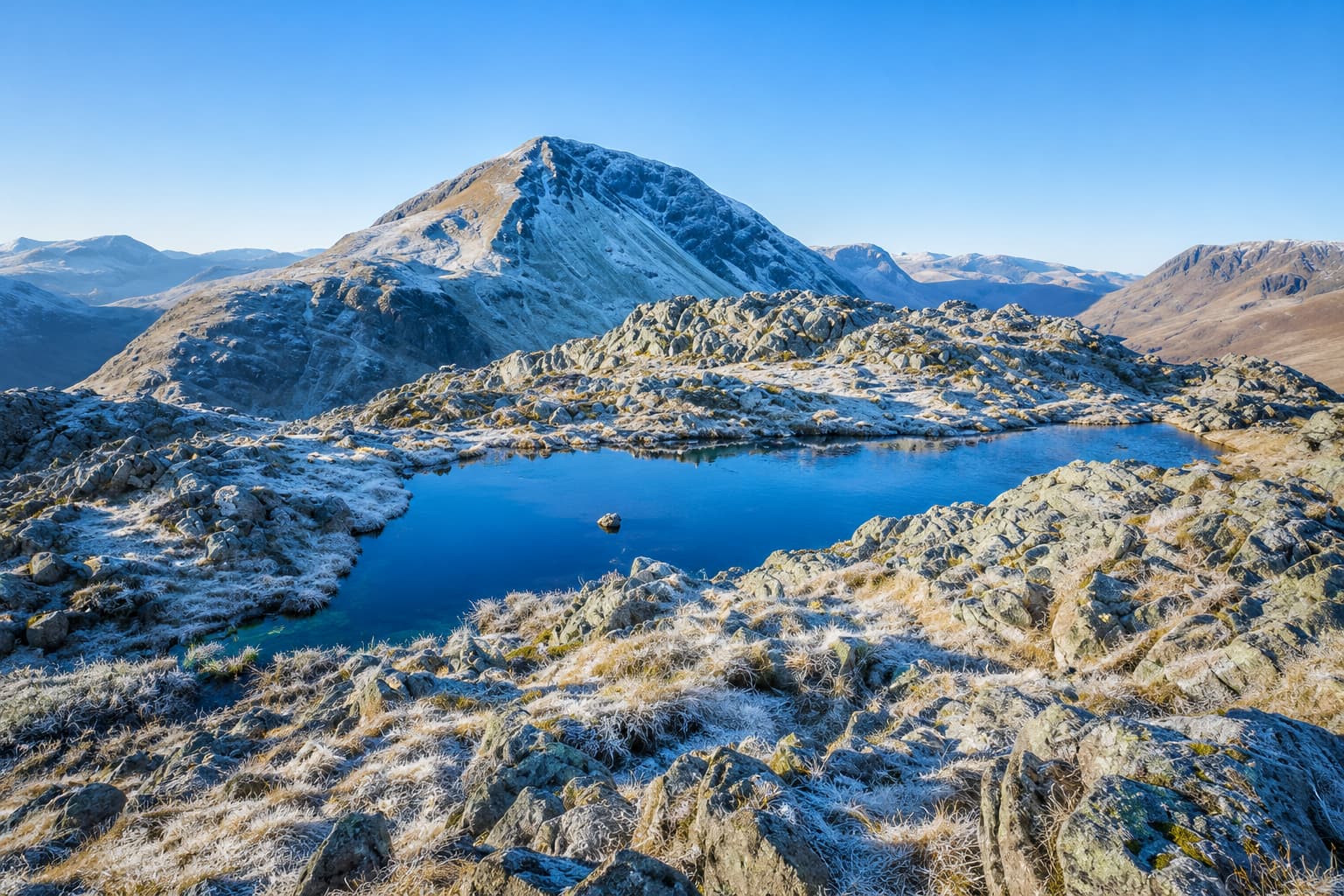
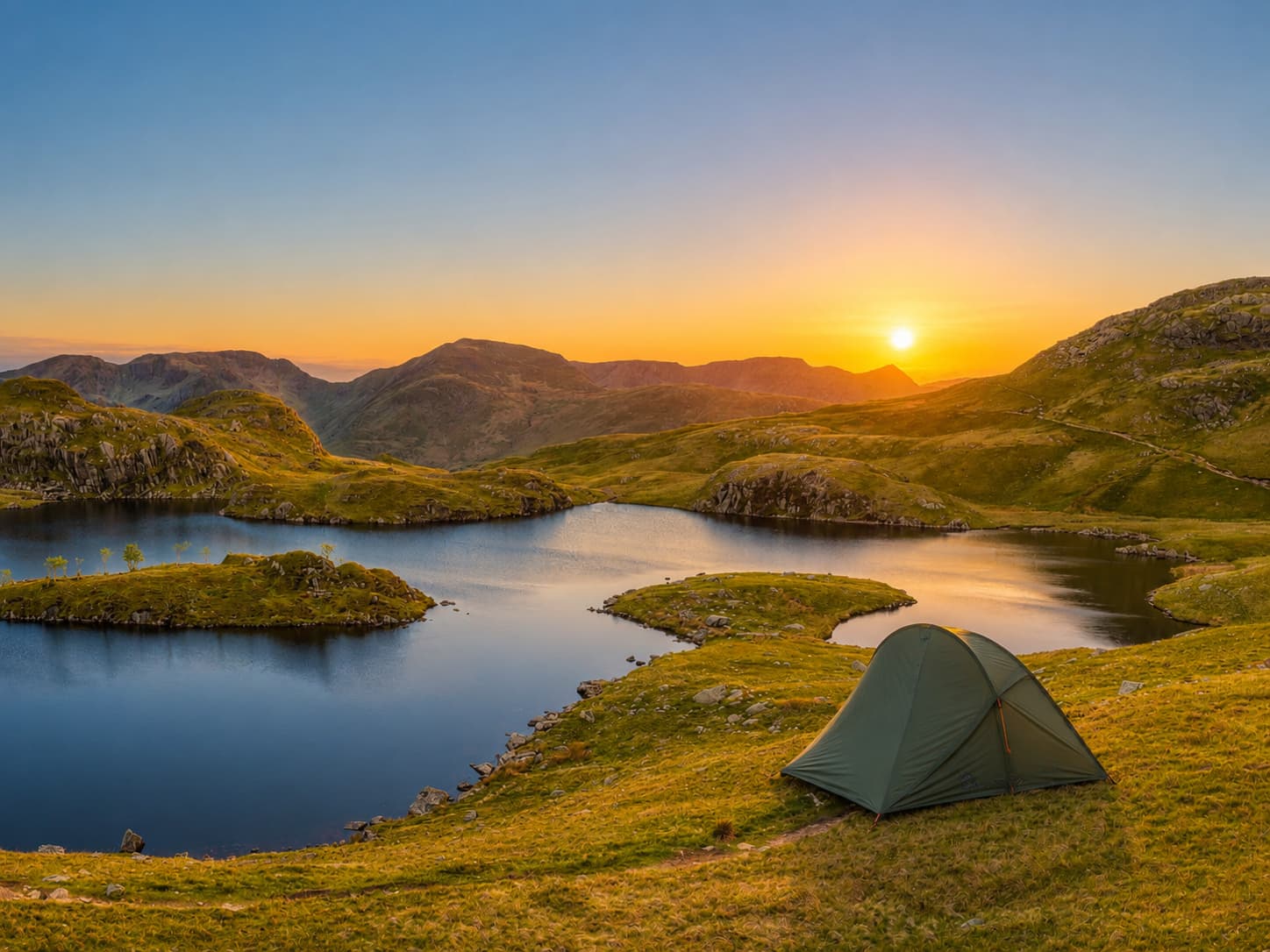
A small tent pitched on the Lake District high fells at dusk beside a mountain tarn
⛺ The honest guide · Above 450m · One night · Leave no trace

Wild Camping in the Lake District

Here's the honest position up front: wild camping in the Lake District is not a legal right — but a single night, high on the fells, done discreetly and with no trace left behind, is widely tolerated. This is the guide to where that applies, the rules that keep it tolerated, and the genuinely good spots — from Angle Tarn to Sprinkling Tarn.

450m+
Pitch above the highest fell wall
1 night
Arrive at dusk, leave at dawn
6
Tolerated high-fell spots, with honest notes
£0
No permit, no fee — just the code, followed
Is It Legal? The Golden Rules Where Not To Camp Best Spots Kit FAQ

The complete guide

A night on the fells, done right

There are few finer things in Britain than waking to mist lifting off a Lakeland tarn with the whole fell to yourself. But wild camping in the Lake District sits in a genuinely grey area, and a lot of what's written online is either wishful thinking ("it's totally legal!") or scaremongering ("you'll be fined!"). Both are wrong, and both cause problems. This guide gives you the real position.

In short: unlike Scotland, England and Wales give you no legal right to wild camp, and almost all Lakeland fell ground is owned by someone — farms, the National Trust, or registered common land. But the Lake District National Park Authority and the National Trust both publish guidance on what responsible high-fell camping looks like, rather than banning it outright. That tolerance is real, and it's fragile — it depends entirely on campers staying high, staying discreet, and leaving absolutely nothing behind. Get that right and you'll almost never have a problem.

Below: the honest legal answer, the golden rules that keep wild camping tolerated, where not to pitch, six genuinely good high-fell spots, and a tight kit list. If a wet fell isn't your idea of a good night's sleep, there's a comfortable alternative linked at the bottom.

Keep it tolerated

The golden rules of Lake District wild camping

Synthesised from the National Park Authority, the National Trust and the established fell code. Follow all six — every one of them is the difference between a place that welcomes the next camper and a place that bans tents.

Camp high

Pitch only above the highest fell wall — roughly 400–450m and up — well away from towns, roads and lake shores. Height is what keeps you discreet and tolerated.

Leave no trace

Pack out everything you bring in — food scraps and toilet paper included. The pitch should look as though no one was ever there. Litter is the single biggest threat to tolerance.

Be discreet

Arrive late, around dusk, and leave early, at dawn. One night only — then move on. A tent that's up all day in plain sight is the kind that gets a knock.

Small groups only

Solo, or one to two small tents. Large groups and big basecamps are not wild camping — they damage the ground and draw attention, and they are not tolerated.

No open fires

Never light a campfire or BBQ — the wildfire risk on dry fell and forestry is severe, and fire scars ruin the ground for years. A camping stove is the only acceptable heat source.

Pitch away from water

Keep clear of a tarn's inflow and outflow and any stream — both to avoid contaminating water others drink, and to protect fragile streamside ground. Go to the toilet well away from water too.

The number-one mistake

Where not to camp

Almost everyone who gets moved on was camping in one of these three places. Stay out of them and you stay tolerated.

Valleys & lakeshores

The flat, sheltered, accessible spots by the water are the most contested ground in the National Park. Use an official campsite here — there are excellent ones in every valley.

Roadsides, laybys & car parks

Sleeping in a car, campervan or tent in a car park, layby or verge is not permitted and is the most common reason people are asked to move on. Overnight parking needs an official site or campsite with permission.

Enclosed farmland & near houses

Walled fields, meadows, and anywhere within sight of a farm or home are private working land. Stay above the intake wall, on the open fell, well away from buildings.

Where to go

Best wild camping spots in the Lake District

Six genuinely good, well-established high-fell pitches — mostly tarns and cols that give you water, a bit of shelter and a sunrise worth the cold. A word of honesty first: the most popular of these (Styhead, Angle Tarn) can get busy on summer weekends, and crowding plus litter is precisely what threatens the tolerance everywhere. Treat "best" as "responsibly enjoyed," not "party here." Camp small, camp late, leave it cleaner than you found it.

Angle Tarn near Patterdale, a classic Lake District wild camping spot with islands and sheltered bays

Angle Tarn, Patterdale

~480m · The classic

📍 Above Patterdale · ⛰️ On the High Street route · 💧 Tarn water (treat)

The most-loved wild camping spot in the eastern Lakes, and for good reason — an irregular, island-dotted tarn with sheltered grassy bays and a glorious outlook to Helvellyn and the Patterdale fells. Easy to reach from Patterdale on the Boredale Hause path, and a natural staging post for High Street or the Knott.

Honest note: its popularity is its only drawback — on fine summer weekends several tents gather here. Pitch a little away from the main bays, keep your group tiny, and it stays special.
Sprinkling Tarn below Great End, a dramatic high wild camping spot in the Scafell range

Sprinkling Tarn

~600m · Dramatic & exposed

📍 Below Great End, Borrowdale/Scafell · ⛰️ High & wild · 💧 Tarn water (treat)

One of the most spectacularly sited tarns in the Lakes — cradled high beneath the crags of Great End, with the Gables looming opposite. A magnificent pitch for a clear, settled night and a front-row seat for sunrise over the Scafells. Reached via Sty Head from Borrowdale or Wasdale.

Honest note: there's little shelter up here and the weather turns fast — only camp in a genuinely good forecast, with a tent that can take wind. Not the place to learn.
Styhead Tarn on the Sty Head pass, a popular Scafell Pike approach wild camping spot

Styhead Tarn

~440m · Popular base

📍 Sty Head pass, near Wasdale · ⛰️ Scafell Pike approach · 💧 Tarn & gill water (treat)

A favourite first-night basecamp for an early start on Scafell Pike or Great Gable, sitting at the great crossroads of the high passes. Relatively sheltered for its height, with grassy pitches by the water and big-mountain surroundings on every side.

Honest note: precisely because it's such a handy base, it's the busiest pitch on this page in summer — and it shows the strain. If it's crowded, move on and up; if you stay, be scrupulous about leaving no trace.
Base near here: Wasdale hub → Walks →
Easedale Tarn above Grasmere, a gentler introduction to Lake District wild camping

Easedale Tarn, Grasmere

Gentler intro

📍 Above Grasmere village · 🚶 Most accessible · 💧 Tarn water (treat)

The easiest of the six to reach — a steady walk up from Grasmere past Sourmilk Gill brings you to a broad, friendly tarn ringed by fells. The gentlest introduction to a night on the hill, and a lovely one, with the village close enough for breakfast afterwards.

Honest note: it sits lower and closer to the village than the others, so discretion matters even more here — pitch late on the far side away from the main path, keep it to one night, and be gone early.
The Haystacks plateau above Buttermere, home to Innominate Tarn, a wild camping spot with the Warnscale bothy nearby

Innominate Tarn, Haystacks

~550m · Iconic & exposed

📍 Haystacks, above Buttermere · ⛰️ Wainwright's favourite · 💧 Tarn water (treat)

The most romantic pitch in the Lakes — the little unnamed tarn on the knobbly summit plateau of Haystacks, where Wainwright asked for his ashes to be scattered. Astonishing views over Buttermere and the High Stile range, with the nearby Warnscale Head and Dubs huts as foul-weather fallbacks.

Honest note: iconic means popular, and the summit is rocky and exposed with few flat pitches — arrive with a backup plan and a tent that copes with wind. As ever up here, pack out every scrap.
Base near here: Buttermere hub →
Red Tarn beneath Striding Edge and Helvellyn, a high and exposed wild camping spot for the experienced

Red Tarn, Helvellyn

~718m · Experienced only

📍 Beneath Striding Edge · ⛰️ One of England's highest tarns · 💧 Tarn water (treat)

A wild, serious pitch in the great hollow between Striding and Swirral Edge, under the east face of Helvellyn — about as dramatic as a Lakeland camp gets. Reached on the long climb from Glenridding, it's a place for a settled high-pressure night and an unforgettable dawn on the ridge.

For the experienced: this is high, cold and brutally exposed to weather coming over the top — a poor choice in anything but a calm, dry forecast, and a winter mountaineering objective when there's snow. Know your kit and the forecast before committing.

Pack for the fell, not the field

Wild camping kit checklist

High-fell camping is colder, wetter and windier than a valley campsite — and there's no shop, tap or toilet. The essentials that genuinely matter:

Sturdy tent

A 3-season-plus tent that can genuinely take wind — exposed pitches punish flimsy gear.

Camping stove

Gas or meths stove for hot food and drinks — never an open fire on the fells.

Water treatment

A filter or purification tablets — tarn and gill water should always be treated.

Warm sleep system

A season-appropriate sleeping bag and insulating mat — fell tops are cold even in summer.

Layers & waterproofs

Warm layers plus a proper waterproof — Lakeland weather changes fast and often.

Head torch

You're arriving at dusk and leaving at dawn — a head torch (and spare battery) is essential.

Trowel & wag bags

For human waste well away from water — or pack it out entirely. Carry out all rubbish.

Map, compass & forecast

OS map and compass (don't rely on phone signal), and a checked mountain forecast before you commit.

Heading up to swim or scramble as well? See our Lake District walks guide for routes to these tarns, and the wild swimming guide for which tarns are good for a dip.

Common questions

Lake District wild camping, answered

Is wild camping in the Lake District illegal?
It isn't a legal right, but it isn't strictly illegal either when done responsibly. In England and Wales wild camping technically needs the landowner's permission. On the Lake District high fells, discreet, responsible, one-night camping above the highest fell wall is widely tolerated by landowners, the National Park Authority and the National Trust. It's the valleys, lakeshores and car parks where you'll be asked to move on.
Can you wild camp in the Lake District?
Yes, on the high fells, if you follow the code: camp high (above roughly 450m), arrive at dusk and leave at dawn, stay one night, keep groups tiny, light no fires, and leave absolutely no trace. Popular tolerated spots include Angle Tarn, Sprinkling Tarn, Styhead Tarn and Easedale Tarn.
What happens if you get caught wild camping?
On the high fells, a responsible camper following the code is very unlikely to be moved on. If a landowner or ranger does ask you to move — more common lower down, near roads or on farmland — the expectation is simply that you pack up and go. There's no fixed fine for fell wild camping, but trespass and littering can carry consequences, and lighting fires is taken seriously because of wildfire risk.
Can I sleep in my car in the Lake District?
No — sleeping in cars, campervans or tents in car parks, laybys and roadside verges is not permitted. Overnight stays need an official campsite or a site with permission. Car-park sleeping is the most common reason people are moved on.
What is the 28-day rule for camping?
The 28-day rule lets a landowner allow temporary camping on their own land for a limited number of days a year without full planning permission — historically 28 days, with temporary extensions to 56 or 60 days in some recent years. It applies to landowners running informal pitches, not to wild campers, but it's why some "nearly wild" pop-up sites appear seasonally.
Can you have a campfire wild camping in the Lake District?
No. Open fires and BBQs are not allowed when wild camping on the fells — the wildfire risk to moorland and forestry is severe, and fire scars damage the very places people come to enjoy. Use a camping stove instead.

Prefer a roof and a hot tub?

Not every Lake District night has to be on a wet fell. If a warm bed, a wood-burner and a proper breakfast sound better than a 4am dew-soaked pack-up, see our guide to the comfortable alternative.

Glamping, pods, cabins & lodges

Lake District tips in your inbox

What the Fell is our free newsletter — hidden corners, access and path updates, mountain weather and the occasional "the fell is closed for wildfire risk" alert worth knowing before you head up.

Subscribe to What the Fell, free