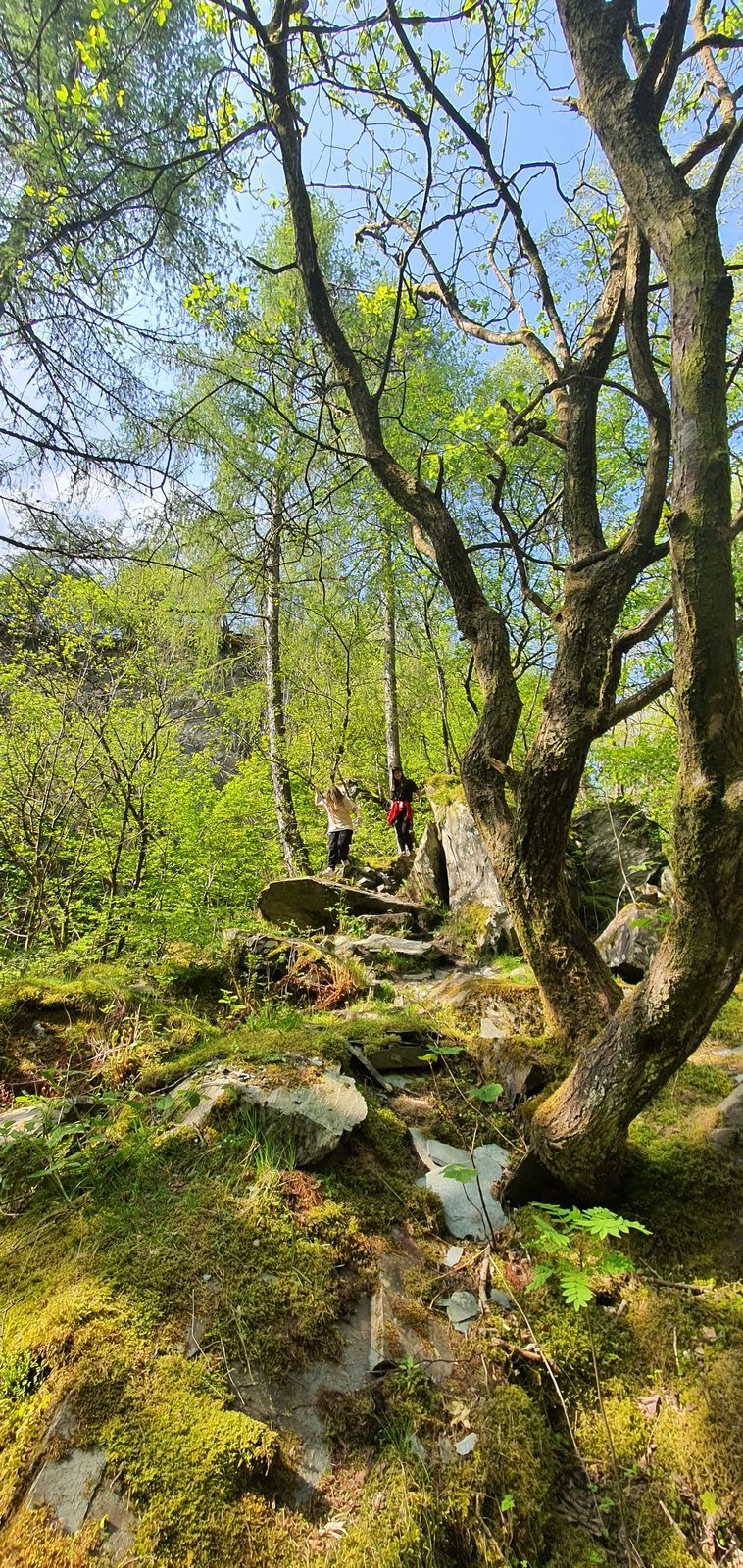
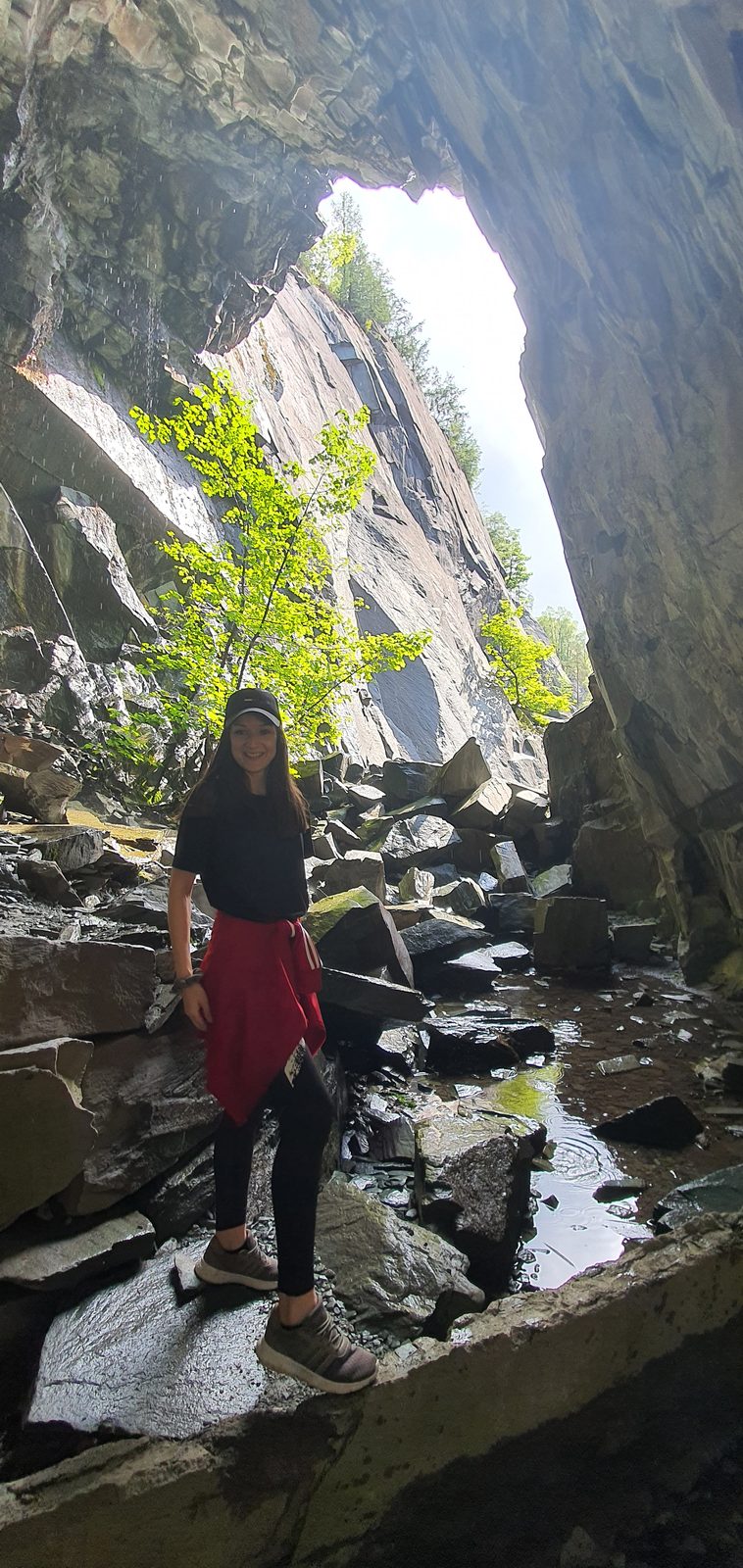
Two extraordinary slate quarries in one Little Langdale valley — the cathedral-like Cathedral Cave and the skull-arch reflection at Hodge Close. Free, open access, near Coniston.
Current access (verified June 2026): a large rockfall (a boulder the size of a car) has closed the upper quarry and tunnels at Cathedral Quarry while the National Trust inspects them. The bottom main chamber — the Cathedral — remains open. Please follow the on-site signage and don't pass any barriers. It's still well worth the visit; just stick to the open chamber.
Both are free — no tickets, no booking. Cathedral Cave and Hodge Close are open-access former slate quarries. Searching for "tickets" or "reviews"? They're walk-up sites; you just turn up.
One valley, two quarries
Little Langdale is a quiet, beautiful valley between Ambleside and Coniston, threaded with the relics of the slate industry that once defined it. Two of those relics are now among the most atmospheric free visits in the Lakes: Cathedral Cave (also called Cathedral Quarry or Cathedral Cavern), a vast chamber lit like a cathedral, and Hodge Close Quarry, a flooded pit whose great arch creates the famous "skull" reflection. They're close together and linked by signed paths via Tilberthwaite and the lovely Slater's Bridge, so most people do both in one walk. Nearest town hub is Coniston; Ambleside is just over the other side.
Both are free and open access. The one thing to plan properly is parking — there's none at the quarries themselves, so you walk in from Elterwater, Tilberthwaite or Hodge Close (covered below). Take a torch for Cathedral Cave's long tunnel, wear footwear that copes with wet slate, and you've got one of the best half-days in the southern Lakes.
Cathedral Cave · Cathedral Quarry · Cathedral Cavern
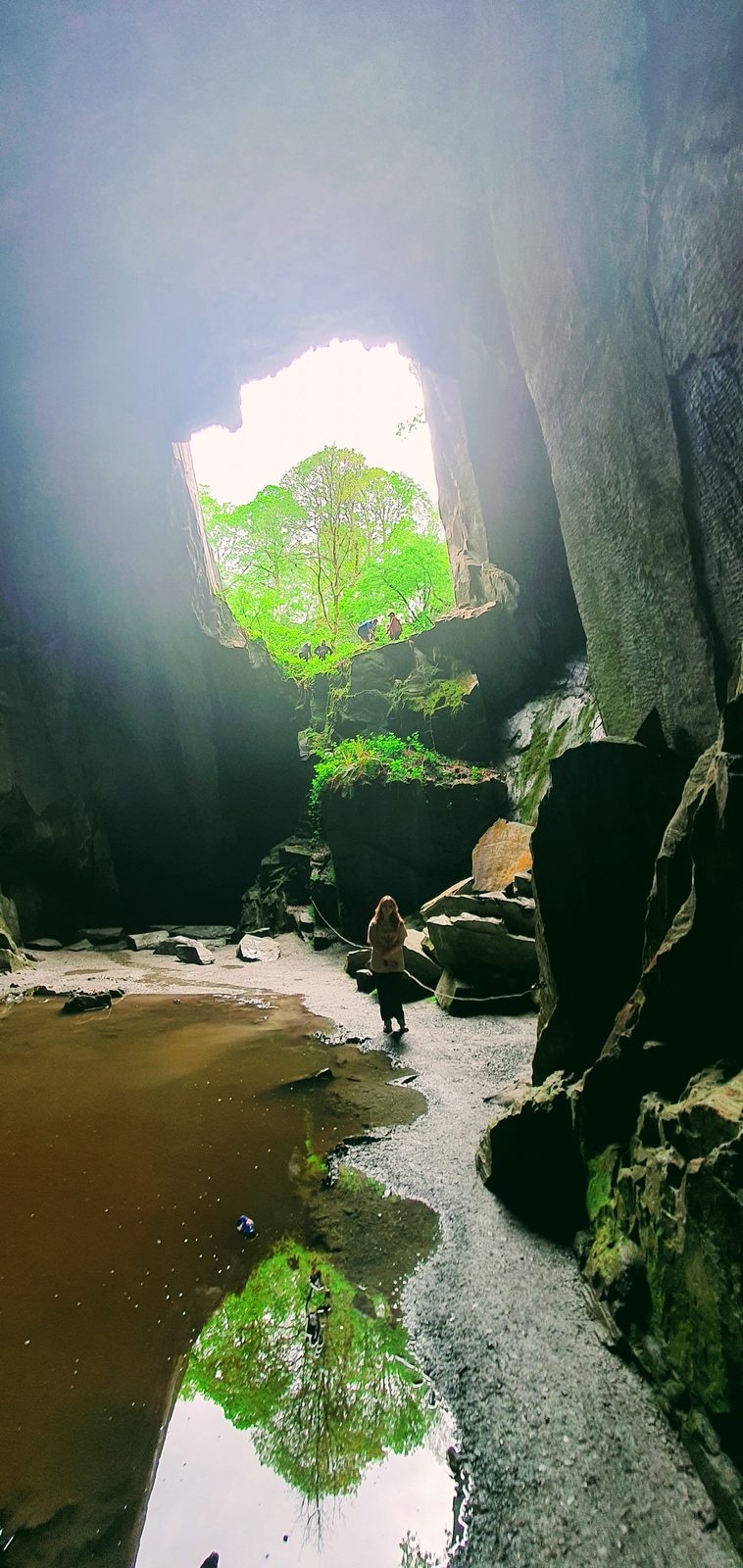
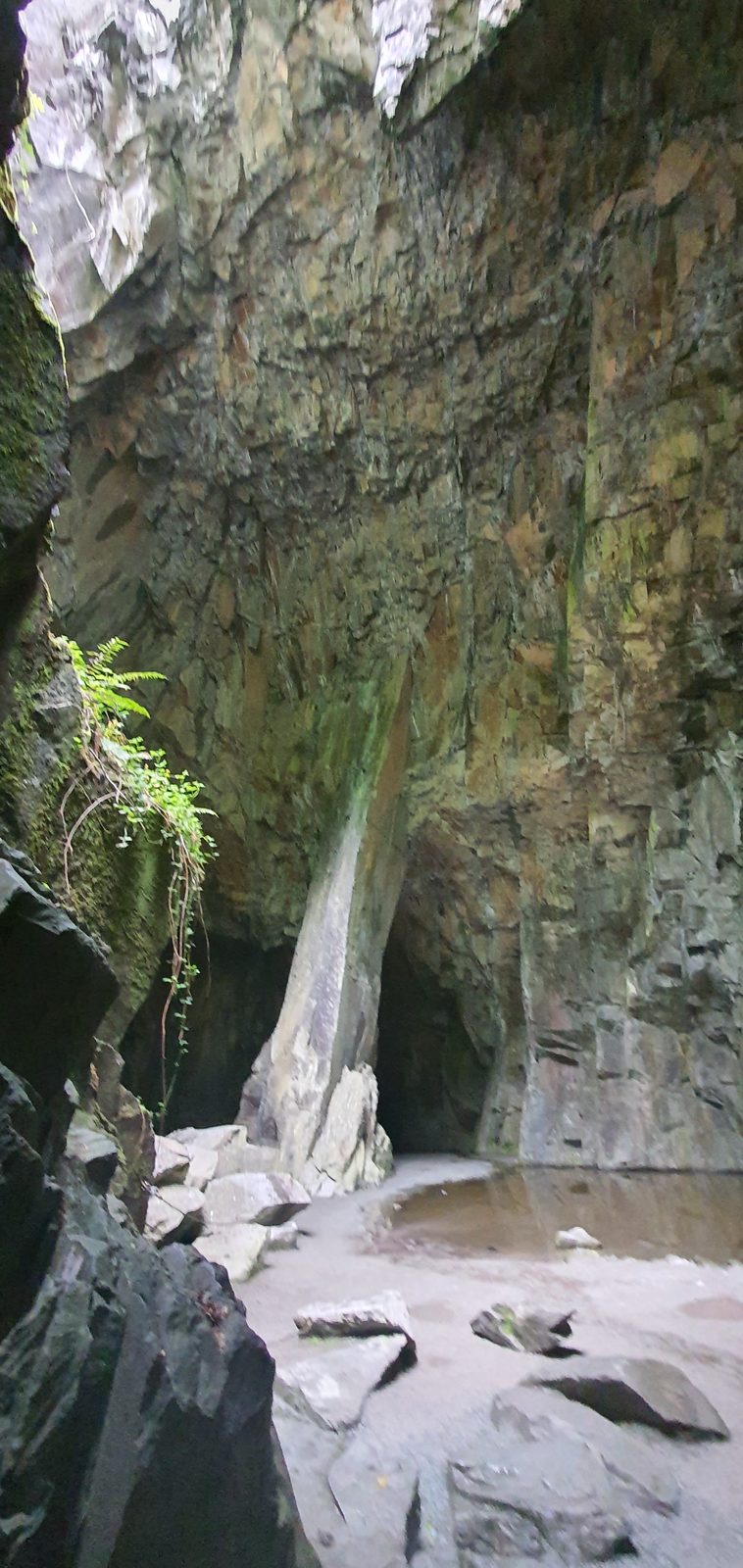
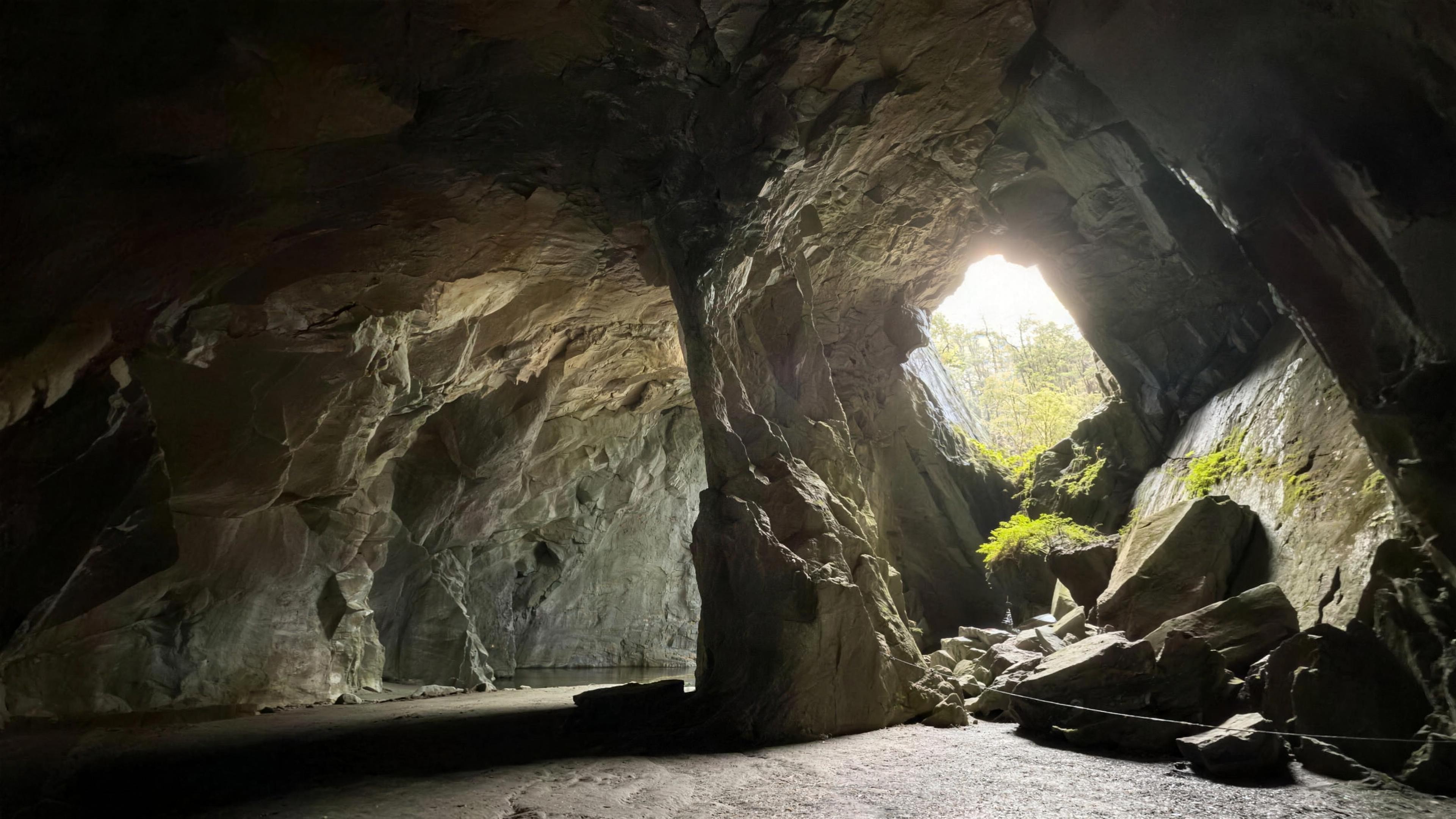
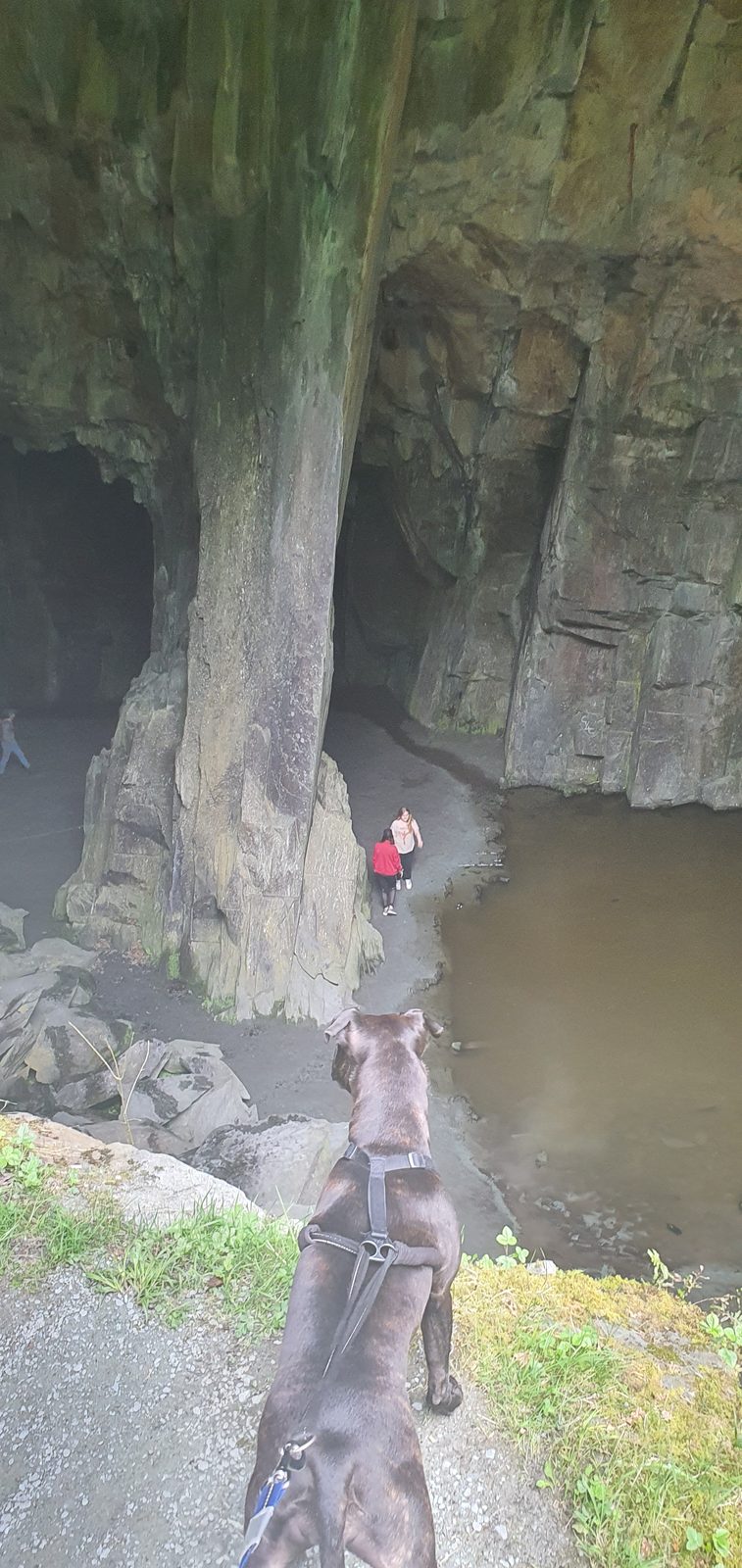
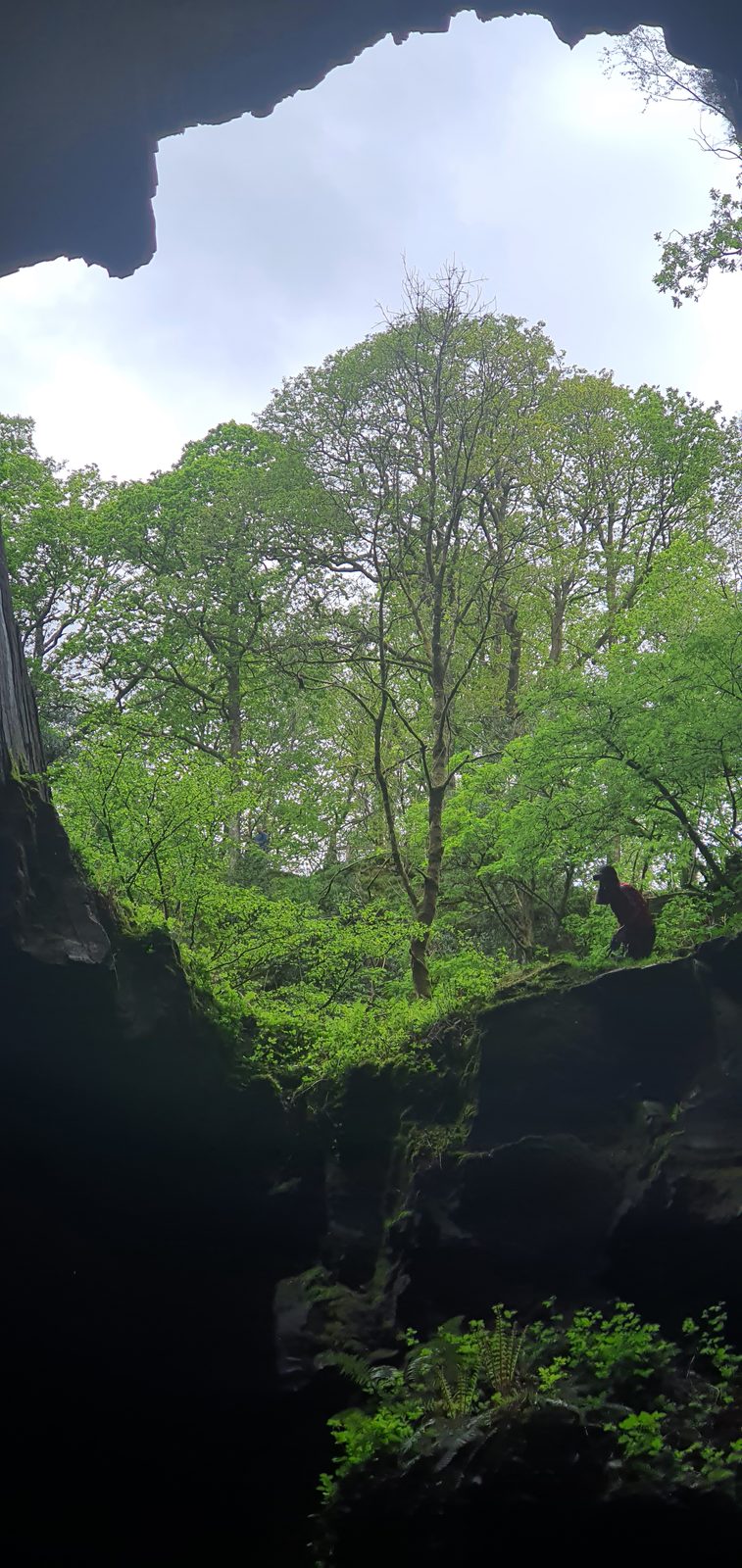
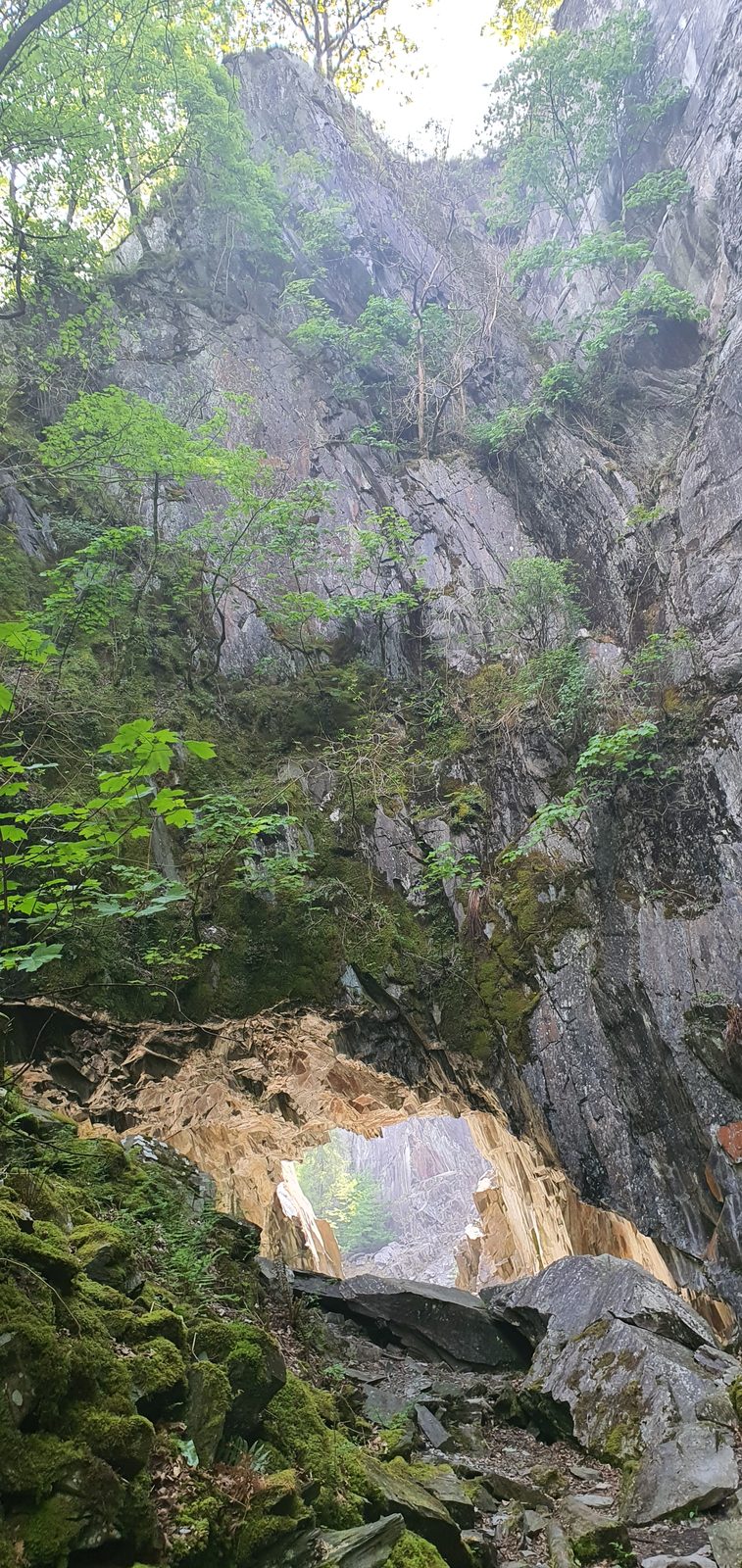
Cathedral Cave — the same place locals also call Cathedral Quarry or Cathedral Cavern — is a single huge chamber about 40 feet (12m) high, lit by two natural rock "windows" that throw shafts of light across the floor. It genuinely feels like stepping into a cathedral hewn from slate. A rock pillar in the middle adds to the effect. It's the most dramatic of the Lake District caves and, in normal conditions, one of the easiest big "wow" moments you can walk a child into.
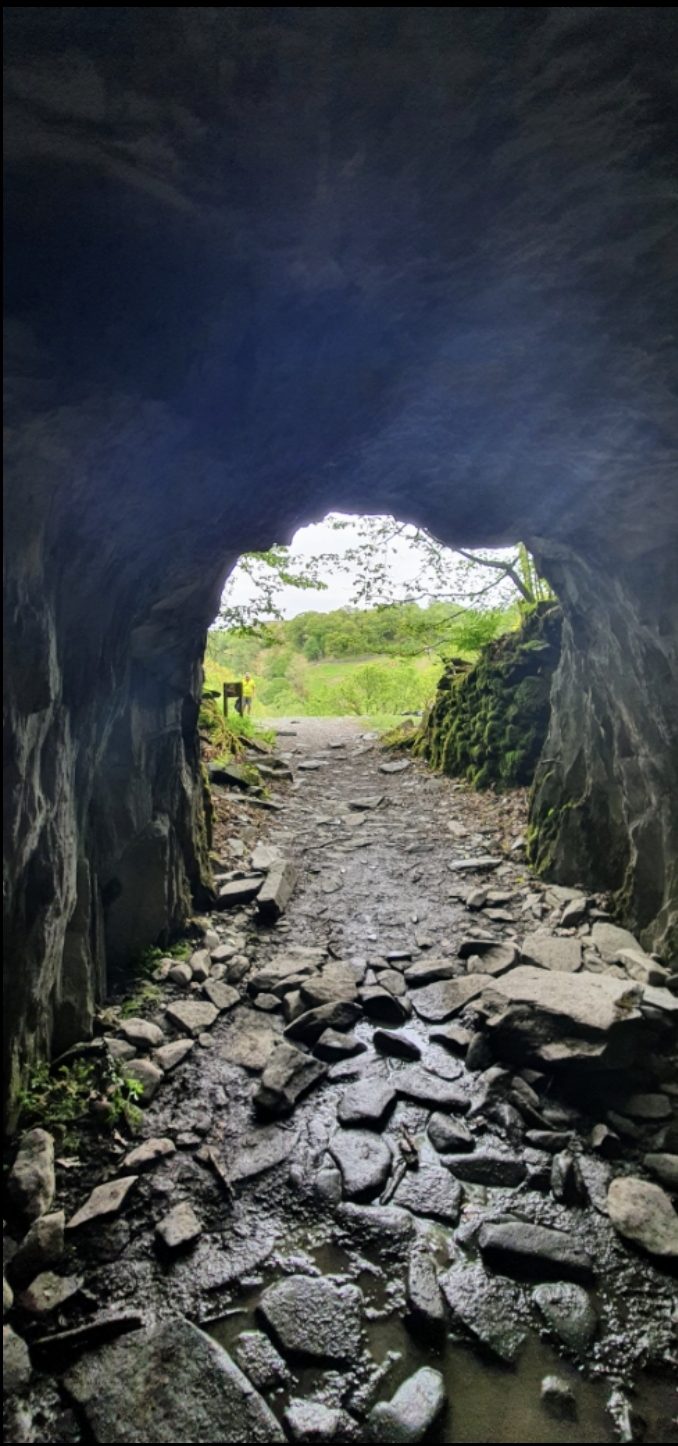
Torch: the first, short tunnel into the chamber is fine in daylight. But the longer connecting tunnel (over 100m) is genuinely dark — bring a torch or use your phone light if you explore it. Access right now: the main chamber is open, but the rockfall has closed the upper quarry and tunnels — follow the signs and don't cross barriers (see the notice above).
Main chamber: ~40 ft / 12 m high, lit by natural windows
Torch: needed for the 100m+ connecting tunnel only
Walk in: ~30–45 min from Elterwater, Tilberthwaite or Hodge Close, via Slater's Bridge
Cost: free, open access (National Trust)
Photos: cathedral-cave-1.jpg & cathedral-cave-2.jpg — drop into /images/ via cPanel.
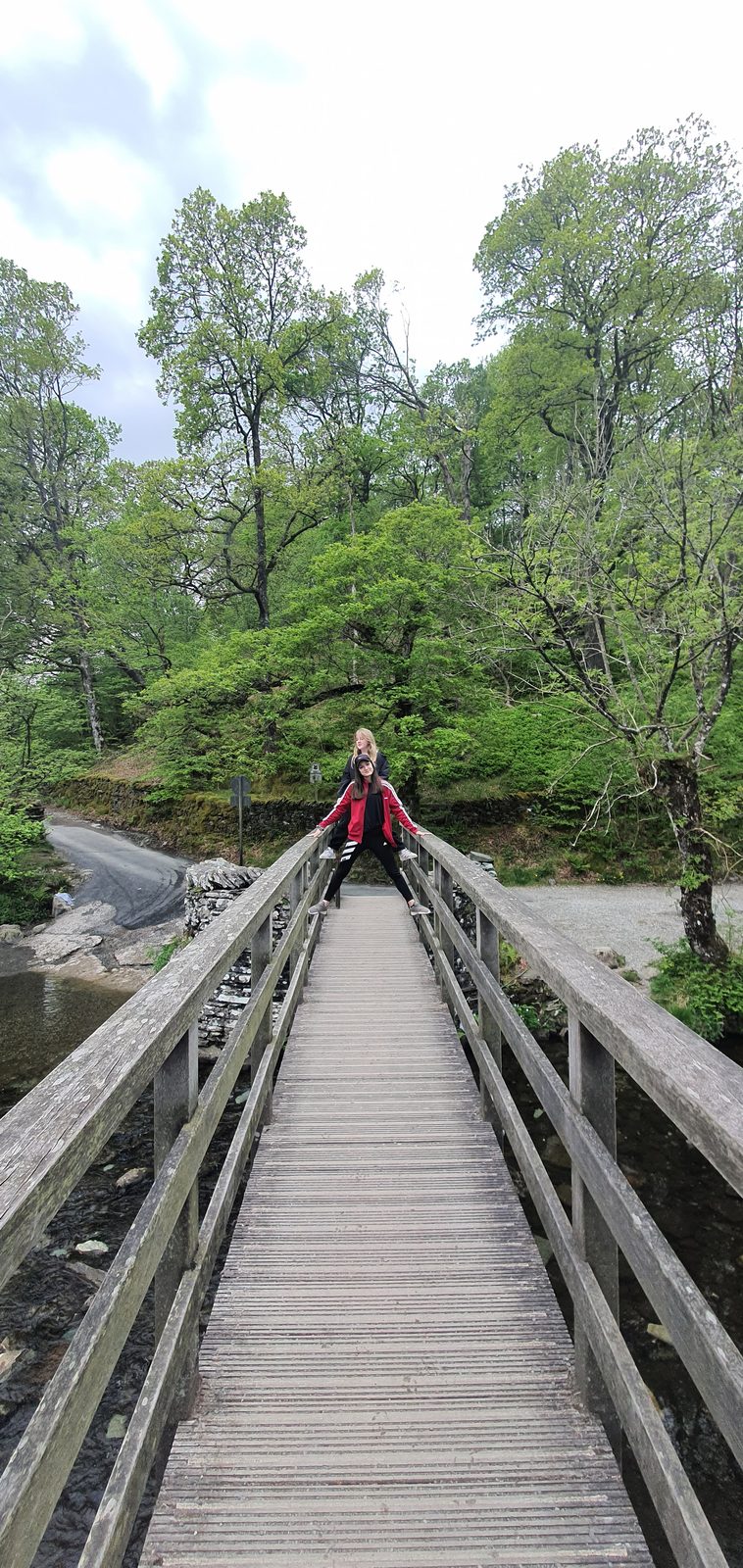
You'll cross — or at least pass — Slater's Bridge on the way in from Elterwater: a slender 17th-century packhorse bridge over the River Brathay, built so quarrymen ("slaters") could get to work. It's one of the most photographed little bridges in the Lakes and a lovely spot in its own right. Photo filename: slaters-bridge.jpg.
A photographer's quarry
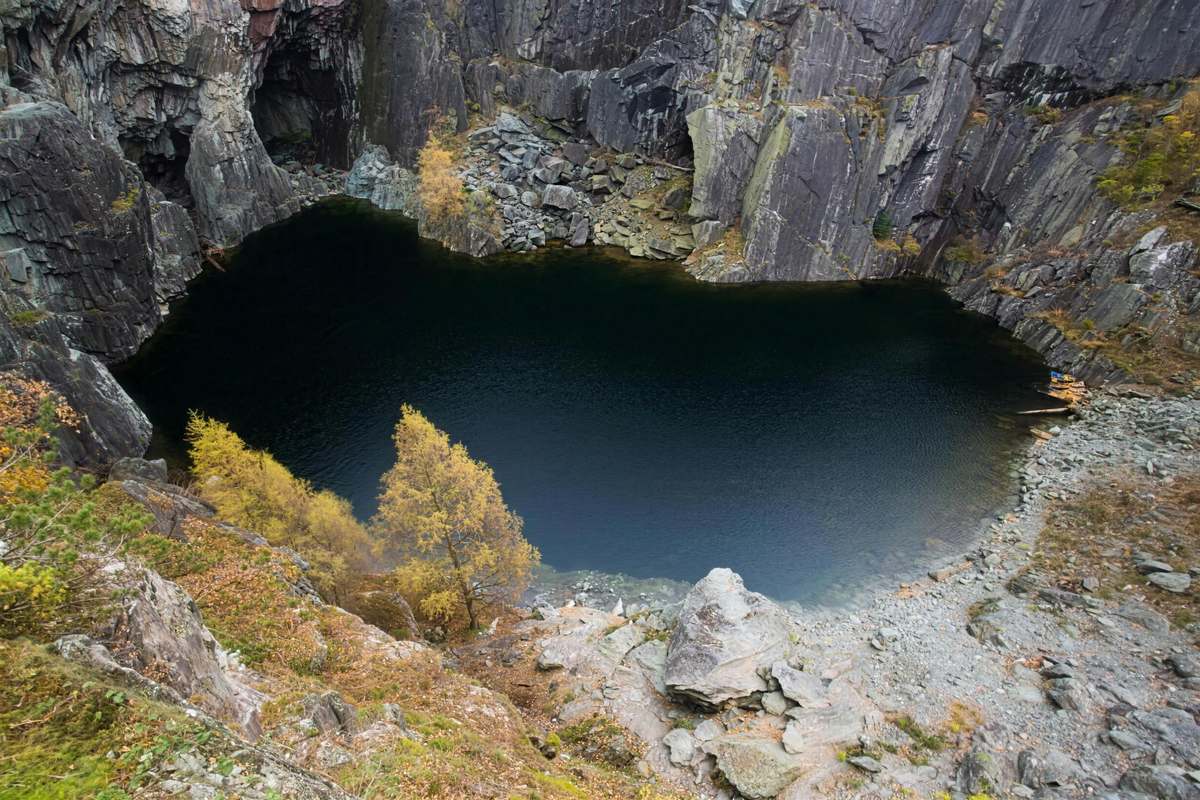
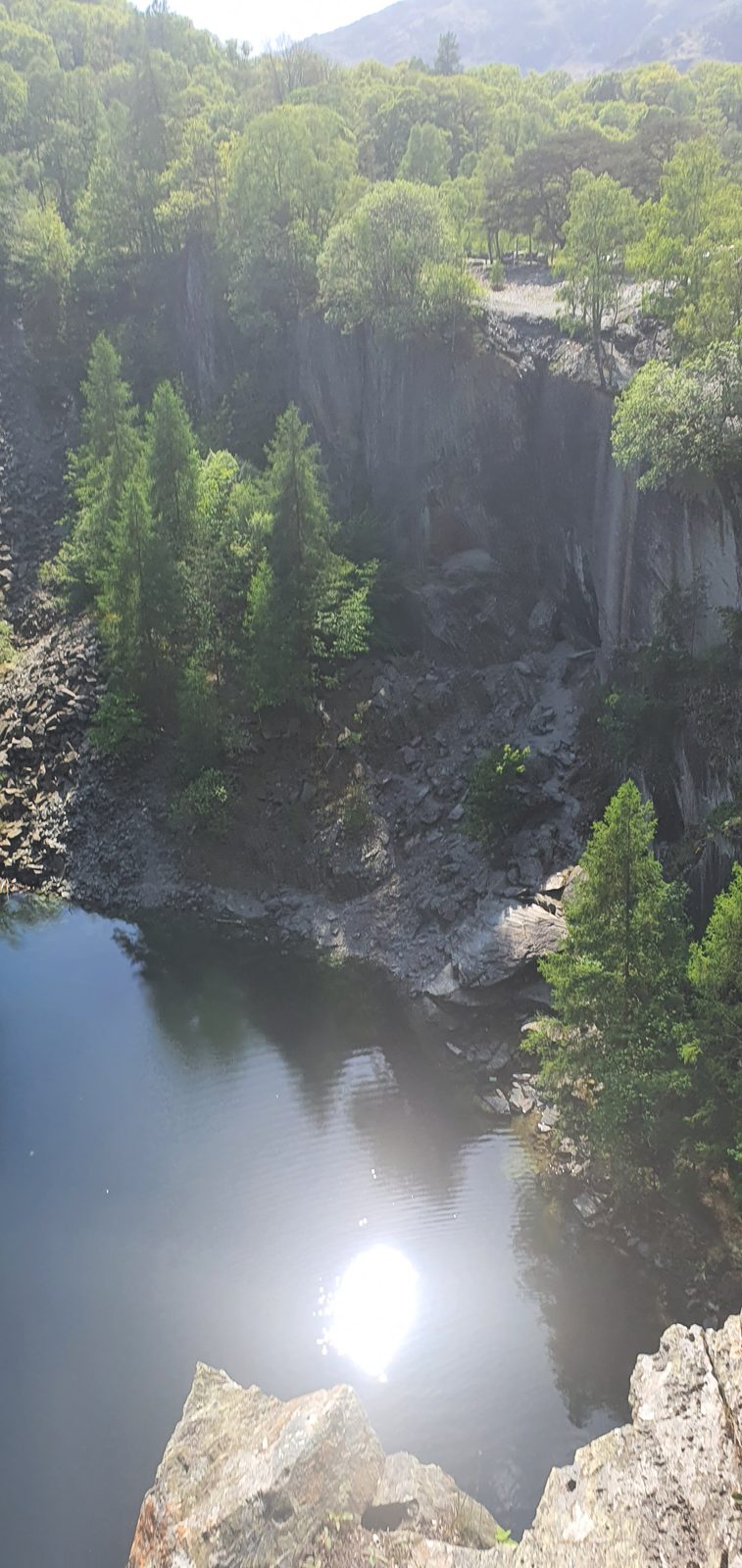
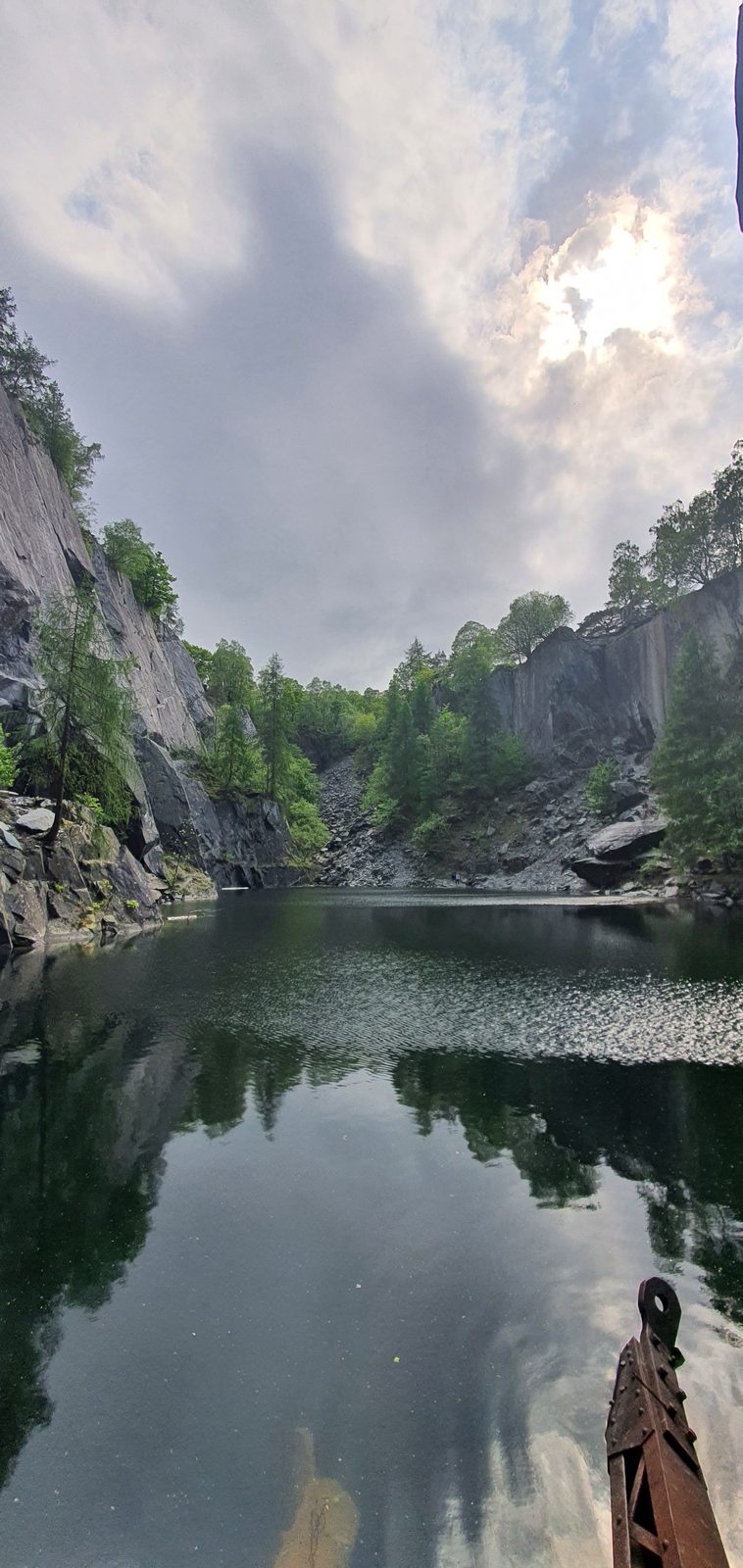
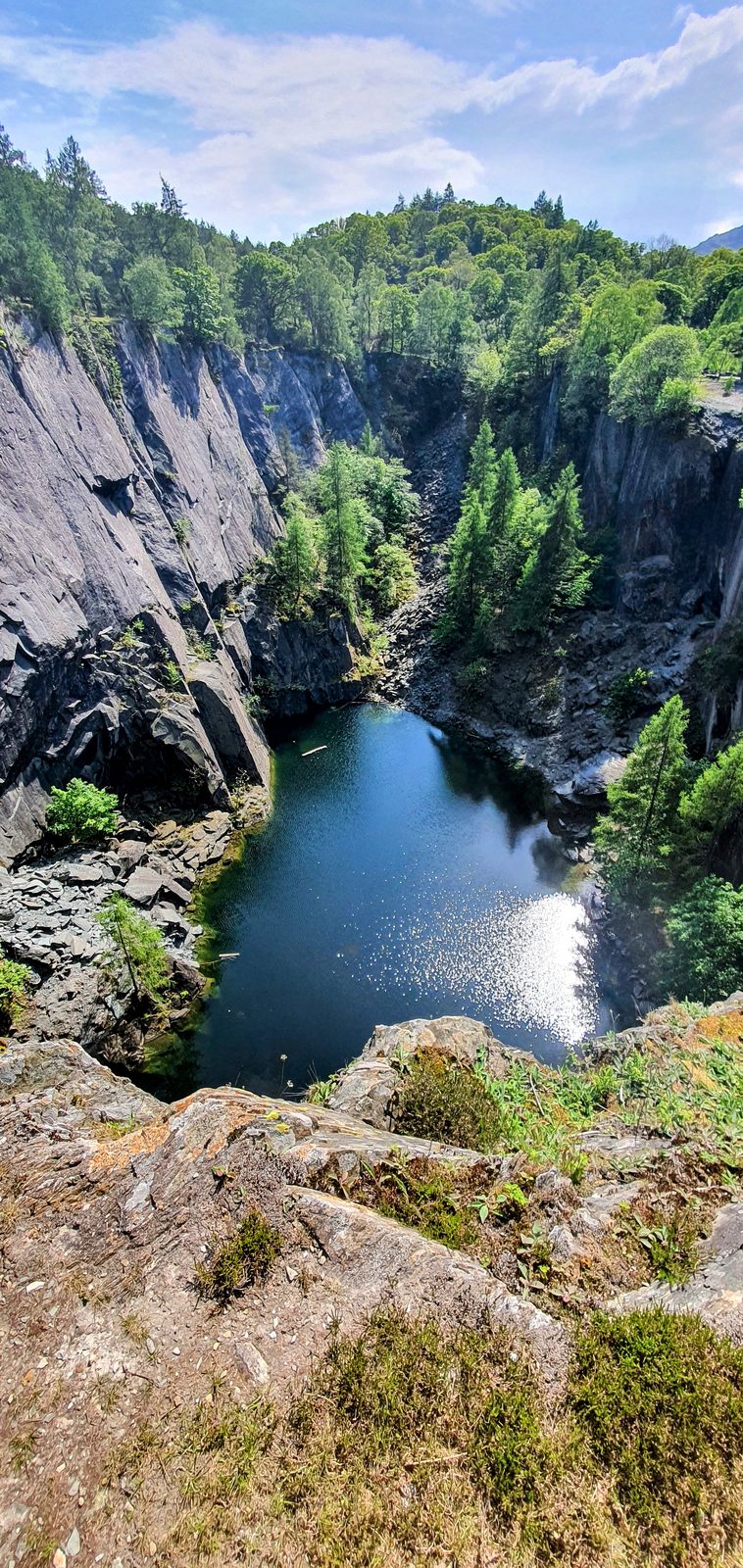
Hodge Close is a vast, dramatic flooded slate quarry — a sheer-walled pit with a huge arch above a deep, still, green pool. Its fame comes from one trick of perspective: from the right spot, the arch and its reflection line up to look like a giant skull, with hollow eyes and a gaping jaw. It's one of the most striking photographs in the Lake District, and the main reason people seek the quarry out. Come for the picture; stay for the sheer scale of the place.
Frame it for what it is: a viewpoint and photography spot, brilliant and completely safe from the edge and the arch. The one firm rule is the water itself.
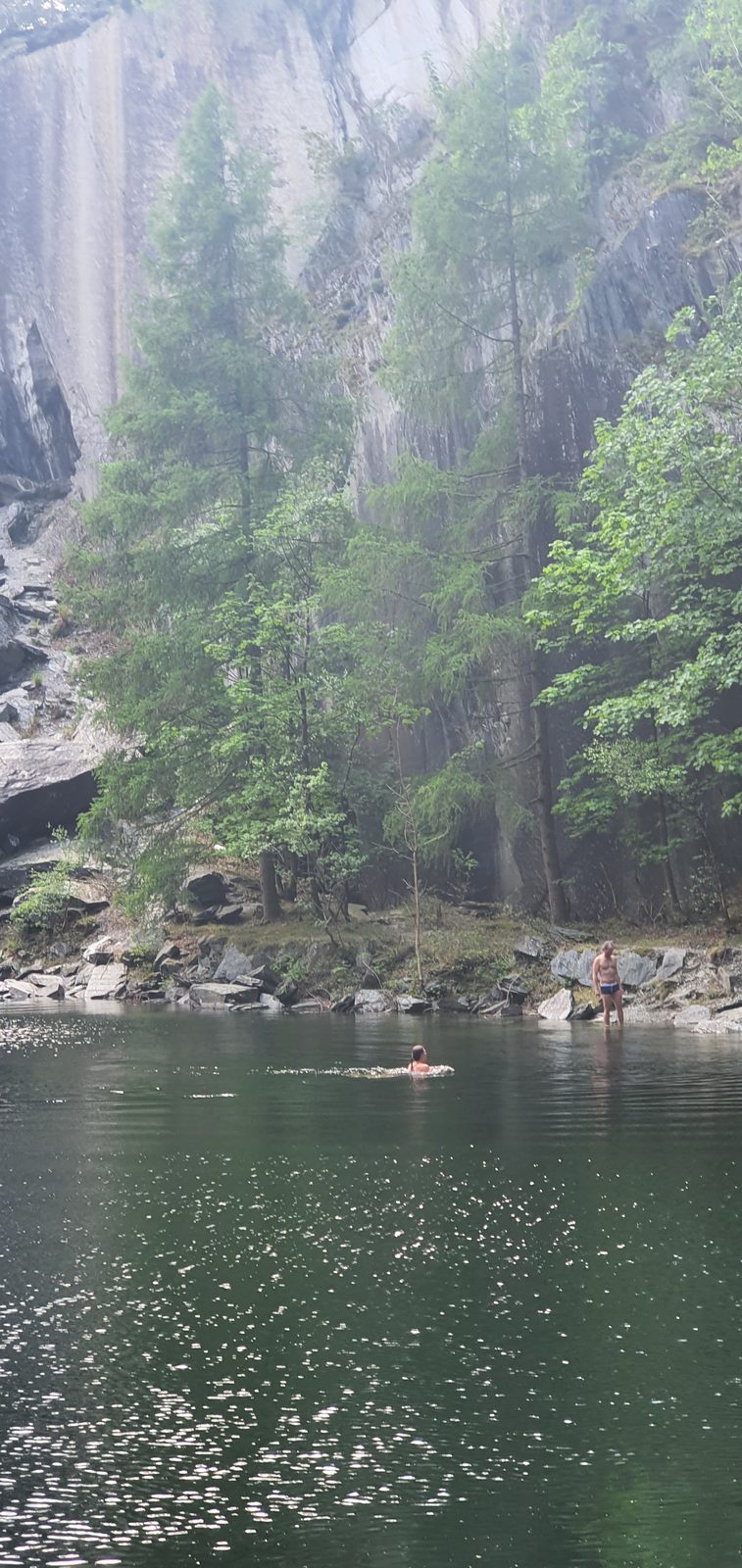
The flooded pool is very deep and bitterly cold, with submerged hazards; it's used for technical and cave diving, and there have been deaths here. It is not a wild-swimming spot and not for jumping. Enjoy it from the edge, keep well back from the unfenced drops, and keep children and dogs close — exactly as you would at a cliff edge.
Photos: hodge-close-skull.jpg & hodge-close-2.jpg — drop into /images/ via cPanel.
The #1 practical question
There is no parking at the quarries themselves. You park in the valley and walk in — roughly 30–45 minutes (2–3km). All three car parks fill fast on fine days, so arrive early and never block the narrow lanes or passing places.
Most popular start
~40 spaces, members free. About 3km in via Slater's Bridge — the classic approach.
Small roadside car park north of Coniston, free-ish. Links to both quarries via Tilberthwaite Gill — a great circular.
Free parking at the small Hodge Close NT car park — closest to the arch, with a signed path directly to Cathedral Cave. The approach is narrow single-track with few passing places and the car park is small, so arrive early — or use Tilberthwaite (LA21 8DG) as the recommended overflow.
Doing both? Cathedral Cave, Hodge Close and Tilberthwaite are usually walked as one circuit via signed paths and Slater's Bridge — allow a half-day and good footwear.
Content gold
Beatrix Potter bought the Cathedral Quarry site in 1929 as part of her wider land purchases to protect the landscape, and it later passed to the National Trust — which is why it's free and open today.
The prized green slate here is Borrowdale Tuff — volcanic ash laid down and compressed roughly 450 million years ago. It's been quarried in Little Langdale for centuries and shipped worldwide.
In the 1800s the local smuggler Lanty Slee distilled illegal moonshine whisky in hidden corners of these quarries, evading the excise men for years. The caves kept his secret well.
Make a day of it
Featured · nearby
The valley's traditional inn — the obvious lunch or pint at the end of the quarry walk. Listing details to confirm.
The Old Man, the lake, cafés and pubs — the nearest town hub.
Things to do in ConistonJust the other side of Little Langdale — waterfalls, cafés and the central Lakes.
Things to do in AmblesideWe only feature businesses with a genuine local reputation and a working website. To be listed here, get in touch.
Keep exploring
Common questions