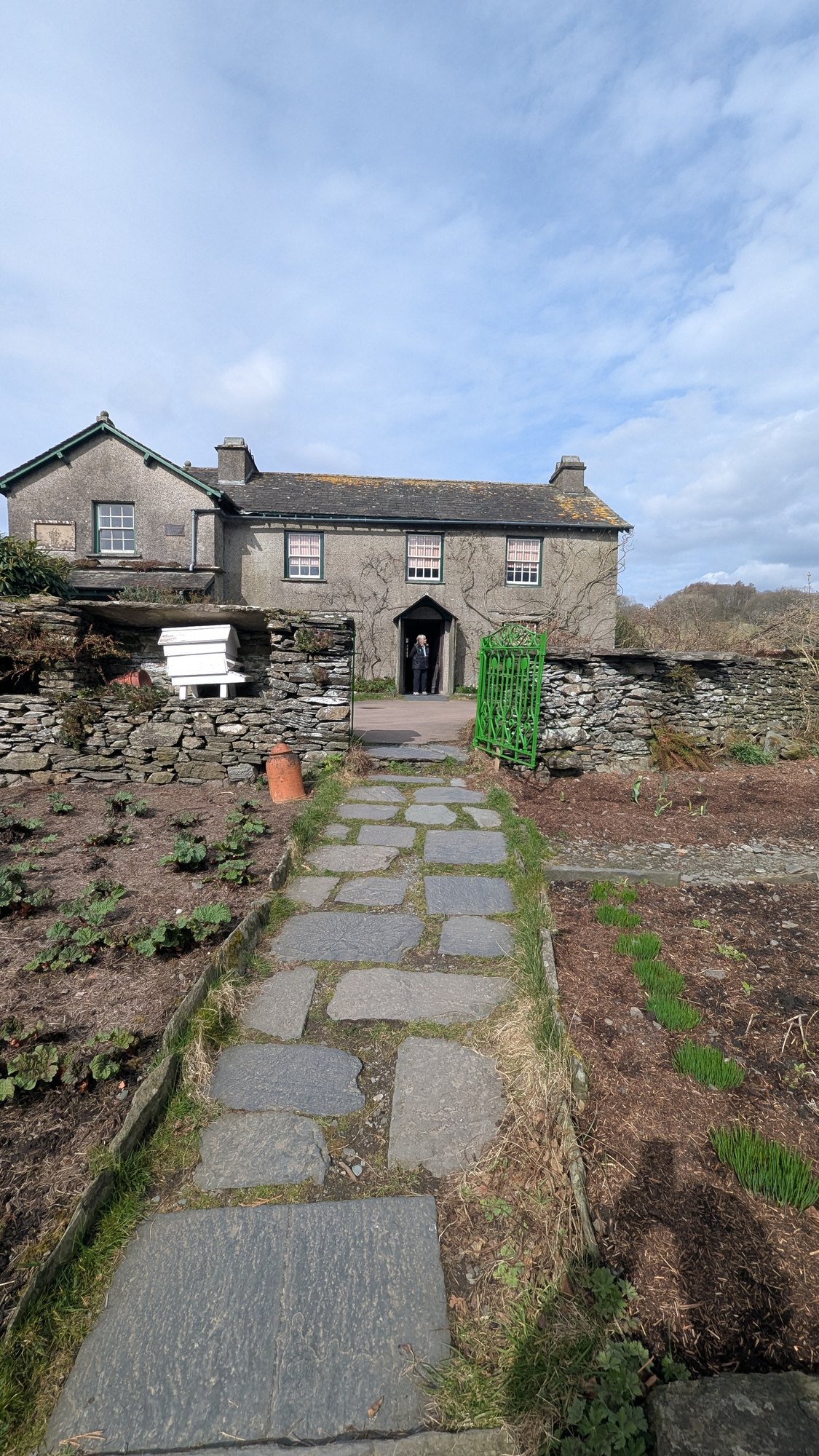
Hill Top, Beatrix Potter's farmhouse at Near Sawrey in the Lake District
Author · farmer · conservationist The free places too

Beatrix Potter's Lake District

The honest, independent guide to her Lakeland — which attractions are worth your time and which aren't, the ferry route nobody explains, the places that are free, and the tales that live in the real landscape.

Beatrix Potter is remembered worldwide for Peter Rabbit and a shelf of little books — but in the Lake District she was something bigger. She used the fortune from those books to become a serious Lakeland farmer, a breeder and champion of the Herdwick sheep, and one of the most important conservationists this country has produced. When she died she left almost all of it to the National Trust, and that gift is a large part of why the central Lakes still look the way they do.

This is the guide the official sites can't write: the two ticketed attractions and whether each is for you, the Windermere ferry route to her farmhouse, the free Beatrix Potter, and the tales set in real, findable places — from the Hill Top farmyard to Catbells and Derwentwater.

The attractions The free places The ferry route Her legacy Tales in the landscape Make it a day FAQ

Which one is for you?

The two ticketed attractions

There are two places you pay to go in, and they could not be more different — one is the real thing, one is built for small children. Knowing which is which saves a wasted afternoon. (All admission is ticketed — book online for current prices.)

National TrustTimed ticket

Hill Top, Near Sawrey

Her actual farmhouse, bought in 1905 and left exactly as she arranged it — the rooms, the furniture and the objects that appear in the tales are all still here. For anyone who grew up with the books it's genuinely moving. But it's small and hugely popular: entry is by timed ticket, so book ahead in season, the 17th-century rooms are tiny, and queues build on summer afternoons. The shop and the cottage garden are free to wander; the small car park is free but limited (about two hours, no campervans).

Best for: literary pilgrims and fans of the books

Book & check times at the National Trust
Ticketed attractionBowness

The World of Beatrix Potter

An indoor attraction on Crag Brow in Bowness (LA23 3BX) with recreated three-dimensional scenes from the tales. It's built for young children and fans of the characters — most families with little ones love it, and it takes about 45–60 minutes. Adults visiting without children may find it aimed at a younger audience. The shops and the Peter Rabbit café are free to enter; assistance dogs only; nearest parking is Rayrigg Road pay & display (10–15 min walk). It's closed Christmas Day and for a short maintenance period in January (dates change — check before you go).

Best for: families with young children

Tickets & current prices
National TrustFree to enter

Tabitha Twitchit's Bookshop, Hawkshead — the former Beatrix Potter Gallery

If you're looking for the old Beatrix Potter Gallery in Hawkshead, here's what's changed: it closed in 2022 (the building's humidity was no longer safe for hanging her original artwork), and in August 2025 it reopened as "Tabitha Twitchit's Bookshop" — the National Trust's first standalone second-hand bookshop, named after one of Potter's cat characters. The building itself is the real story: it was the solicitor's office of William Heelis, and it's believed to be where Beatrix first met the local solicitor she would marry in 1913. So the marriage that made her a Lakeland farmer began right here. It's free to browse — check the National Trust for current opening.

Best for: browsers, quieter days, and the William Heelis story — not the original-artwork gallery it used to be

Current opening at the National Trust

Costs nothing

The free Beatrix Potter

Some of the most rewarding Potter experiences don't cost a penny — you just need to know where to look.

Wray Castle grounds

Where it started. Potter's family rented Wray for a holiday in 1882, when she was sixteen — her first sight of the Lake District, and where she met Hardwicke Rawnsley, later a founder of the National Trust. She never lived there, but the rest of her Lakeland life follows from that summer. The grounds are free; the castle building is currently closed for refurbishment. Full Wray Castle guide.

Near Sawrey village

The village around Hill Top is itself straight from the books — lanes, cottages and the farmyard that appear in the tales. Wandering it (respectfully — people live here) is free and often the most atmospheric part of a visit.

Moss Eccles Tarn

The little tarn above Near Sawrey that Potter bought, stocked with fish and planted with water lilies — she used to row on it. It's reachable on foot from the village on National Trust permissive and public paths (can be muddy). A quiet, lovely walk.

Yew Tree Farm, near Coniston

A farm Potter owned and left to the National Trust — and the one that stood in for Hill Top in the 2006 film Miss Potter. It's a working hill farm with its distinctive spinning gallery, and offers B&B; check locally for any current tearoom hours.

The landscape she saved

The biggest free experience of all: the Herdwick-grazed fells and valleys she bought and gave to the nation. Half the central Lakes is her legacy — see below.

The bit nobody explains

Getting to Hill Top from Windermere & Bowness

Hill Top is on the quiet western side of Windermere, and the nicest way there is also the one visitors find most confusing. From Bowness, take the Windermere Ferry — the little chain car-and-foot ferry from Ferry Nab — across to Ferry House at Far Sawrey. The crossing takes about ten minutes and you can't pre-book; foot passengers, bikes and cars all cross.

From the western landing it's roughly 1.5 to 2 miles (about 30–45 minutes, uphill) on to Near Sawrey and Hill Top. A seasonal connecting bus (the Cross Lakes link) has run in past years, but whether it runs varies year to year — check the current timetables rather than relying on it. Right by the western landing is Claife Viewing Station, so the ferry side is a half-day in itself.

By car, you drive round the head or foot of the lake via Hawkshead to the small National Trust car park at Hill Top — but that car park is limited and fills fast, which is another reason the ferry-and-walk is often the better plan in season.

National TrustFree

Claife Viewing Station

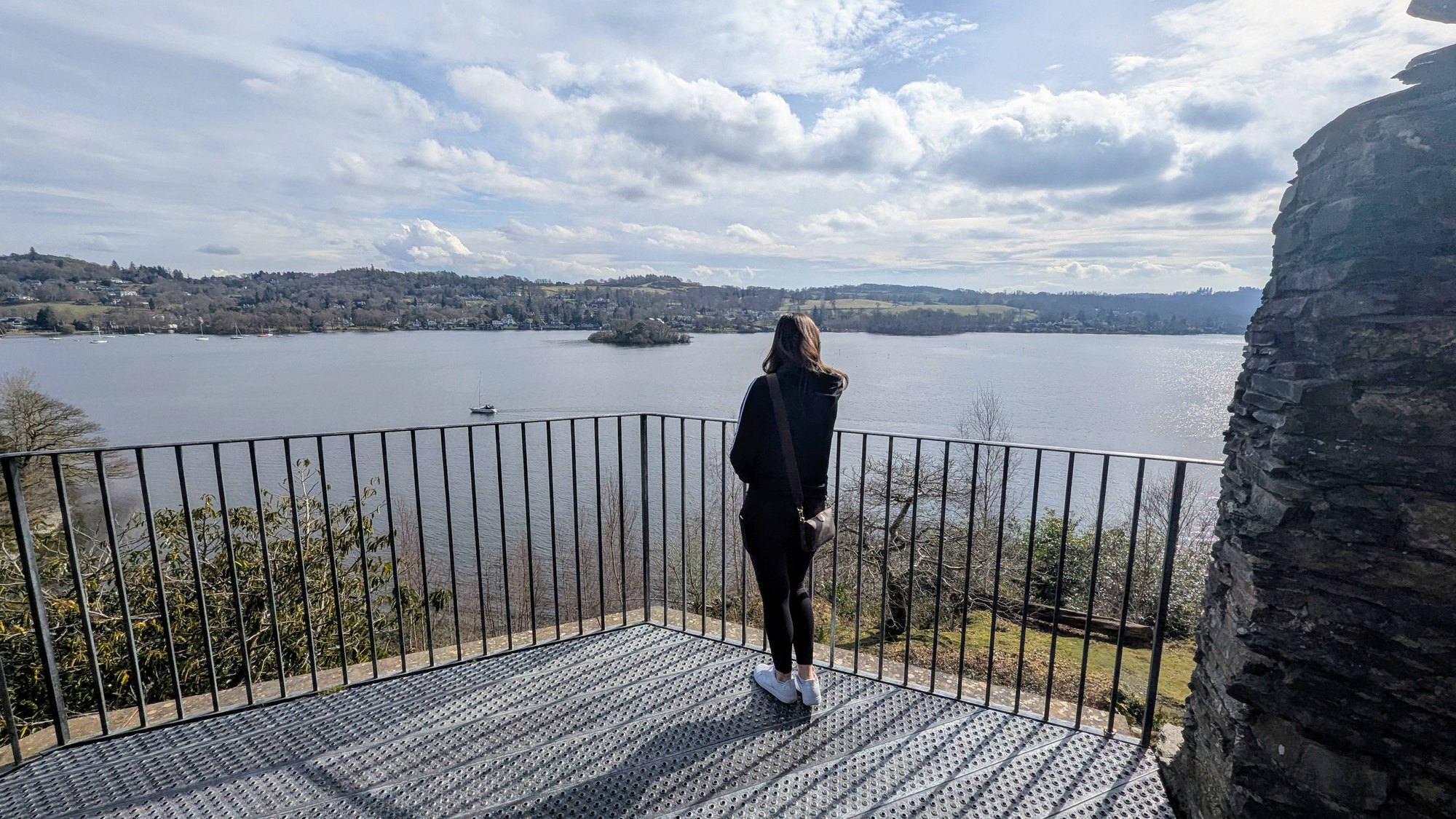
Just up from the ferry's western landing is one of the Lakes' loveliest free surprises: Claife Viewing Station, a restored Georgian folly built so that early tourists could admire framed views of Windermere through coloured glass. The restored viewing room still frames the lake beautifully, and it answers the honest question "is there anything else over on that side?" — yes, and it's the first thing you reach.

It's free and open-air, so you can visit any time, and there's a seasonal café in the courtyard (currently Joey's, roughly daytime hours in season). A perfect first stop before the walk up to Hill Top.

Her real legacy

The farmer who saved half the central Lakes

Potter poured her book earnings into land. Farm by farm, she bought up properties across the southern and central Lakes to keep them from development and to protect the Herdwick sheep and the hill-farming way of life — she became a respected breeder and judge of Herdwicks herself, working closely with her shepherds.

When she died in 1943 she left the National Trust around 4,000 acres of land and roughly fourteen to fifteen farms, along with her Herdwick flocks — one of the most significant gifts the Trust has ever received. It's why so much of the landscape between Windermere, Coniston and the central fells remains open, grazed and unspoilt. When you look out over those valleys — or up at the fells on our mountains & fells and Wainwrights pages — a great deal of what you're seeing survives because of her.

Where the stories really live

The tales set in the real Lakes

Several of the little books are set in places you can actually stand in — split between the Sawrey farmyard she knew as home, and the Keswick and Derwentwater country where she spent childhood summers.

Around Hill Top & Near Sawrey

Her farmhouse and its village star in several tales: The Tale of Samuel Whiskers / The Roly-Poly Pudding and The Tale of Tom Kitten (the Hill Top house and garden), The Tale of Jemima Puddle-Duck (the farmyard — and the Tower Bank Arms next door appears in it), The Tale of Pigling Bland, and the village-shop tales The Pie and the Patty-Pan and Ginger and Pickles.

Around Keswick & Derwentwater

On childhood summers at Lingholm and Fawe Park she sketched the country that became: The Tale of Mrs Tiggy-Winkle, set in the Catbells and Newlands valley (Catbells is given as the hedgehog-washerwoman's very address); The Tale of Squirrel Nutkin, set on Derwentwater, whose "Owl Island" is really St Herbert's Island; and The Tale of Benjamin Bunny, whose garden is the kitchen garden of Fawe Park on the lake's western shore.

Myth-buster — Peter Rabbit isn't a Lakeland tale. The one everyone assumes is set here actually isn't: The Tale of Peter Rabbit grew from a picture-letter Potter wrote in 1893 while staying in Perthshire, Scotland. She didn't buy Hill Top until 1905. Peter Rabbit is Scottish in origin — it's her other tales that put the Lake District on the page.

On the ferry side

Where to eat near Hill Top

The western side is quiet and there aren't many options — which matters more here than in a busy town. Our honest advice: book ahead, or plan to eat in Hawkshead or back across the ferry.

Tower Bank Arms

The pub right next door to Hill Top in Near Sawrey — National Trust-owned, and genuinely drawn into The Tale of Jemima Puddle-Duck. As atmospheric as it sounds, and tiny, so it fills fast in season — worth booking.

Cuckoo Brow Inn

A short way off at Far Sawrey (formerly the Sawrey Hotel), handy for the ferry side with rooms and food. Check current opening before you rely on it.

Claife / the ferry landing

The Claife Viewing Station café (seasonal) is right by the western landing for a coffee or a light bite before or after the walk.

From our own visit (midsummer): the far-side places were full, and we ended up driving back towards Ambleside to eat. It's a genuinely quiet corner — lovely, but come with a booking or a plan B in Hawkshead, especially in high season.

Our field-tested route

Make it a day

  1. 1

    Ferry across from Bowness to the western shore — leave the car in Bowness and go on foot.

  2. 2

    Claife Viewing Station — the framed Windermere views, right by the landing (free), and a coffee at the café.

  3. 3

    Walk up to Hill Top at Near Sawrey (pre-book your timed entry) via the lane — about 30–45 minutes.

  4. 4

    Food on the far side — booked ahead at the Tower Bank Arms, or plan for Hawkshead.

  5. 5

    Ferry back. Extend the day with the Hawkshead village and bookshop, or — with young children — the World of Beatrix Potter back in Bowness.

Common questions

Beatrix Potter, answered

Is Beatrix Potter's house worth visiting?
For fans of her books, Hill Top is magical — it's her actual farmhouse, kept as she left it, and you recognise rooms and objects straight from the tales. But go in with the right expectations: it's a small 17th-century cottage, not a big museum, entry is by timed ticket, the rooms are tiny and it gets busy and queued in high summer. Literary pilgrims love it; anyone expecting a large visitor attraction can find it underwhelming.
Where did Beatrix Potter live in the Lake District?
Her best-known home is Hill Top at Near Sawrey, bought in 1905. After marrying the local solicitor William Heelis in 1913 she lived nearby at Castle Cottage and farmed land across the southern Lakes. As a child she also spent long family holidays near Keswick — at Lingholm and Fawe Park on Derwentwater — which inspired several of the tales.
How do I get to Beatrix Potter's house from Windermere?
From Bowness, take the Windermere Ferry across to Ferry House (Far Sawrey), then it's roughly 1.5–2 miles (30–45 minutes, uphill) on to Near Sawrey and Hill Top. A seasonal connecting bus (the Cross Lakes link) has run in the past but varies year to year, so check current timetables. By car you drive round via Hawkshead to the small National Trust car park at Hill Top.
Is the World of Beatrix Potter worth visiting?
It's built for young children and fans of the characters — an indoor attraction of recreated scenes that most families with little ones enjoy, taking about 45–60 minutes. Adults visiting without children hoping for a serious museum will find it aimed at a younger audience. The shops and the Peter Rabbit café are free to enter.
How long does it take to go around the World of Beatrix Potter?
Allow about 45 to 60 minutes for the attraction itself, a little longer if you add the café and shops.
Did Beatrix Potter live in the Lake District, and is Peter Rabbit set there?
Yes — she lived at Hill Top and became a major Lakeland farmer and conservationist. But The Tale of Peter Rabbit did not originate in the Lakes: it grew from a picture-letter she wrote in 1893 while staying in Perthshire, Scotland. Several of her other tales, though, do use real Lake District settings — from the Hill Top farmyard to Catbells and Derwentwater.
How much of the Lake District did Beatrix Potter buy?
A great deal. On her death in 1943 she left the National Trust around 4,000 acres of land and roughly fourteen to fifteen farms (sources vary slightly on the count), together with her flocks of Herdwick sheep — one of the most significant single gifts the Trust has ever received, and a large part of why the central Lakes look as they do.
Where is Beatrix Potter buried?
There is no public grave. She was cremated, and her ashes were scattered in the countryside around Near Sawrey by her farm manager Tom Storey, who was asked to keep the exact spot secret. He never revealed it, so the precise location is unknown — which is exactly how she wanted it.
How is Beatrix Potter related to Kate Middleton?
Genealogists have reported a distant family connection between Beatrix Potter and Catherine, Princess of Wales, through the Lupton family of Leeds — a remote, collateral link rather than a close blood relationship. It's a genuine talking point rather than an established close kinship, so it's best treated as an interesting footnote.

Plan the rest of your day