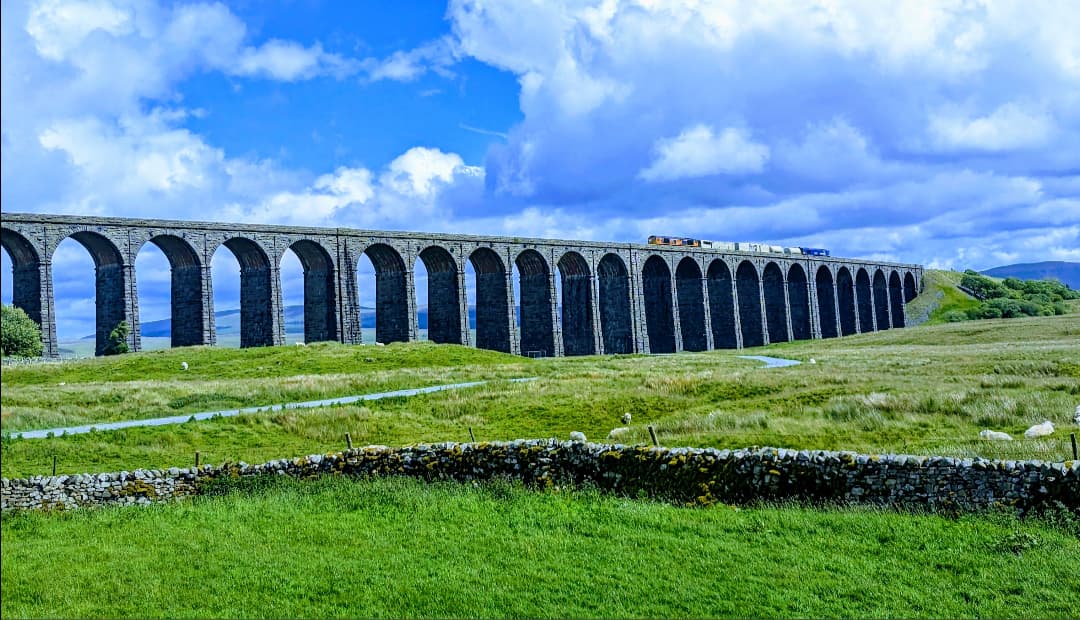
The distinctive story
Building the viaduct: the lost navvy village
When the Midland Railway drove its line over these moors from 1869, there were no machines for the heavy work — it was done by hand, by an army of navvies (navigators) who lived where they worked. At its peak the project employed up to 2,300 men, and on the open ground beside Batty Moss they and their families built a sprawl of timber shanty towns: temporary settlements with their own shops, schoolrooms, chapels, a hospital and a pub, in one of the bleakest spots in England.
Clustered around the main construction site known as Batty Green, the camps had names borrowed, half-jokingly, from the news of the day and the smart streets of London — Batty Wife Hole, Sebastopol and Belgravia among them. Life there was hard and often short: accidents on the works, the brutal weather, and a smallpox outbreak that swept the camps all took lives. Over 100 men died during construction — and a great many women and children too — with the dead buried in the nearby churchyard at Chapel-le-Dale, where a memorial remembers those who died building the line.
When the work moved on, the town vanished almost completely. Today it's grass and rushes — but walk the ground with this in mind and the low humps, platforms and tramway lines of the old camps are still there to read in the moor; the site is now a scheduled ancient monument. That's what makes the Ribblehead walk different from a simple photo stop: you're walking through a place where a whole community once lived and died, and the only monument left is the viaduct they raised.
And it nearly went. By the 1980s the viaduct was decaying and British Rail proposed closing the whole Settle–Carlisle line. A determined public campaign fought the closure, the line was reprieved, and the viaduct was repaired — with the track relaid as a single line over the structure to reduce the stress on it. That's why you can stand under it today.