A shingle bay on the Ullswater shore between Glenridding and Aira Force, with trees at the waterline and a National Trust car park across the road. Here is how the parking works, where the free spaces are, and what you will find on the shore.
Parking & getting there
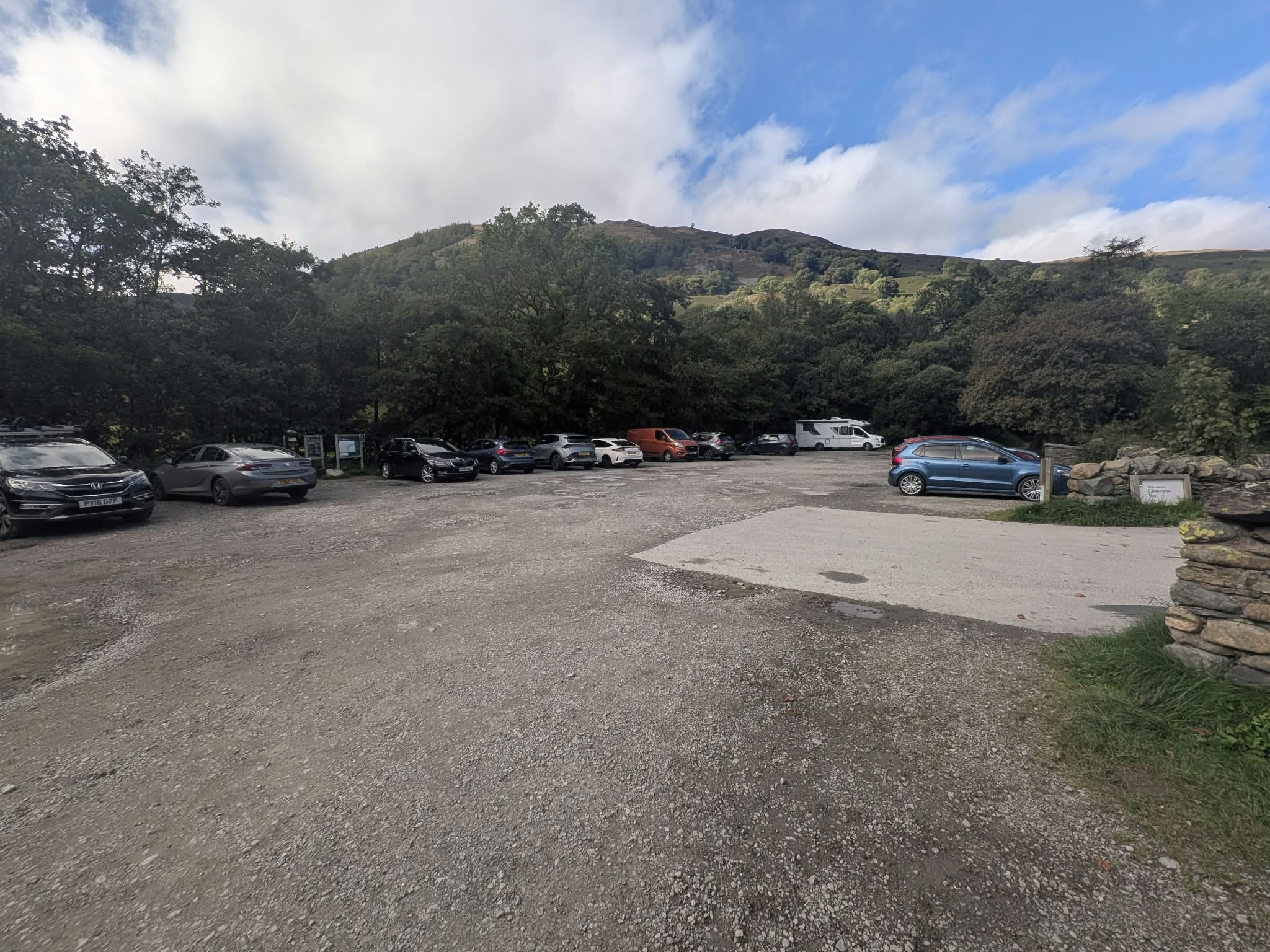
Glencoyne Bay sits on the A592 along the western shore of Ullswater, between Glenridding and Aira Force. The National Trust car park is on the landward side of the road, with the shore a short walk across it. It is a gravel car park with room for roughly 30 to 50 cars.
Pay by coins at the machine, or through the JustPark app, location 80501. National Trust members scan their membership card at the machine or validate in JustPark. Blue Badge holders park free.
No overnight parking, and the car park is monitored. For current charges, see the National Trust's Aira Force and Gowbarrow Park page.
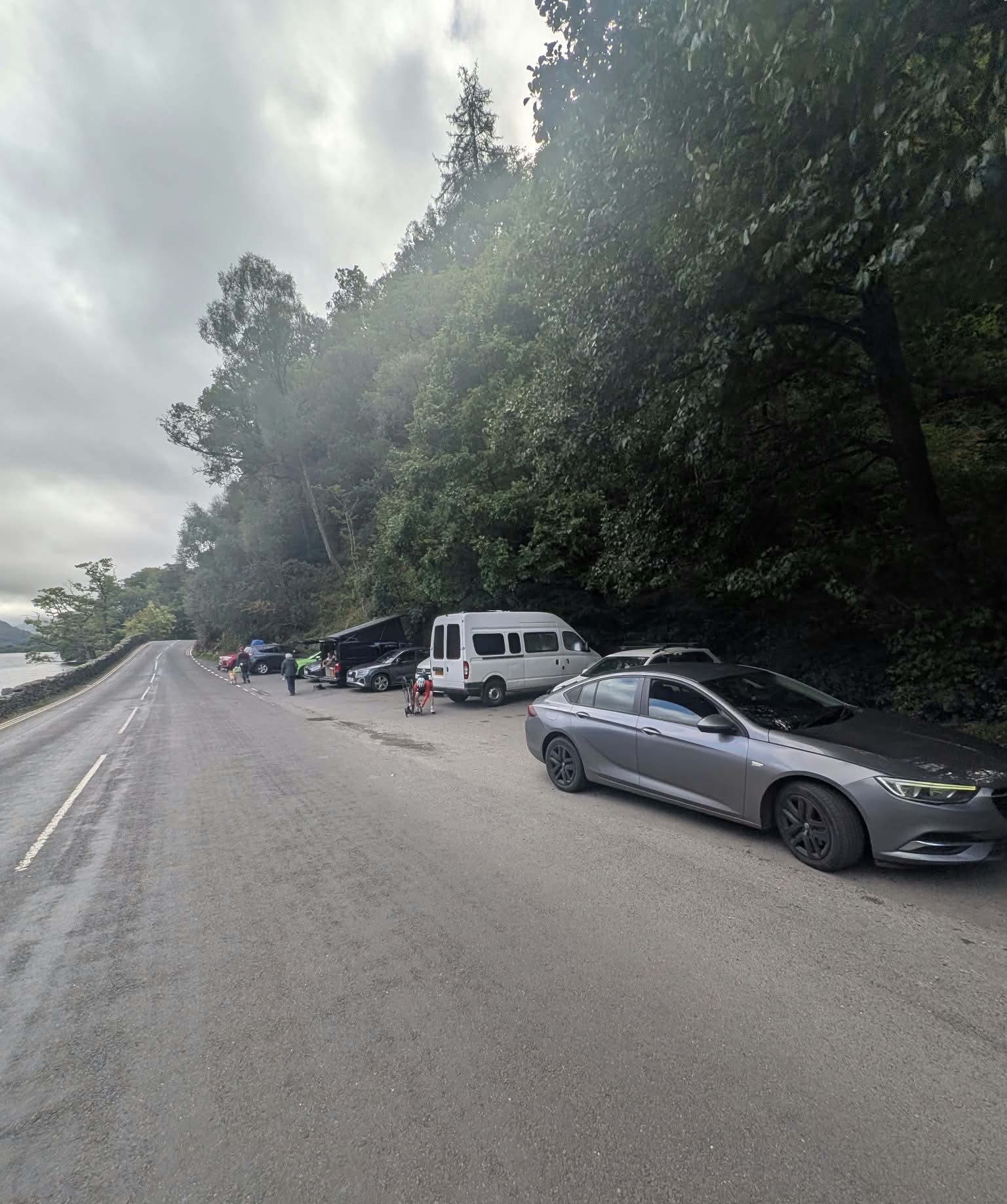
/// what3words — Glencoyne car park ///confirms.loosed.encodes Postcode CA11 0QT · grid ref NY386188 (both from the National Trust).There are six small laybys on the A592 between Glencoyne Bay and the bus stop below — three on each side of the road, along a stretch of less than a mile. Each takes two or three cars at most.
They are free, and that is exactly why they fill early. On a fine day, if you are not there first thing, plan on the car park.
Stagecoach's 508 and 509 stop on the A592 by Glencoyne, with buses stopping on both sides of the road. Check routes and times with Stagecoach or Traveline.
/// what3words — bus stop ///them.fillings.choppers The laybys run between here and the bay.

Facilities
None in the car park and none on the shore. The National Trust board in the car park gives the nearest as:
Both distances are the board's. Go before you settle on the beach.
The lakeshore
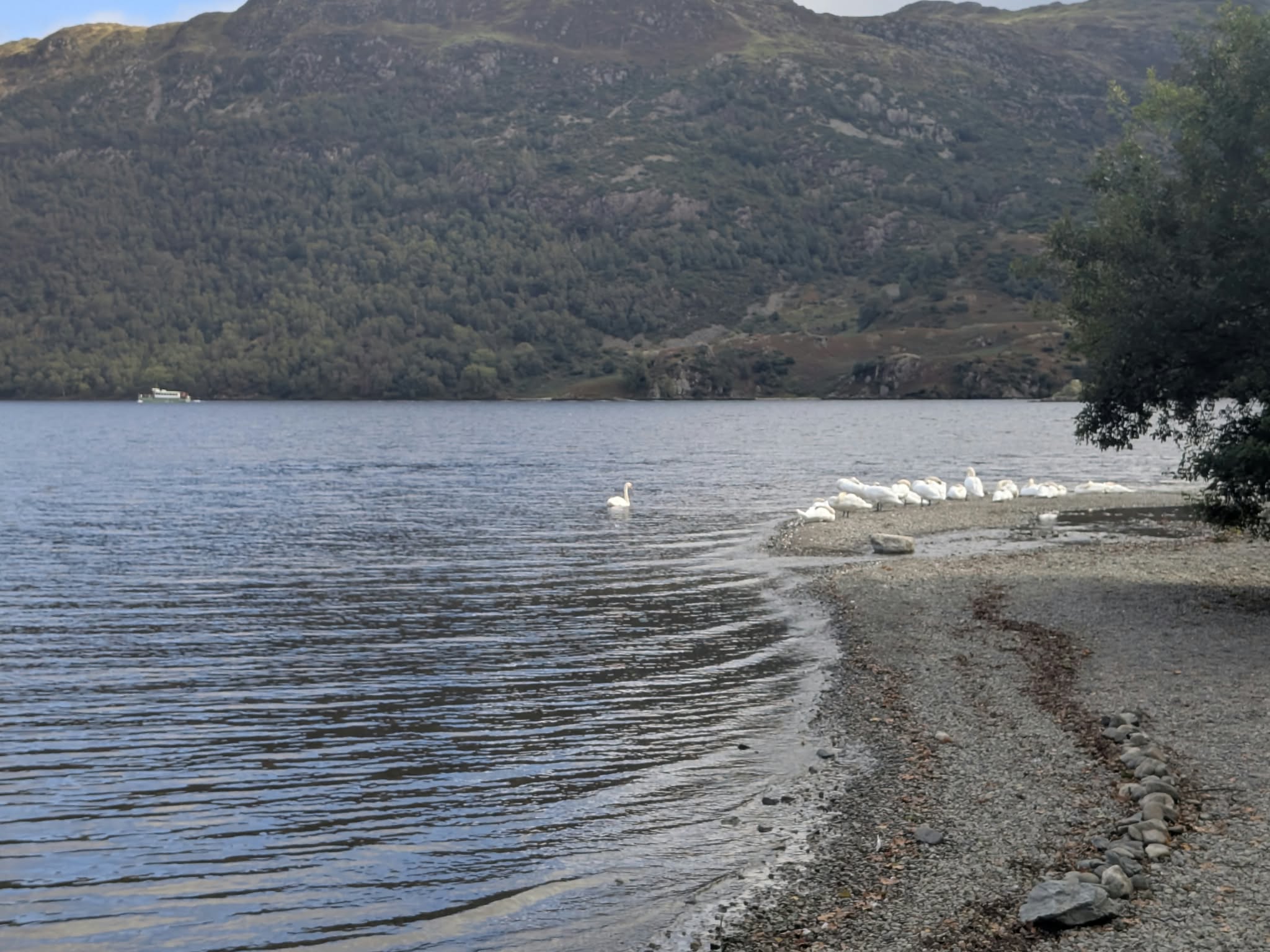
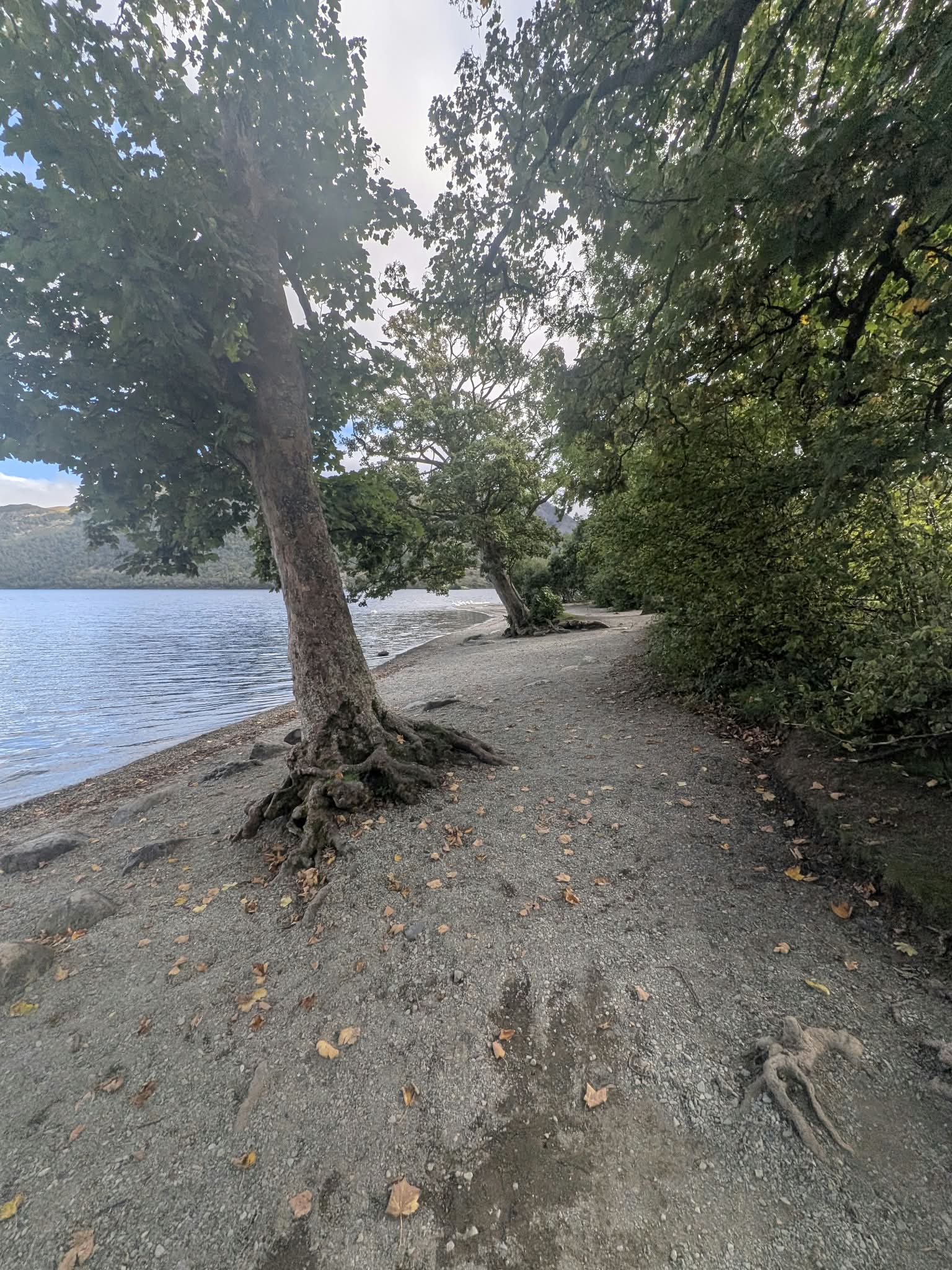
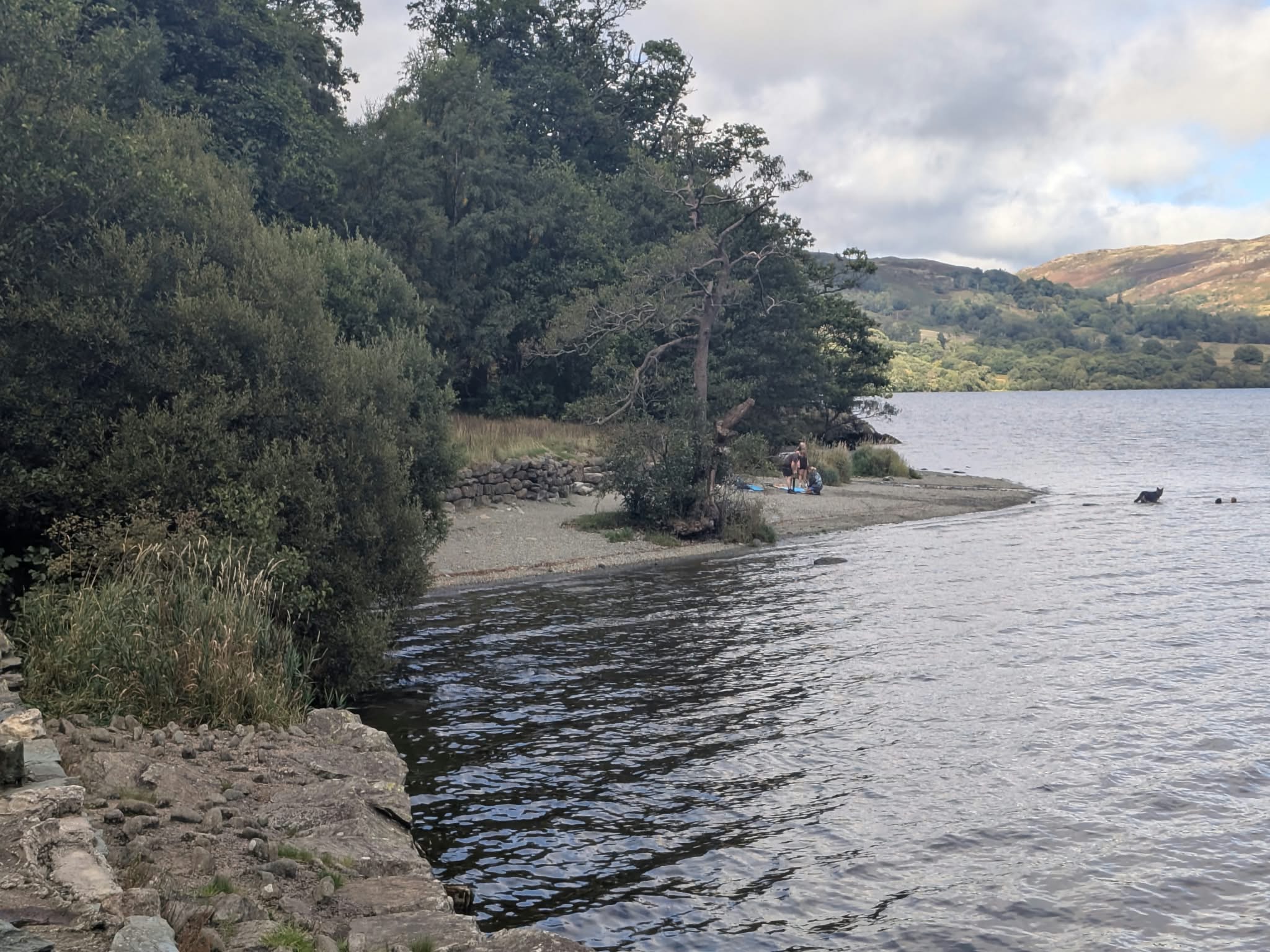
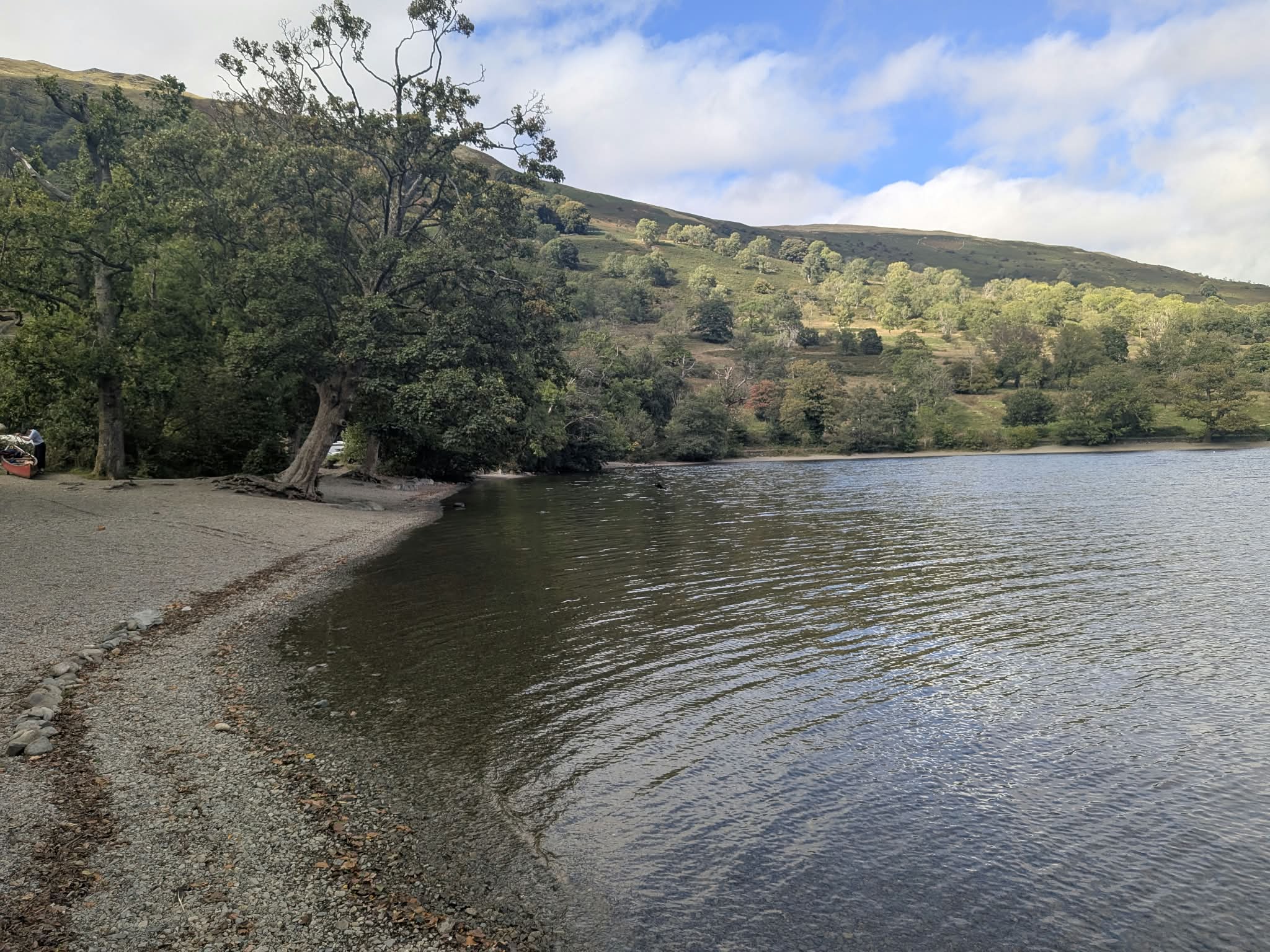
The bay is a shingle beach curving round to a low spit, with old trees leaning out over the water and a lakeshore path running under them. It is the kind of shore you can sit on for an hour: flat stones, clear water, and the fells of the far side of Ullswater filling the view.
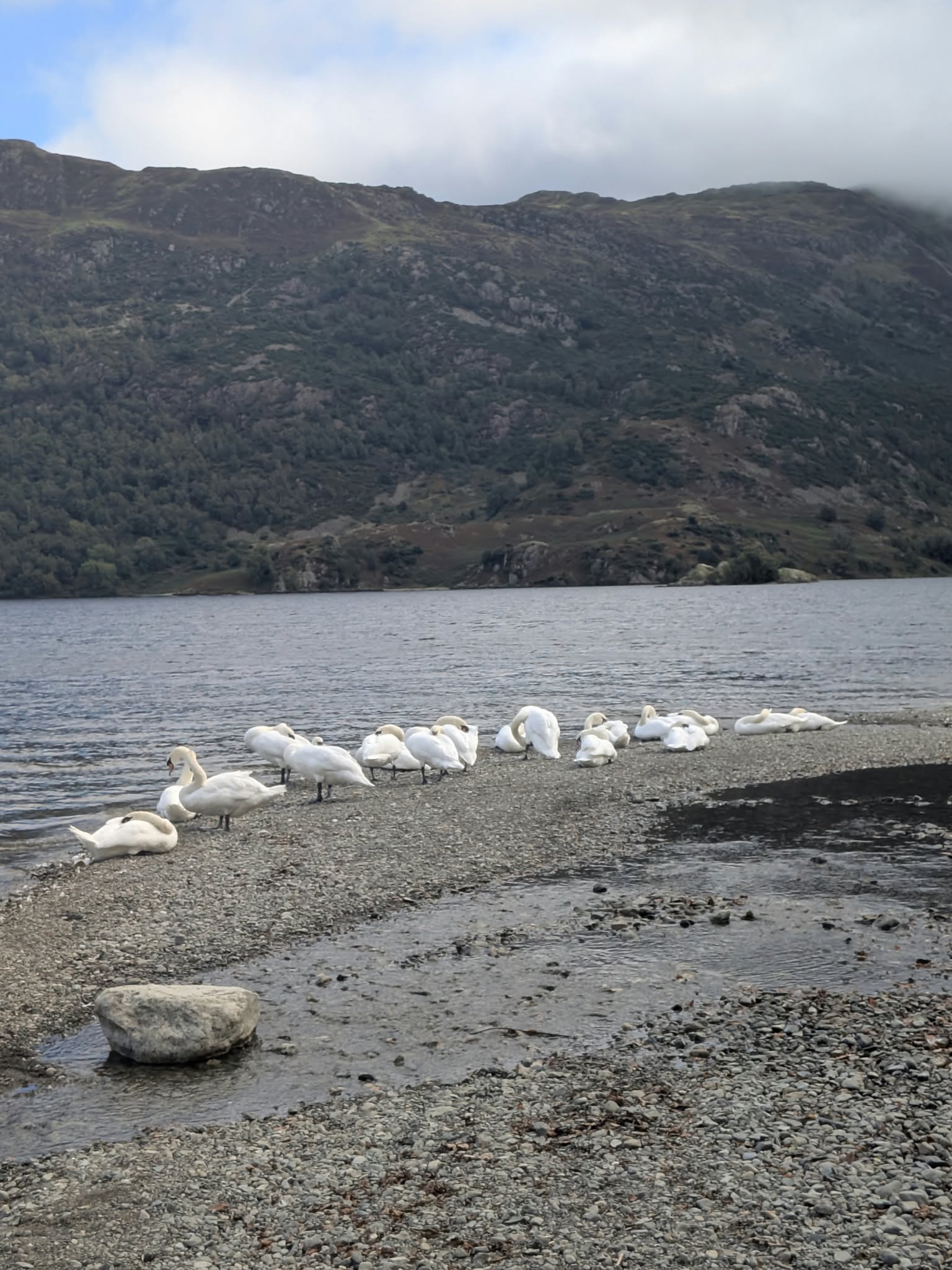
On our visit there was a canoe pulled up on the beach and a group of swans on the shingle spit. They were there that morning; that does not mean they always are.


In the water
On our visit, people were swimming off the shingle spit: shallow shingle to walk in from, and open water beyond. For how to swim Ullswater safely, see our wild swimming guide; for paddle craft, our Ullswater paddleboarding guide.

Coffee
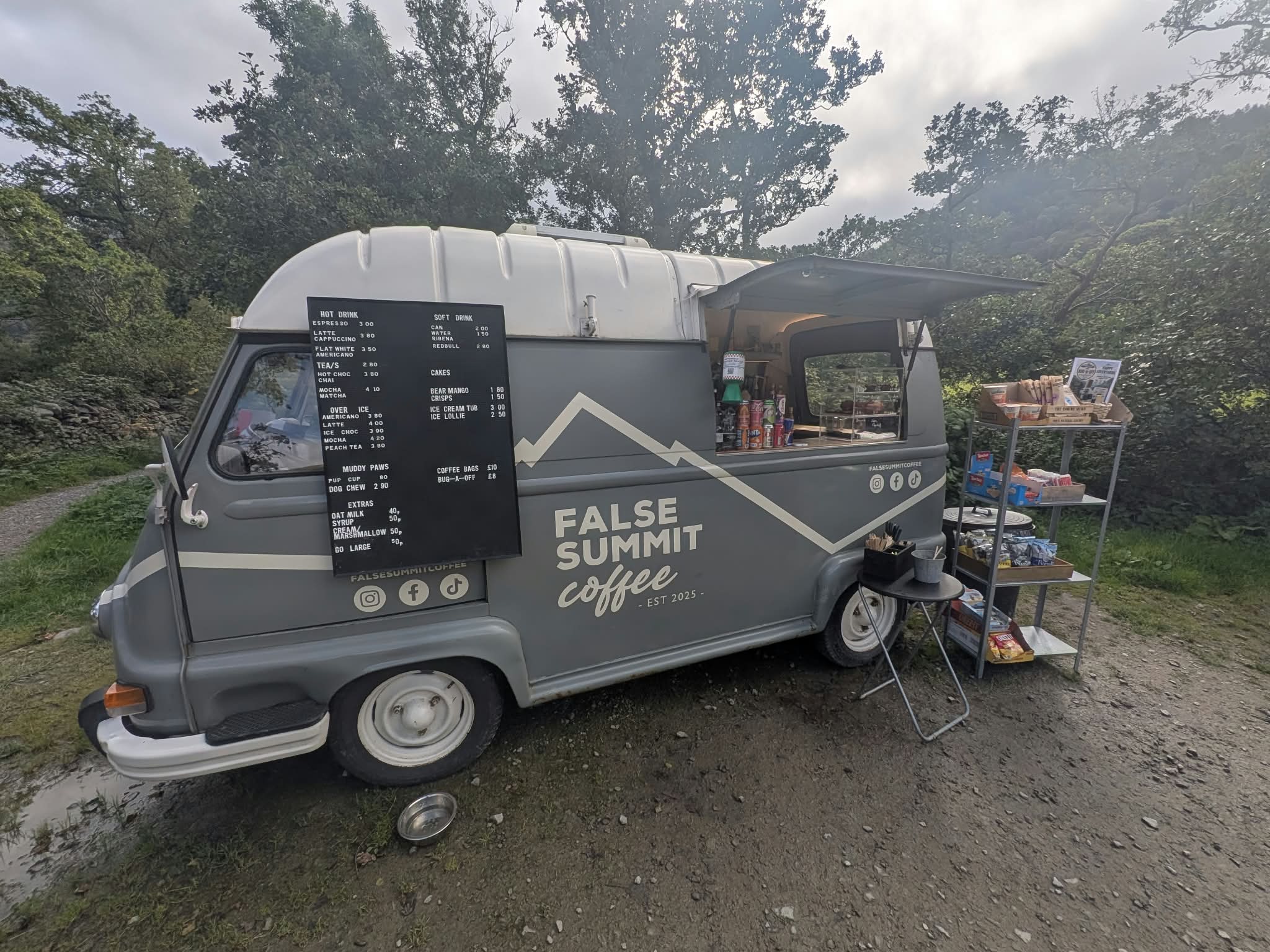
False Summit Coffee is a converted vintage van — a 1970 van called Florence, according to its owners — that was trading at Glencoyne on our visit. Glencoyne is its regular pitch. The van says it was established in 2025, and it has a dog menu and a water bowl out.
It trades seasonally, roughly March to October, and some days it is away at shows and events. The van posts its location every morning on Instagram (@falsesummit_coffee), so check there before you make a special trip.
Planning an event? The van can be hired — see Book the Van on their website.

Glencoyne Farm
Glencoyne itself is a working hill farm, and the National Trust has waymarked a circular trail round it that starts from the Glencoyne car park. It is 3 miles (4.8 km) and takes about 2 hours.
It is steep in places and can be boggy. There is livestock throughout, and two road crossings on the A592.
The National Trust lists this trail as not suitable for dogs. If you have a dog with you, stick to the shore. Full route and current guidance: Glencoyne Farm trail (National Trust).
Nearby
Aira Force is 1.2 miles along the A592 to the left out of the car park — one of the best-known waterfalls in the Lakes, covered in our Lake District waterfalls guide. The National Trust board names a tea-room at Aira Force and Gowbarrow Park, which is also where the nearest toilets in that direction are.
Turn right instead and Glenridding is 1.4 miles away, with the steamer pier, the pubs and the Helvellyn paths. For the whole lake — steamers, walks and villages — start with our Ullswater guide.
Dogs: the National Trust asks for dogs to be kept on leads around Glencoyne, to protect wildlife and the livestock on the farm.
Common questions
Keep exploring