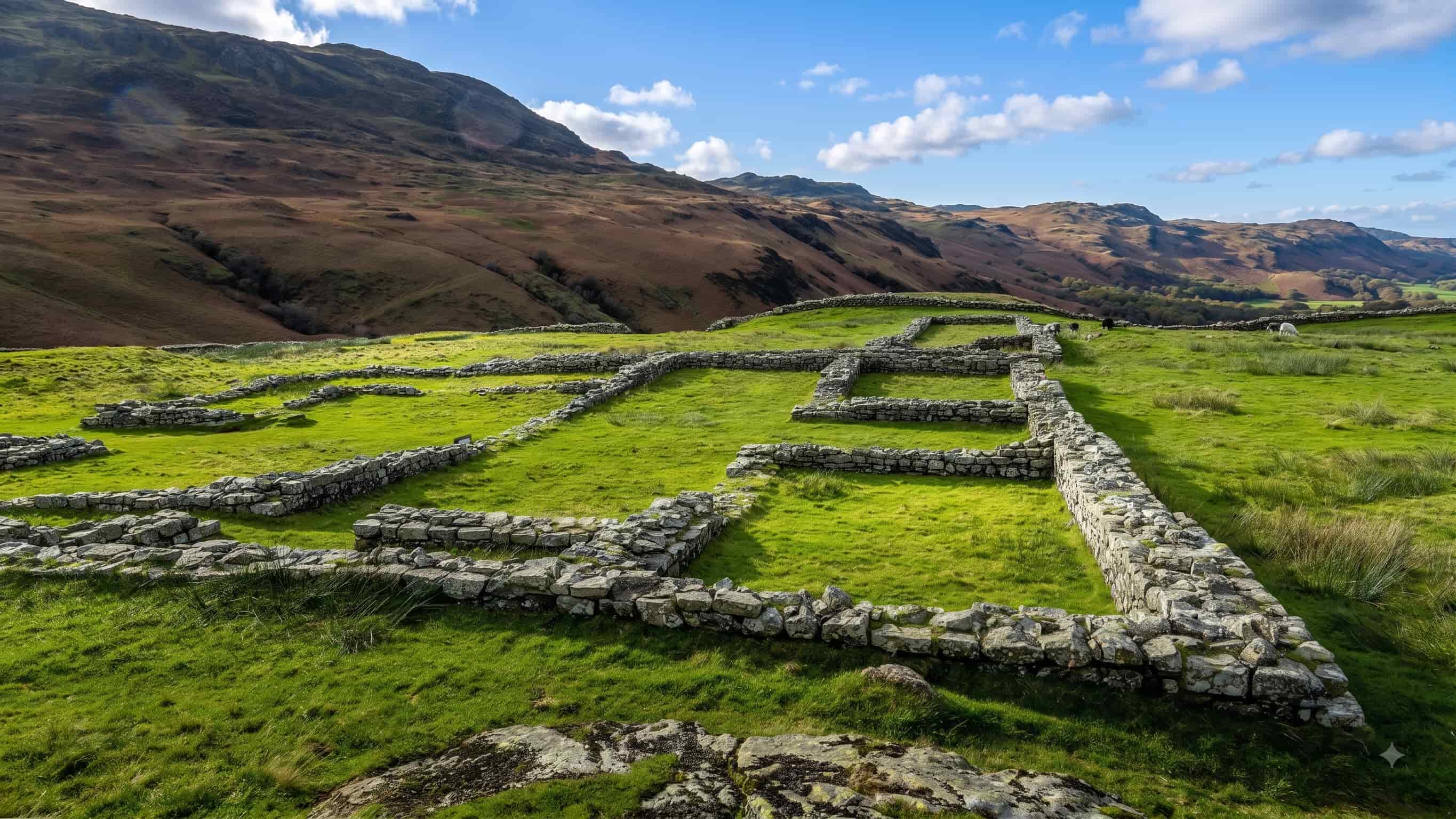
A western valley with a working water mill, a seven-mile steam railway and a Roman fort road at its head — and far fewer people than the valleys an hour east of it.
Start here
Eskdale is a western valley in the Lake District National Park. It runs inland from the coast at Ravenglass, through Eskdale Green in the lower valley, up to the hamlet of Boot at its head — where the road stops being a valley road and starts climbing Hardknott Pass.
One thing to get straight before you plan anything: there is more than one Eskdale. There is an Eskdale in Scotland with a newspaper named after it, and another in Derbyshire. Search the bare word and you will get all of them. Search "Eskdale, Cumbria" or "Eskdale valley" and you will get this one.
There are two ways in, and they are not equivalent.
From the coast — the A595 to Ravenglass, then inland up the valley. Longer on the map from the central Lakes, and the one that works all year.
From Ambleside and the central Lakes — over Wrynose and then Hardknott, dropping into the head of the valley at Boot. Short on the map, and a serious drive.
Eskdale Mill tells its own visitors not to trust sat nav — because from Ambleside it routes them over Wrynose and Hardknott, which the mill describes as "very difficult even in good conditions". When the operator at the far end of the road is the one issuing the warning, it is worth taking seriously. Read what Hardknott actually involves before you commit a car, a caravan or a booked day to it.
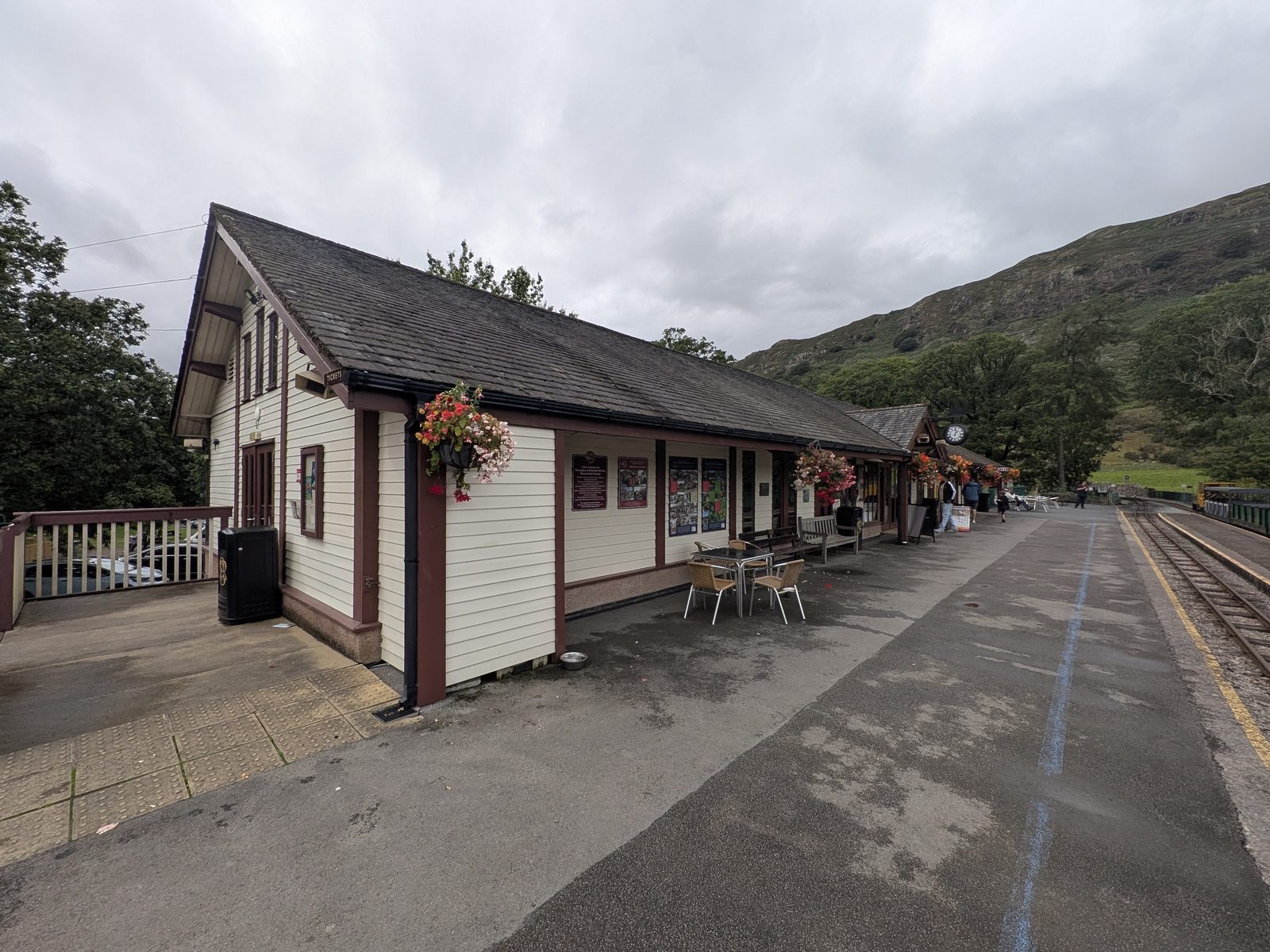
By rail: Northern's Cumbrian Coast line serves Ravenglass, at the seaward end of the valley. From there the Ravenglass & Eskdale Railway runs the seven miles up to Dalegarth for Boot — which makes Eskdale one of the few Lakeland valleys you can reach, and then travel through, entirely without a car.
By bus: Stagecoach 7 and X7 serve the coast road.
The short version
Eskdale is a small valley and it does not take much planning. Five things carry most of a visit, and each has its own section further down this page.
Seven miles from the coast at Ravenglass up to Dalegarth for Boot, about 40 minutes each way.
The last remaining working water-powered corn mill in the National Park — and closed Fridays.
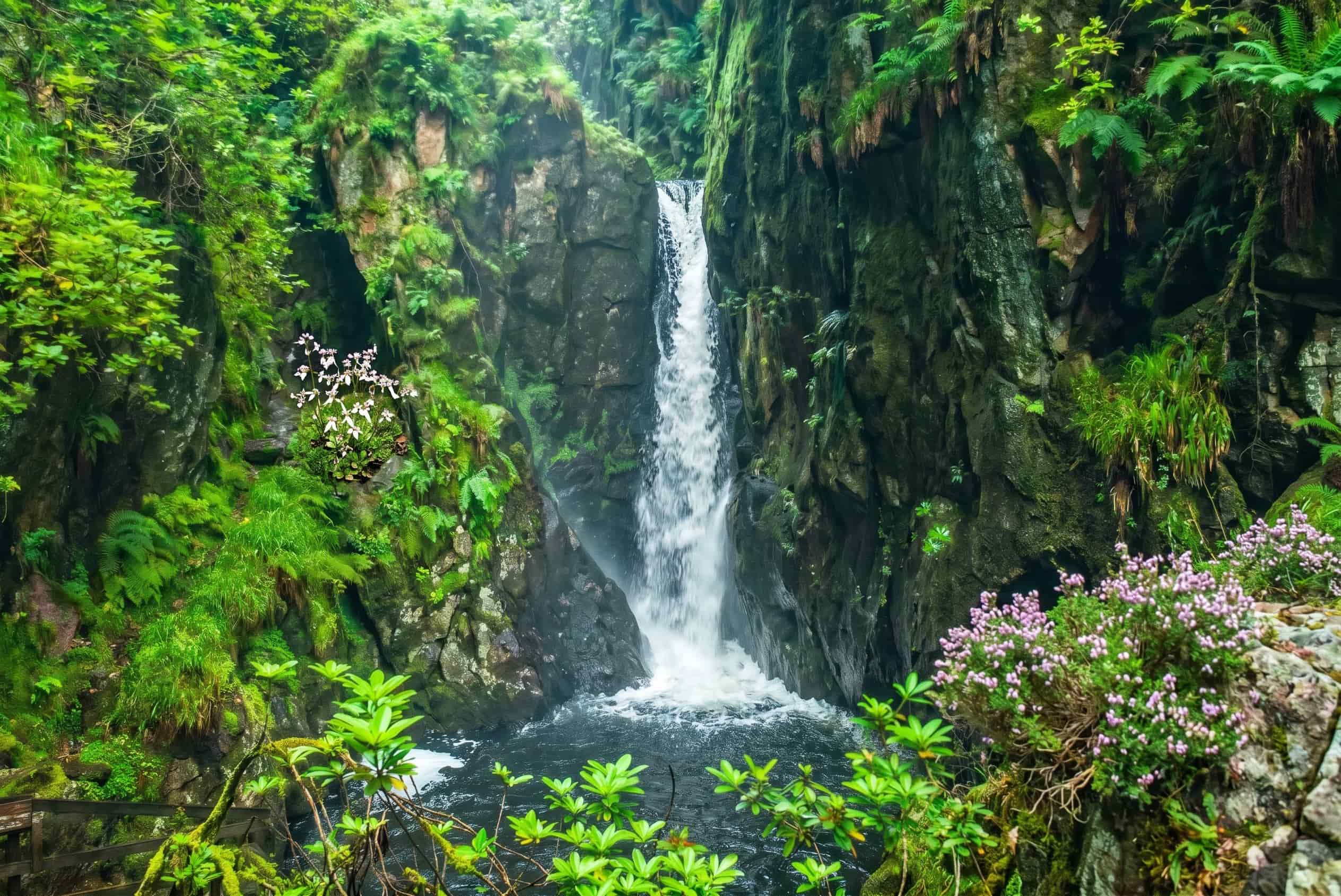
A 60-foot fall in a mossy gorge, seen from a high-level viewing platform. Check signage on site.
A recently upgraded riverside route running with the Esk from Ravenglass to Dalegarth.
A Roman fort on the pass road at the head of the valley, with the view that goes with the altitude.
The lower valley's own settlement — a separate place from Boot, and often confused with it.
The head of the valley
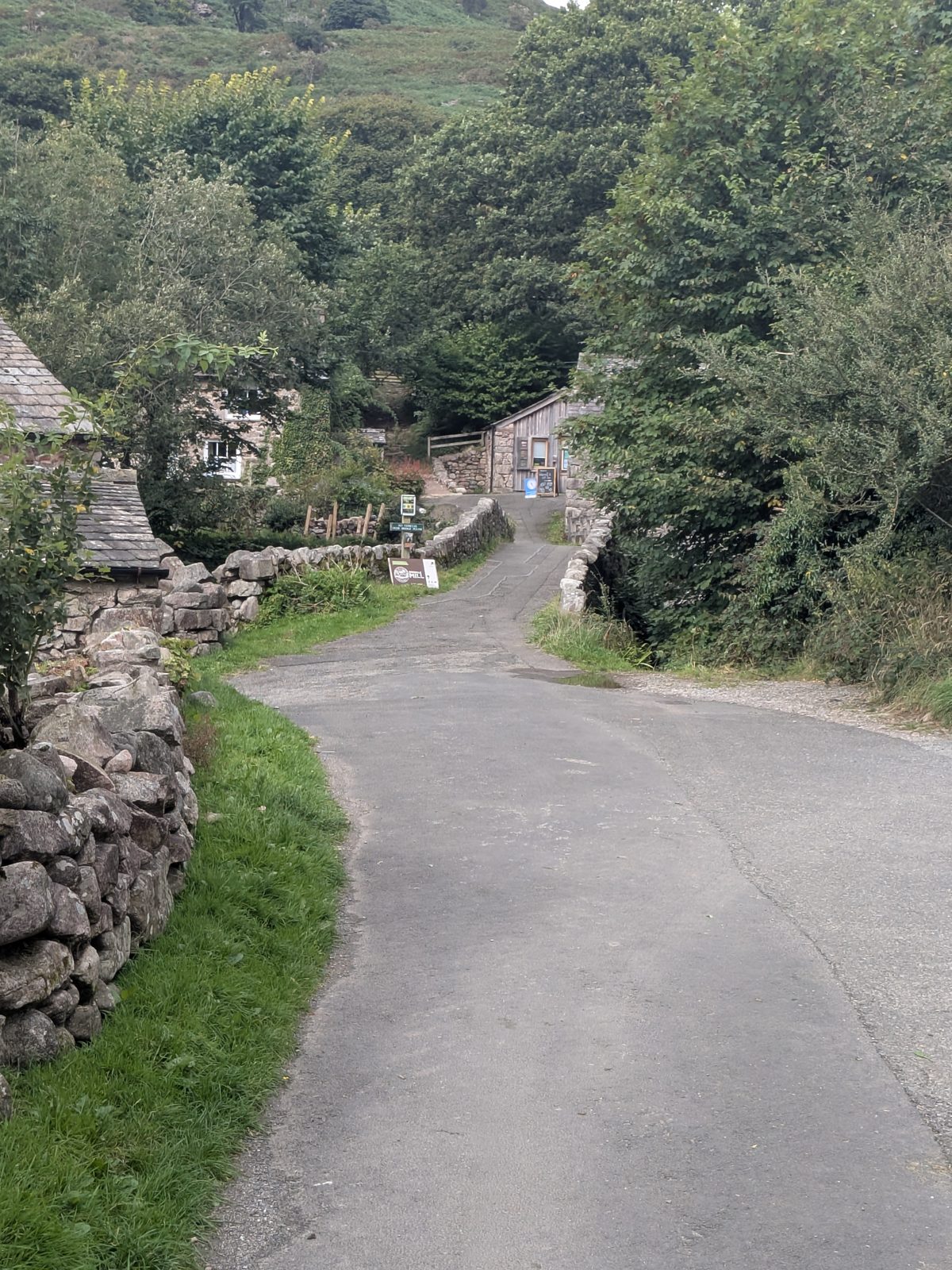
Boot is the hamlet at the head of Eskdale, sitting at the western foot of Hardknott Pass. It is small — a mill, a church, a couple of village inns and shops — and that is most of what makes it worth the drive. This is not a place with a high street; it is a place where the road runs out and the fells start.
What Boot has that nothing else in the valley has is Eskdale Mill, at the north end of the hamlet on Whillan Beck, reached over a 17th-century packhorse bridge. It is the last working water-powered corn mill in the Lake District National Park, and it is the single best reason to be in Boot rather than looking at it from the train.
Dalegarth for Boot, the terminus of the Ravenglass & Eskdale Railway, sits at roughly 210 feet above sea level, about a ten-minute walk from the village. If you come up on the train, that walk is the whole of your transfer.
Boot is also the start of the quietest of the main routes up Scafell Pike — a long day from here, and a very different experience from the queue on the Wasdale path. We cover the mountain itself on the Scafell Pike page.
The one to plan around
Read this before anything else: the mill is closed on Fridays and most Saturdays. In the main season, April to the end of October, it opens Sunday to Thursday, 10.30–16.30. Almost everyone assumes a visitor attraction opens at the weekend, and this one largely does not — a Saturday drive over Hardknott to a locked mill is a genuinely miserable way to spend a morning.
Out of season, from November to the end of March, the mill opens on selected days during school holidays only, 11.00–15.30. Last admission is 30 minutes before closing in either season. Those are the patterns to plan around; confirm the actual dates on the mill's own visitor information page before you travel.
The last remaining working water-powered corn mill in the Lake District National Park, and Grade II* listed. The operator dates it back to at least 1578 — we are giving you their figure rather than picking one, because other sources offer 1547, "the 1500s", and deeds from 1737. It is old, it is documented, and the exact founding year is not settled.
Inside there is original working milling machinery, double overshot waterwheels — one of only a few places in the UK with them — a traditional oats drying rack, and a modern hydro-electric wheel doing a job the site has been doing in one form or another for centuries.
It is run by the Eskdale Mill & Heritage Trust, a small independent charity (registered charity number 1113837). That is worth one honest sentence: visitor income is what keeps the wheels turning, and there is no large parent body behind it.
Children aged 16 and under go free with a paying adult. And the structure of the adult ticket is unusual enough to mention: it gives the original ticket holder a year's free admission — so keep the ticket, because proof of purchase is required. If you are staying in the valley for a week, that changes the sums considerably.
Online booking is advised, though ad-hoc visits are possible during quieter periods. Groups of ten or more should contact the manager ahead. We do not print the figures; the mill publishes them and they are the ones that will be correct on the day.
The mill is on the north side of Whillan Beck, at the north end of Boot, over the packhorse bridge. It is a ten-minute walk from Dalegarth for Boot station, signposted to Boot village, and bicycles can be stored securely. There is a free car park at Trough House Bridge, south of Boot, around a twenty-minute walk away — that one comes from Visit Lake District rather than the mill itself, so treat it as a strong steer rather than gospel.
On accessibility, the mill is refreshingly blunt. It is a hilly site with steep steps, uneven ground and granite bedrock. Pushchairs and wheelchairs can be left safely at reception, and there are alternative routes and handrails where the site allows. The ground-floor exhibition room has a touchscreen virtual tour, which is the honest answer for anyone who cannot manage the upper levels — not a substitute for the mill, but not nothing either.
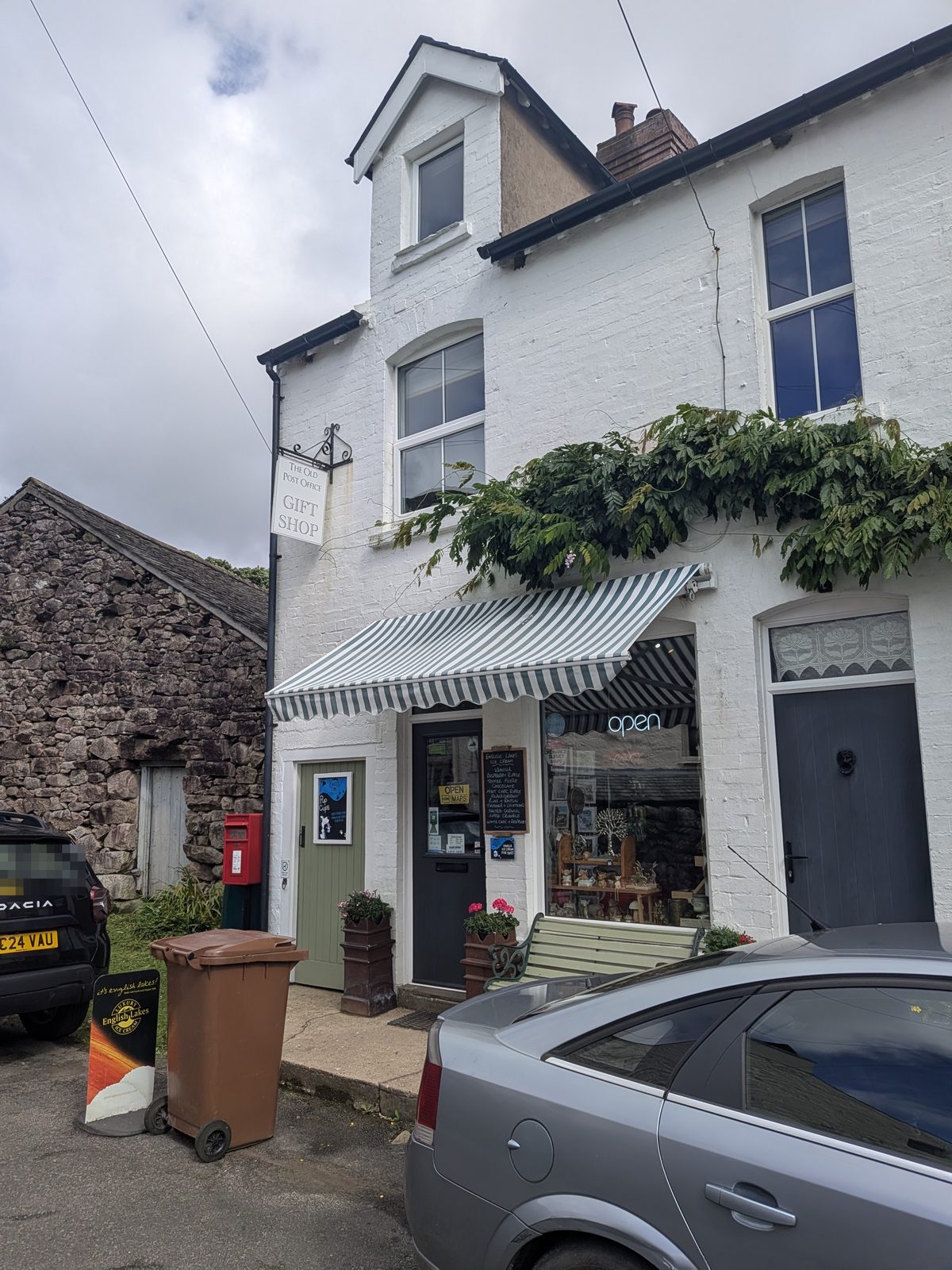
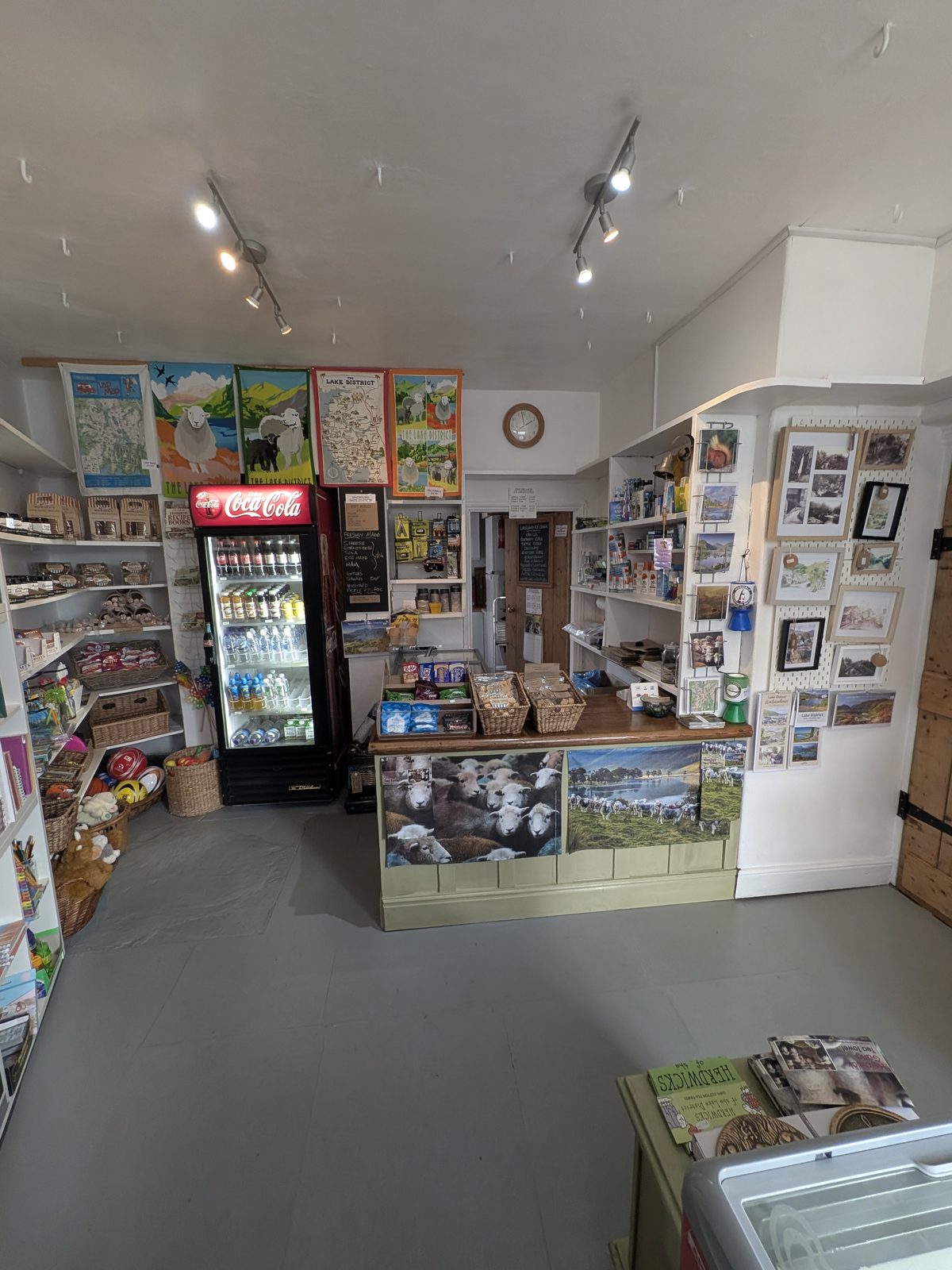
There are refreshments — local handmade ice cream, hot and cold drinks, pre-packed snacks — and a small gift shop selling Cumbrian stoneground flour, a guidebook and prints. Buying the flour is, in a small way, the point: it is what the building is for.
The waterfall
Roughly a 60-foot waterfall dropping into a narrow gorge, and the most photographed thing in the valley. The gorge is designated an SSSI — a Site of Special Scientific Interest — for its mosses, liverworts and ferns, which is the reason the walls look the way they do: wet, green and hung with growth that only survives in permanent shade and spray.
Access to the base of the falls: status not confirmed
Independent reporting has consistently said since at least 2023 that the lower path to the base of the falls is closed following rockfall, and one 2023 account suggests that closure may be long-term or permanent. A new high-level viewing platform — cantilevered out over the top of the gorge, built in a Victorian style — has been put in, and the older lower viewing platform is gone.
We have not been able to confirm the current position from an authoritative landowner or National Park source. Everything above comes from consistent independent reporting rather than the people who manage the site. Treat the signage on the ground as the authority on the day, and do not go past a barrier because a website said the path was open.
The path is not a stroll. It is steep, rocky, slippery, narrow in places and unfenced in places, and it is not accessible. Footwear with grip is the minimum; this is a gorge in a wet valley and it stays wet.
Where to start: the falls are reached from Dalegarth Station car park, from Dalegarth Hall car park, or from a small National Trust car park near Dalegarth Campsite, beyond Trough House Bridge. We are not publishing a step-by-step route to the base, because we cannot stand behind the state of the lower path.
Not to be confused with Gill Force. Stanley Ghyll Force and Gill Force are two different places, and some writers use the names loosely. Gill Force is a small fall and pool on the River Esk near St Catherine's Church, and it is a swimming spot rather than a gorge walk — we cover it in the wild swimming guide. If you are looking for the 60-foot fall in the mossy ravine, you want this page.
On foot
Eskdale splits cleanly into two kinds of walking, and it is worth knowing which one you are signing up for.
The EskTrail is the valley's own path, recently upgraded, running alongside the River Esk from Ravenglass on the coast up to Dalegarth. It shadows the railway line for much of its length, which makes it unusually easy to plan around: walk one way and take the train back, or the reverse.
We are not going to quote you a distance for it, because we have not been able to source one we would stand behind. What we can tell you is the shape of it — riverside, low-level, and running the length of the valley between the two places most people are travelling between anyway.
The ground above Eskdale is serious. The valley sits under the highest land in England, and the routes that leave it climb into the Scafell range and onto the high Southern Fells. From Boot, the Eskdale approach to Scafell Pike is the quietest of the main routes — and one of the longest, a full day rather than an afternoon.
That quietness cuts both ways. Fewer people on the path means fewer people to follow when the cloud comes down, and this is not ground to learn navigation on. If the high fells are the plan, read our Scafell Pike guide first, and take the weather below seriously.
Lower valley
Eskdale Green is a separate settlement from Boot, and the two get confused constantly — including by people who have already booked somewhere. Boot sits at the head of the valley under Hardknott. Eskdale Green sits down in the lower valley, nearer the coast end, with its own request stop on the railway.
If you are booking accommodation "in Eskdale", this is the distinction that matters most: the two are several miles apart along a valley road, and which one you are in decides whether you walk to the mill or drive to it.
Up the valley
The narrow-gauge line runs seven miles from Ravenglass on the coast to Dalegarth for Boot at the head of the valley, taking about 40 minutes each way, with seven intermediate request stops along the route.
What makes it more than a novelty is the connection at the bottom: Ravenglass is on Northern's Cumbrian Coast line, so the little railway is a genuine onward link rather than a ride that starts and ends in a car park. Arrive by train, change onto the narrow gauge, and you are at Boot without having driven a mile.
Fares, timetables and the seasonal running pattern are the operator's to publish, and they move — the railway's plan-your-visit page carries the current ones. If you are also visiting Muncaster Castle, just east of Ravenglass, there is a joint ticket covering both.
The head of the valley
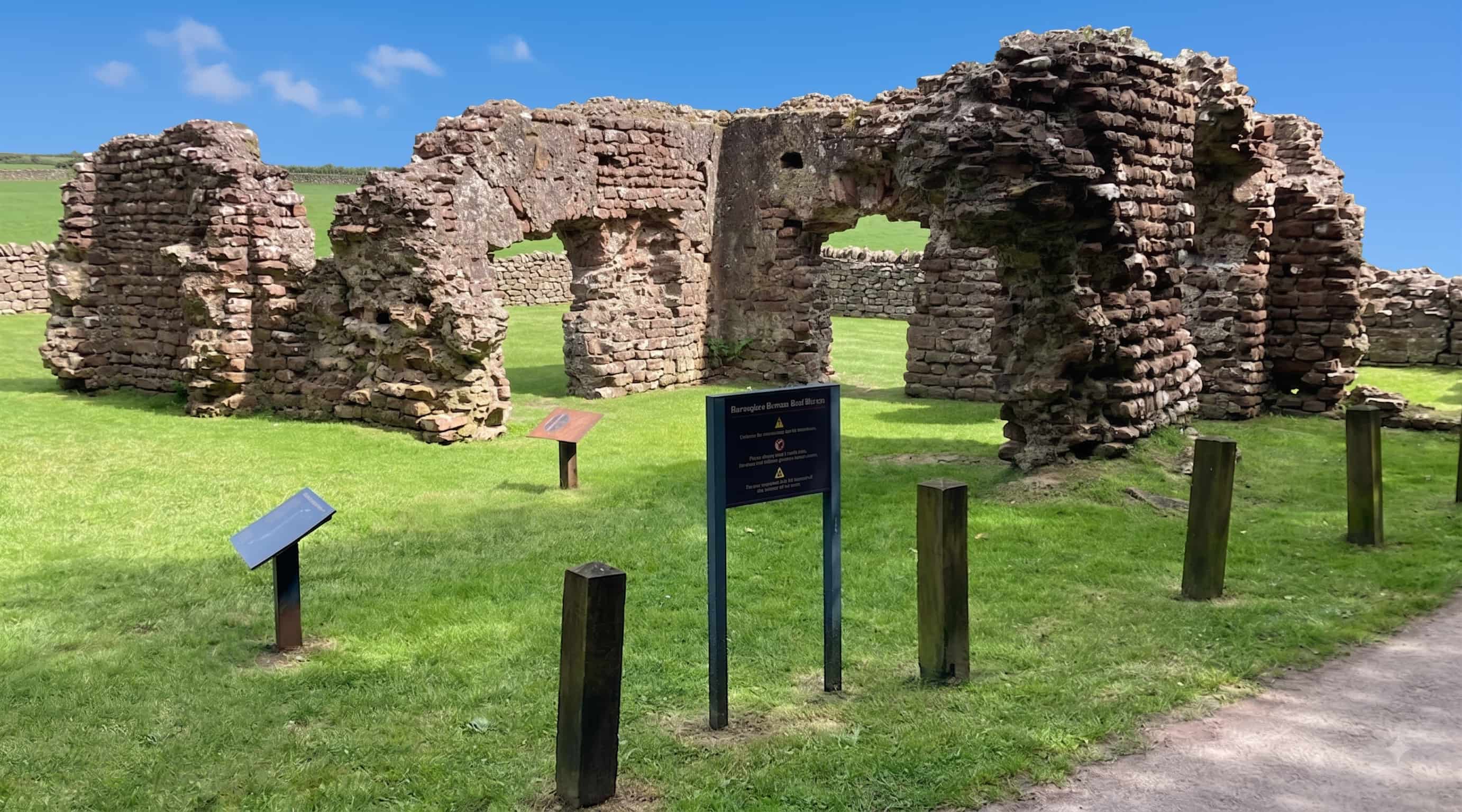
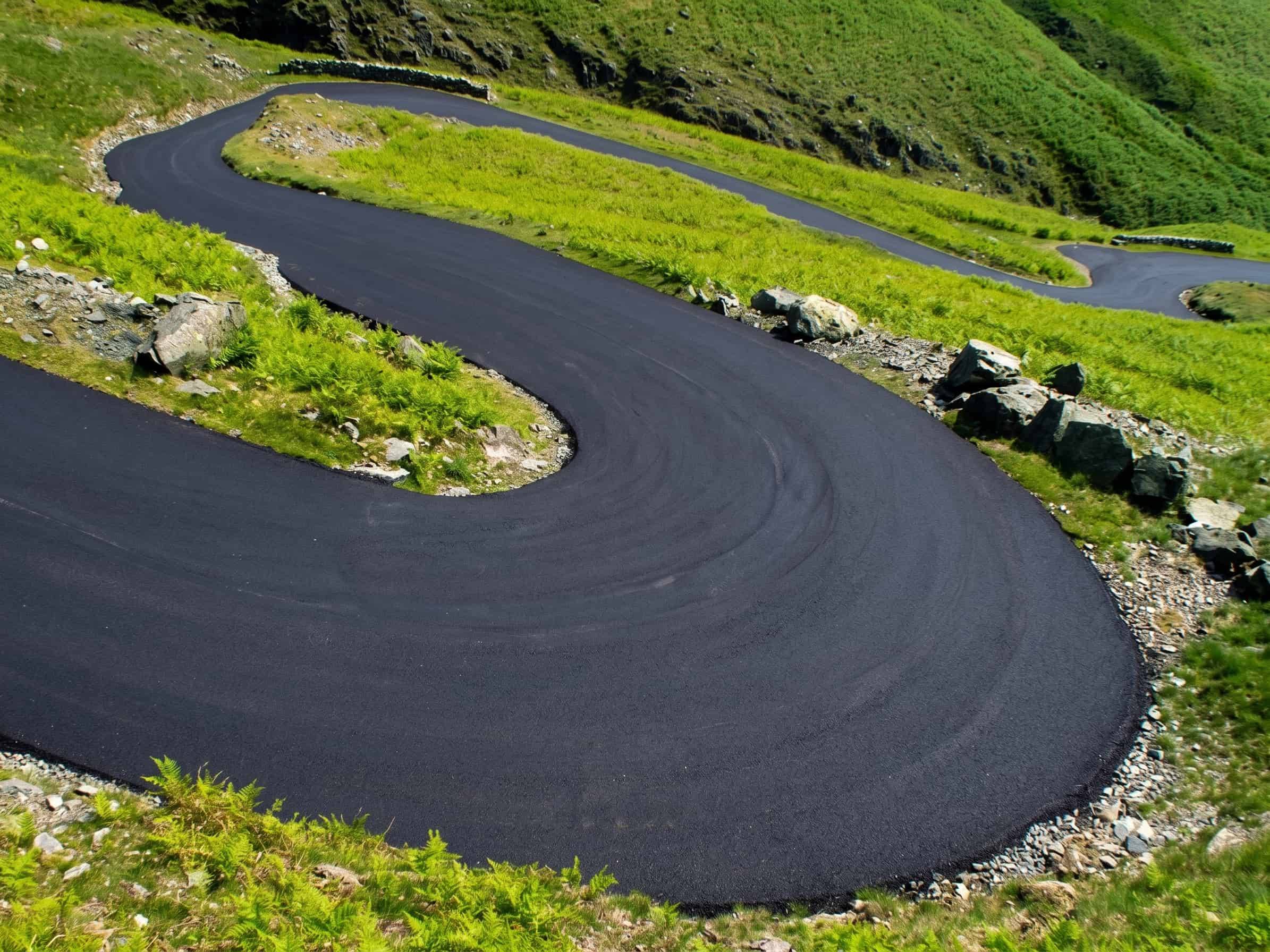
Hardknott Pass forms the eastern entrance to Eskdale — the road that climbs out of the valley head towards Wrynose and, eventually, Ambleside. Partway up sits Hardknott Roman fort, one of the more remarkable things the Romans left in Britain simply for where they chose to put it.
It is a short stop from the road, and the view down the valley from it is the reason to make it. Whether you drive the pass or walk up to the fort from the Eskdale side, it is worth understanding the road before you take a vehicle onto it.
The gradient, the hairpins, the fort, and an honest answer on whether to drive it.
Hardknott's twin, and the other half of the drive from the central Lakes.
Before you set off
Eskdale opens to the west, which means it catches weather coming in off the Irish Sea before most of the Lake District does. A valley that faces the incoming front gets the rain first and gets more of it — and the ground above the valley is high enough that conditions at Boot tell you very little about conditions on the tops. Check both, and plan the indoor half of the day as seriously as the outdoor half.
Tomorrow
—°
—
—°
—
—°
Live data via Open-Meteo · updates each visit
A western valley in the rain is not a wasted day, but it does need a different plan.
Practicalities
Set your expectations for a small valley. Boot has a couple of village inns and shops; Eskdale Green in the lower valley has its own accommodation; and there is camping in the valley. That is broadly the range. There is no cluster of restaurants and no supermarket — if you are self-catering, shop before you come inland.
We are deliberately not naming the pubs here. Lakeland hospitality has changed hands and changed names a great deal in recent years, and we would rather send you to "the inns in Boot" and have you find them than name one that has since become something else. Check current names and opening before you plan a meal around them — particularly out of season, when a small valley runs a short week.
The one booking decision that matters is the one covered above: Boot and Eskdale Green are different places, several miles apart. Know which you have booked.
The honest verdict
If you want a quiet valley, Roman history and a steam railway — yes, and there is nowhere else quite like it. A working water mill, a seven-mile narrow-gauge line and a Roman fort on a mountain pass is an unusual combination to find in one small valley, and Eskdale is genuinely one of the least crowded corners of the National Park.
It suits you if you are happy with a day built around three or four things rather than twenty, you like arriving somewhere by train, and you would rather have a valley to yourself than a choice of cafés.
It suits you less if you want lake cruises, shops and restaurants, or a quick hop from a base in the central Lakes. The direct road crosses Wrynose and Hardknott, and the reliable way in is the long way round by the coast. Eskdale rewards people who came for Eskdale, not people passing through.
One caveat we will be straight about: this guide is desk-researched from operator sources and consistent independent reporting. We have not yet walked the valley ourselves for this page, and where a fact could not be confirmed — the Stanley Ghyll access position above — we have said so rather than filled the gap.
Common questions
The road out of the valley head — 1 in 3, and the Roman fort on the way up.
Hardknott's twin, and the other half of the drive from Ambleside.
Just east of Ravenglass — and there is a joint ticket with the railway.
The twelve falls worth the walk, across the whole National Park.