🏛️ Free and unstaffed, on the Hardknott Pass road — read the pass guide before you set off.
Free entry English Heritage Dogs on leads
Eskdale · Free · English Heritage
Hardknott Roman Fort, Eskdale
A Roman fort on a shelf of fellside above the Hardknott Pass road, built for its sightlines and abandoned within twenty years. The walls are the best in Britain, according to the people who look after them. The view is the reason to come.
Written and walked by Peter·Visited Monday 31 August 2026
The view the Romans chose, and Wordsworth wrote about
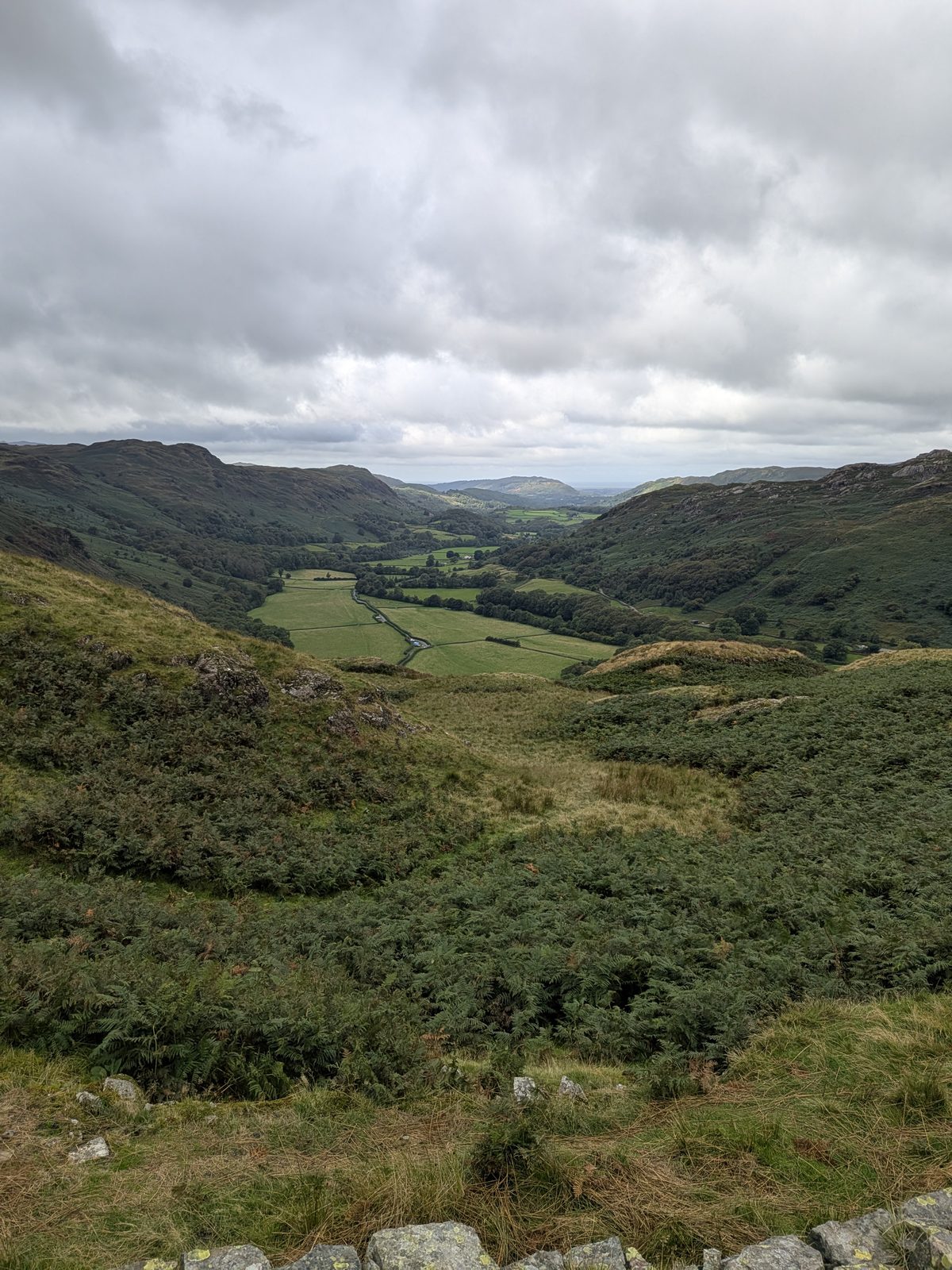
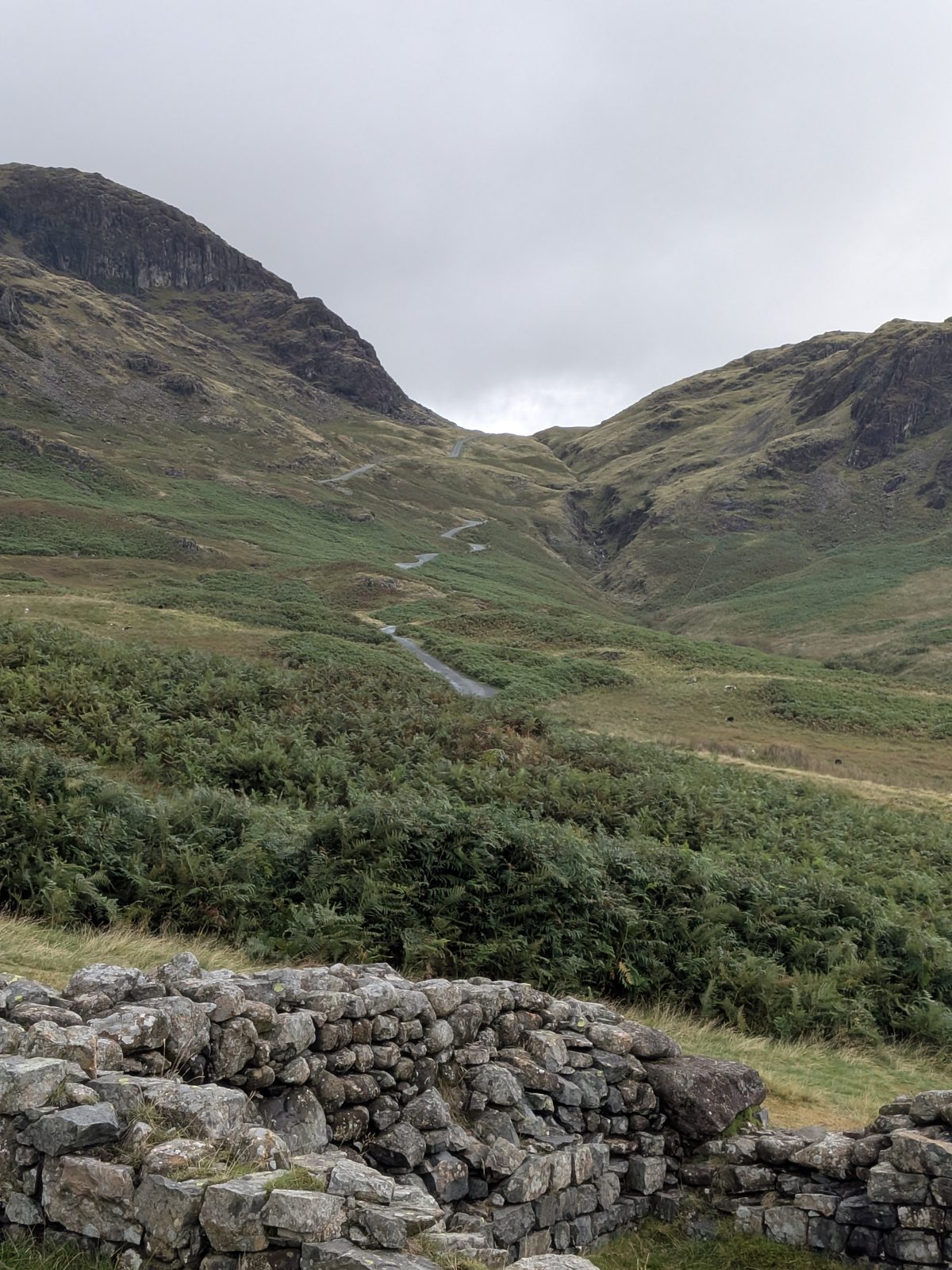
Everybody who writes about Hardknott writes about the walls. Almost nobody writes about what you see over them, and that is the thing that stopped me. Stand on the wall on the valley side and the whole of Eskdale lies below you: the fields on the valley floor, the river, the road threading down it, and the fells closing in on both sides all the way to where the valley opens out towards the coast. Turn round and the Hardknott Pass road is climbing away above you in hairpins to the summit.
That is not an accident of where the ruins happen to be. The Romans put a fort here because the shelf sees everything: the road up from the coast, the road over the top, and anyone moving on either. The fort's job, according to the English Heritage board on site, was to guard the road linking the coast with the heart of the Lake District. From up here you can see why it did not need to be anywhere else.
Seventeen centuries after the garrison left, Wordsworth came this way and put the place into The River Duddon, his sequence of sonnets published in 1820. The seventeenth of them names "that lone Camp on Hardknott's height". The board on site quotes the same lines, and it is the one detail I would send anyone up here to read: the same view, chosen by soldiers for one reason and by a poet for another.
If you only do one thing here, walk to the wall on the Eskdale side before you look at anything Roman. The fort makes much more sense once you have seen what it was watching.
The other view: the pass road climbing away to the summit, seen over the fort wall
What survives
Walls, gateway, granaries and towers
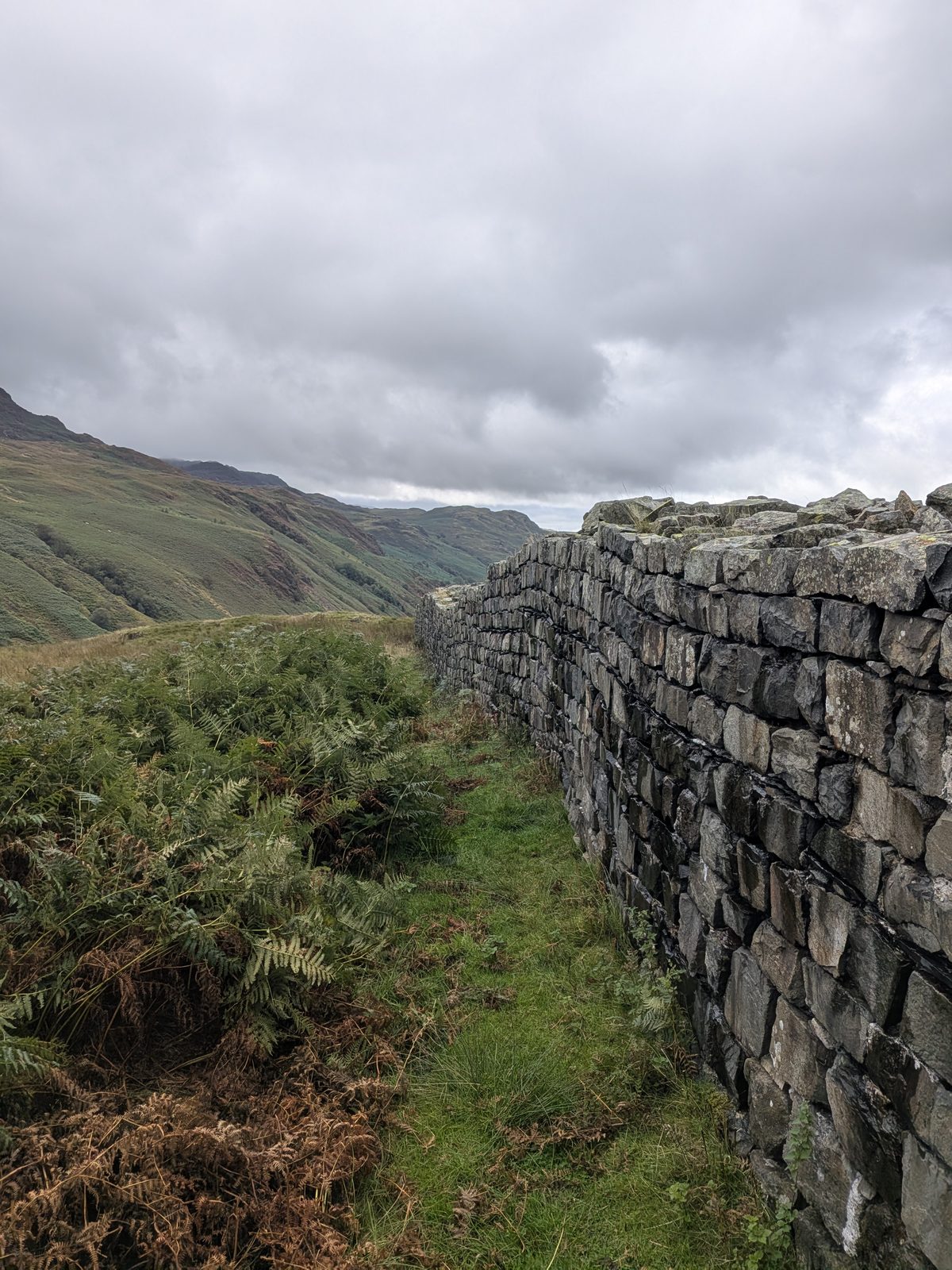
For a site this remote, a remarkable amount is still standing. English Heritage, who look after the fort, describe its walls as the best preserved of any Roman fort in Britain, still standing to about two metres. That is their claim rather than ours, but walking the outside of the wall with the valley falling away beside you, it is not hard to believe.
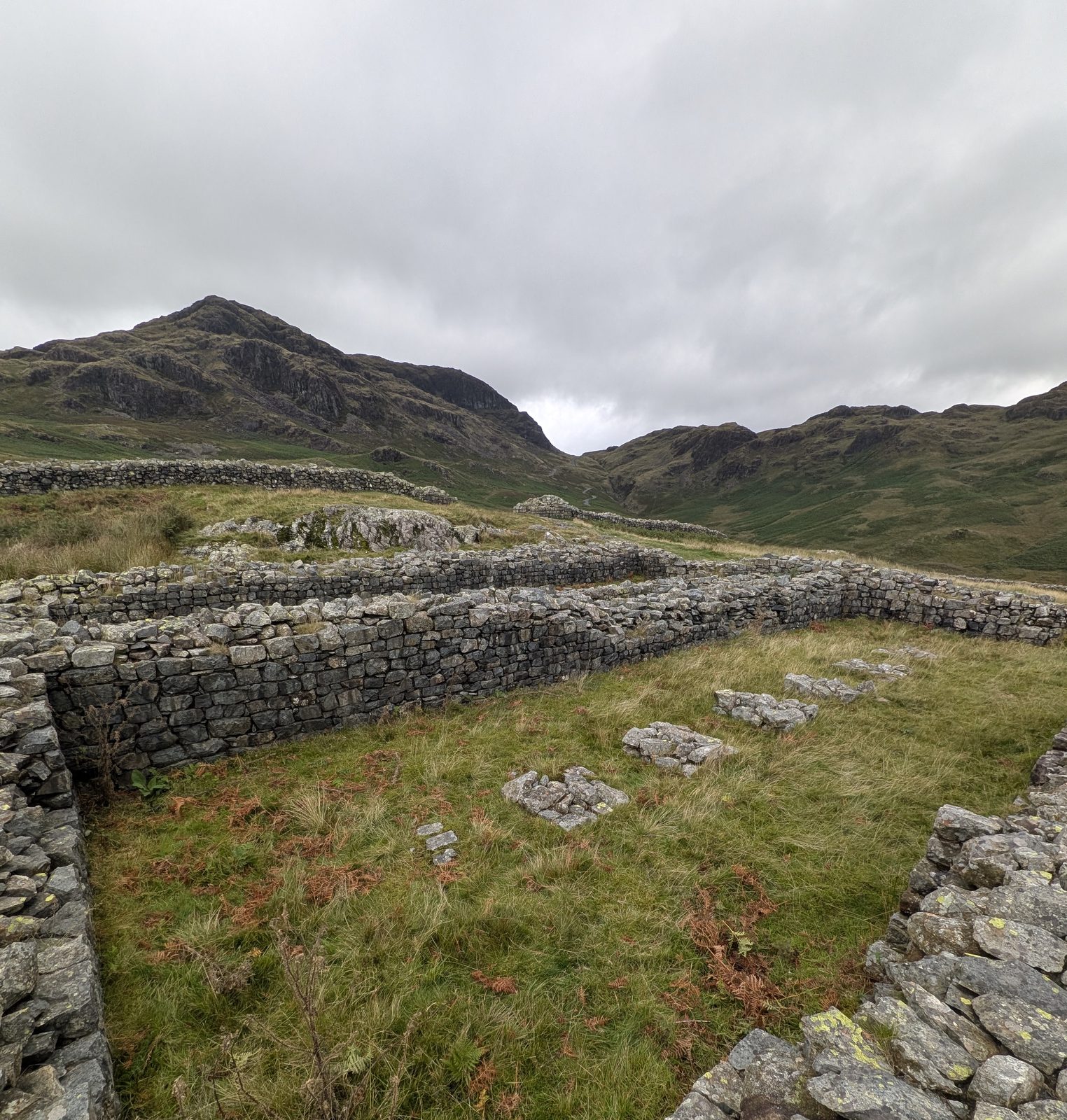
Building footings inside the fort, the outer wall beyond them, and the valley dropping away on the right
The gateway
The main entrance was the south-east gate, and the road through it ran dead straight to the headquarters building in the centre of the fort. It had a double portal, and the boards record that it was originally built in red sandstone rather than the grey local stone you see now. Excavations in the 1960s turned up fragments of a stone inscription in front of the gateway, which is how the fort is dated: to the reign of Hadrian, between AD 117 and 138, and built by a cohort from Dalmatia.
The granaries
Two granaries stood off the main cross-street, with heavily buttressed walls and raised wooden floors carried on rows of stone piers to keep the air moving underneath the grain. The buttresses have gone, but the rows of piers are still there on the ground, which is the detail that makes the buildings readable rather than a scatter of footings. Grain was the bulk of a soldier's diet, topped up with meat, vegetables, fruit and beer.
Rows of stone footings on the floor of one of the buildings, with the fort wall and the fells behind
The commanding officer's house and the towers
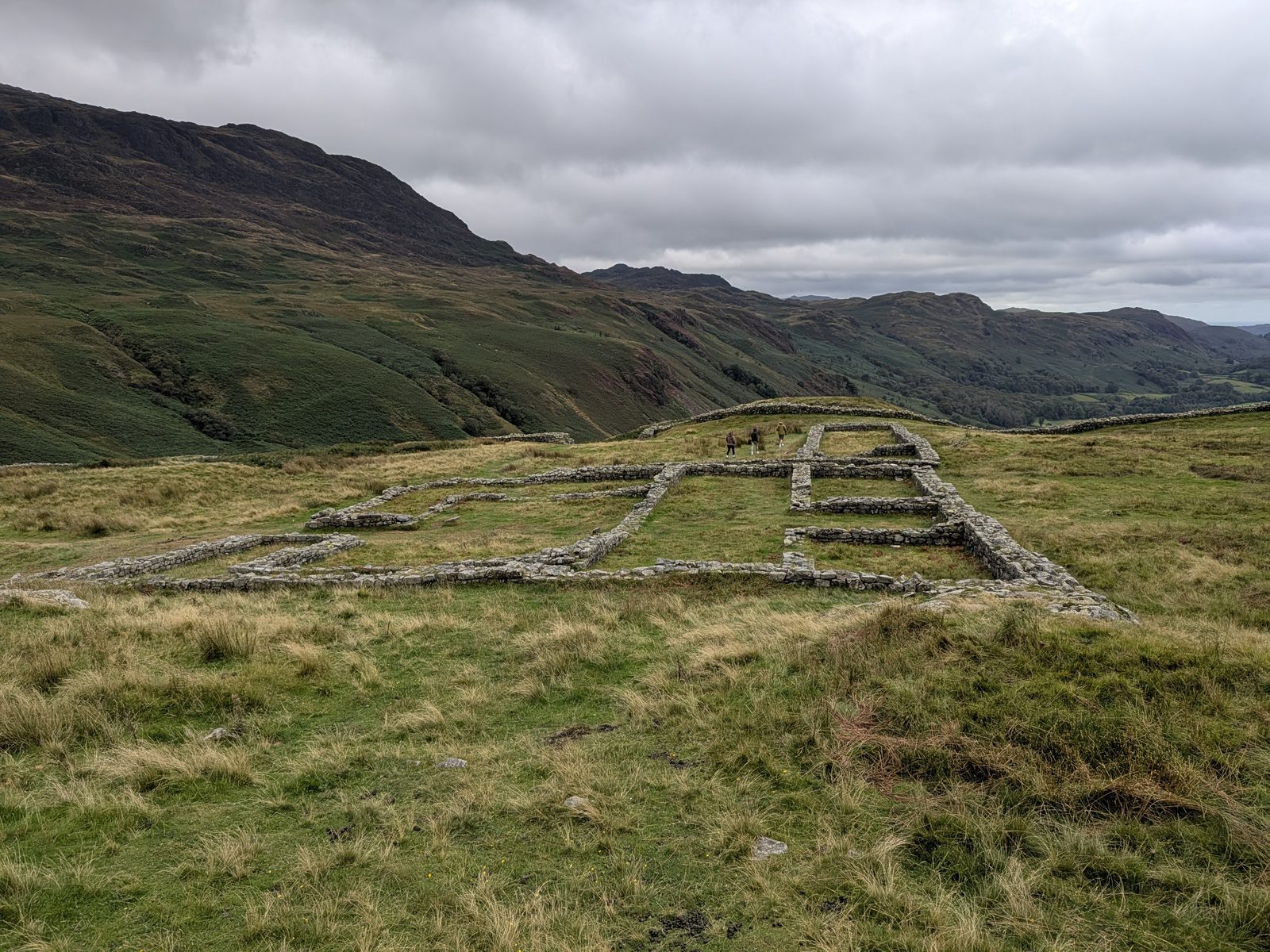
The commanding officer lived in a single-storey house with rooms round a central courtyard, modelled on a Roman town house. Only one range of it survives, plus the outer wall of a second. The soldiers were in timber barracks elsewhere in the fort, and timber does not last on a fellside, which is why the barracks are the one thing you cannot see. At each corner stood a square angle tower with no doorway at ground level, so the only way in was from the walk along the top of the wall.
The western side of the fort, footings laid out on the grass
The parade ground
Above the fort the garrison levelled a parade ground out of the fellside. The board on site puts the earth and stone moved to flatten it at around 5,000 cubic metres, and offers the comparison of roughly two Olympic swimming pools. Either way it was a great deal of digging for a posting that lasted twenty years.
Outside the walls
The bath house and the laconicum
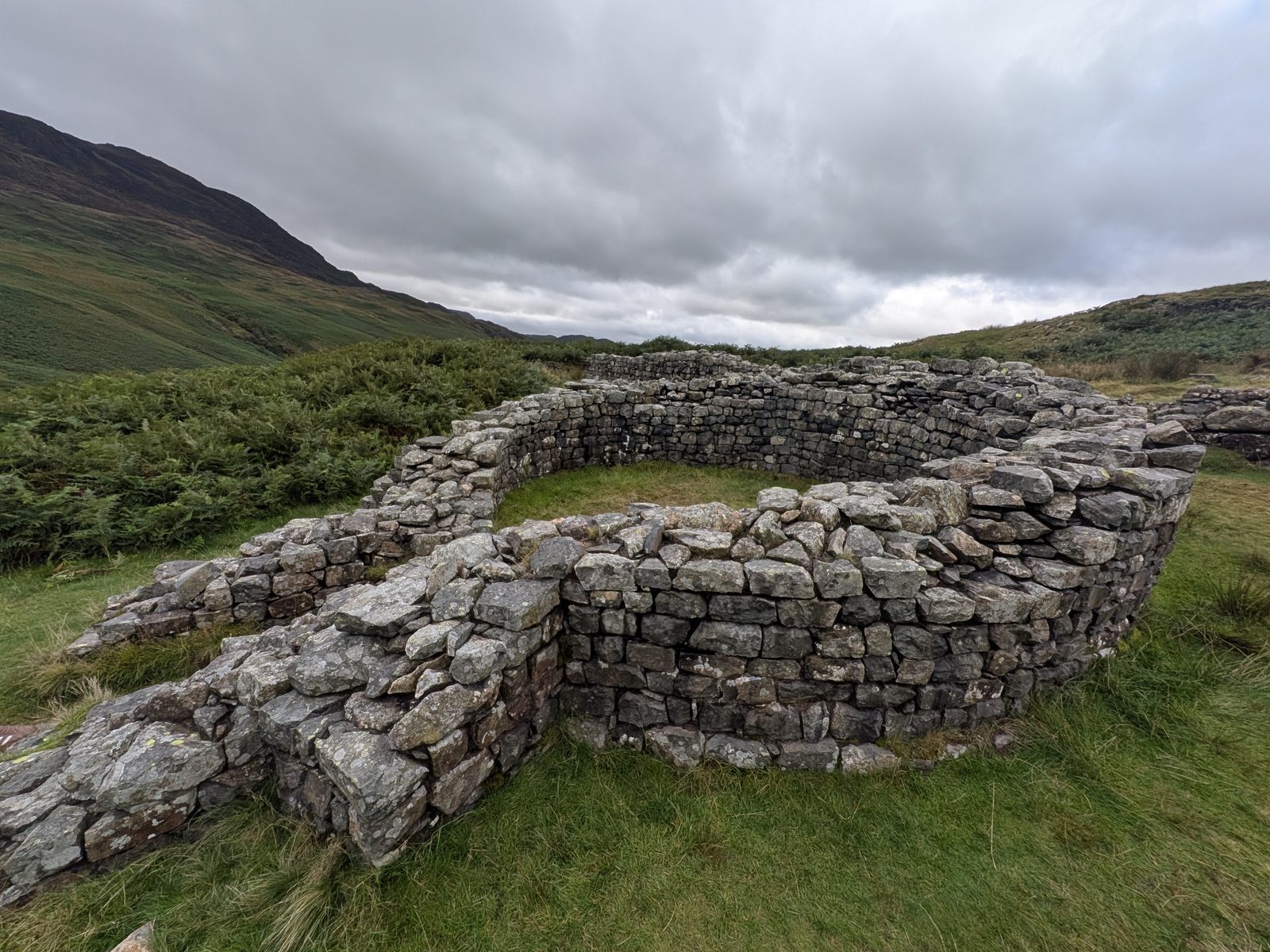
Roman forts were normally given a bath house, and normally put it outside the walls, which is where you find Hardknott's: below the fort on the slope towards the road. The main block was three rooms in a row, the cold room, the warm room and the hot room, with a plunge pool at the cold end. Beside it, and the thing you notice first, is a separate circular building: the laconicum, a dry-heat sauna. Two furnaces heated the whole arrangement, and the passage on one side of the laconicum is not a corridor but the flue that fed it.
The laconicum, the bath house's circular dry sauna, standing apart from the main block
The routine, as the board beside it sets out, was simple and rather sensible. You sat in the hot rooms until you sweated, so that the dirt came up to the surface of the skin. Then you scraped it off. Then you went into the cold plunge, which closed the pores. Nobody knows how often a soldier posted here actually got to use it, but standing beside the laconicum on a raw day above Eskdale, you hope it was often.
Who was here
The Fourth Cohort of Dalmatians
The garrison was the Fourth Cohort of Dalmatians: around five hundred soldiers recruited in the Balkans, from the Roman province of Dalmatia, in what is now Croatia. They were auxiliaries rather than legionaries, which is to say not Roman citizens. The deal was that if you survived twenty-five years of what the boards call hazardous service, you became one. The inscription found at the gateway in the 1960s names a cohort from Dalmatia as the builders, so the men who watched this road also built the walls they watched it from.
Their work was to monitor movement along the road and deal with any trouble from the local population. Whether a posting to a fellside shelf above Eskdale counted as hazardous or merely bleak, the boards do not say.
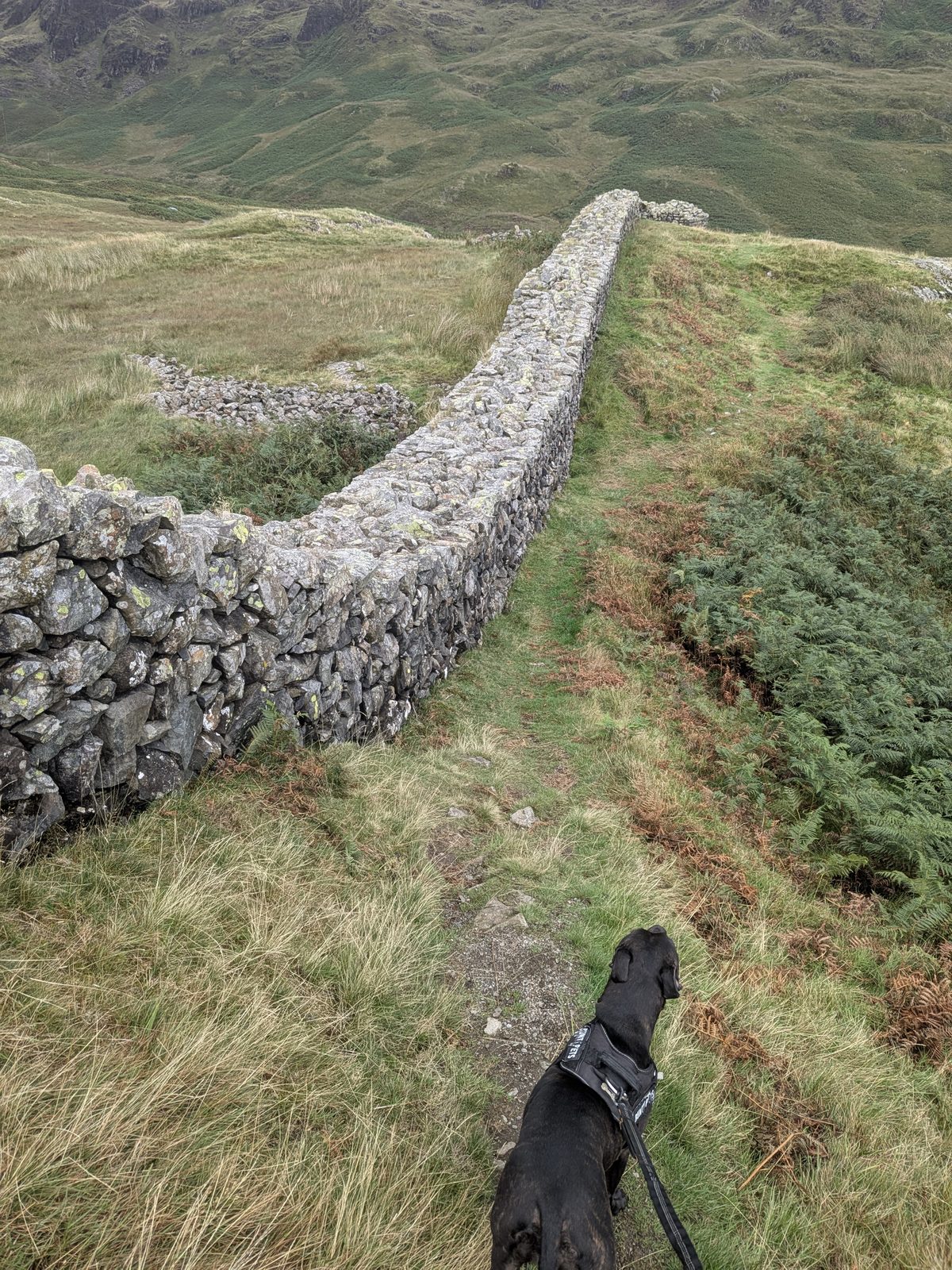
The outer wall, still standing to head height on the valley sideCass, our Staffordshire Bull Terrier, on the lead along the northern wall
Twenty years and abandoned
Built under Hadrian, empty within a generation
Hardknott was built around AD 120, during a reorganisation of Rome's northern frontier in which the army put up a network of forts and roads to hold the north-west. The Roman advance into Scotland in the AD 70s and 80s had gone past the western Lake District without troubling it; the forts came later, at Ambleside and Watercrook around AD 90, then here, with a small fort at Ravenglass at the same time. Hadrian himself came to Britain in AD 122 to oversee the wall that carries his name.
And then, around AD 140, the garrison left. A larger fort had been built at Ravenglass on the coast, and Hardknott was no longer needed. Barely twenty years of use, for a fort whose walls would outlast the empire by sixteen centuries. It went out of use before Roman rule in Britain was a quarter of the way through.
Why it matters. Most Roman forts in Britain were rebuilt, extended and reused for centuries, which is why so little of their early form survives. Hardknott was built once and walked away from. What you see is close to what the Fourth Cohort saw, because nobody ever came back to change it.
Getting there
The pass road, and where to park
The fort is reached from the Hardknott Pass road, on the Eskdale side of the pass. If you have searched for the fort rather than the road, be clear about what that means before you set off: this is one of the most demanding roads in the country, and our Hardknott Pass guide covers the drive honestly. This page does not repeat it.
Two parking areas
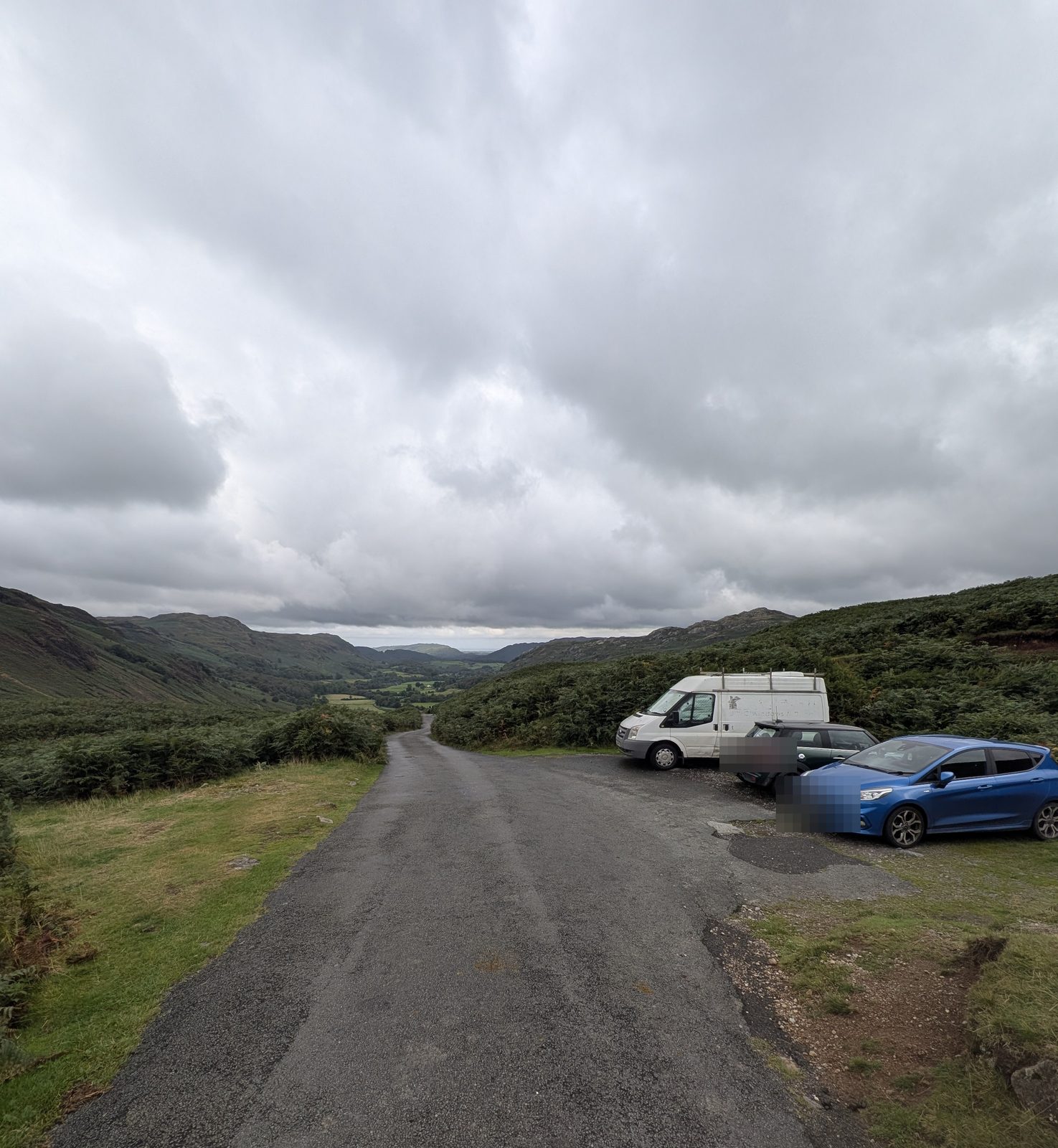
There are two places to leave a car on the pass road below the fort: a lower parking area and an upper, northern one. Both are pull-ins beside the road, not car parks. We came in from the south and used the lower one, which is what the photographs show: a stretch of tarmac beside the road with space for a handful of vehicles, and the view straight down Eskdale from where you leave the car.
The lower parking area, approached from the Eskdale side, with the valley beyond it
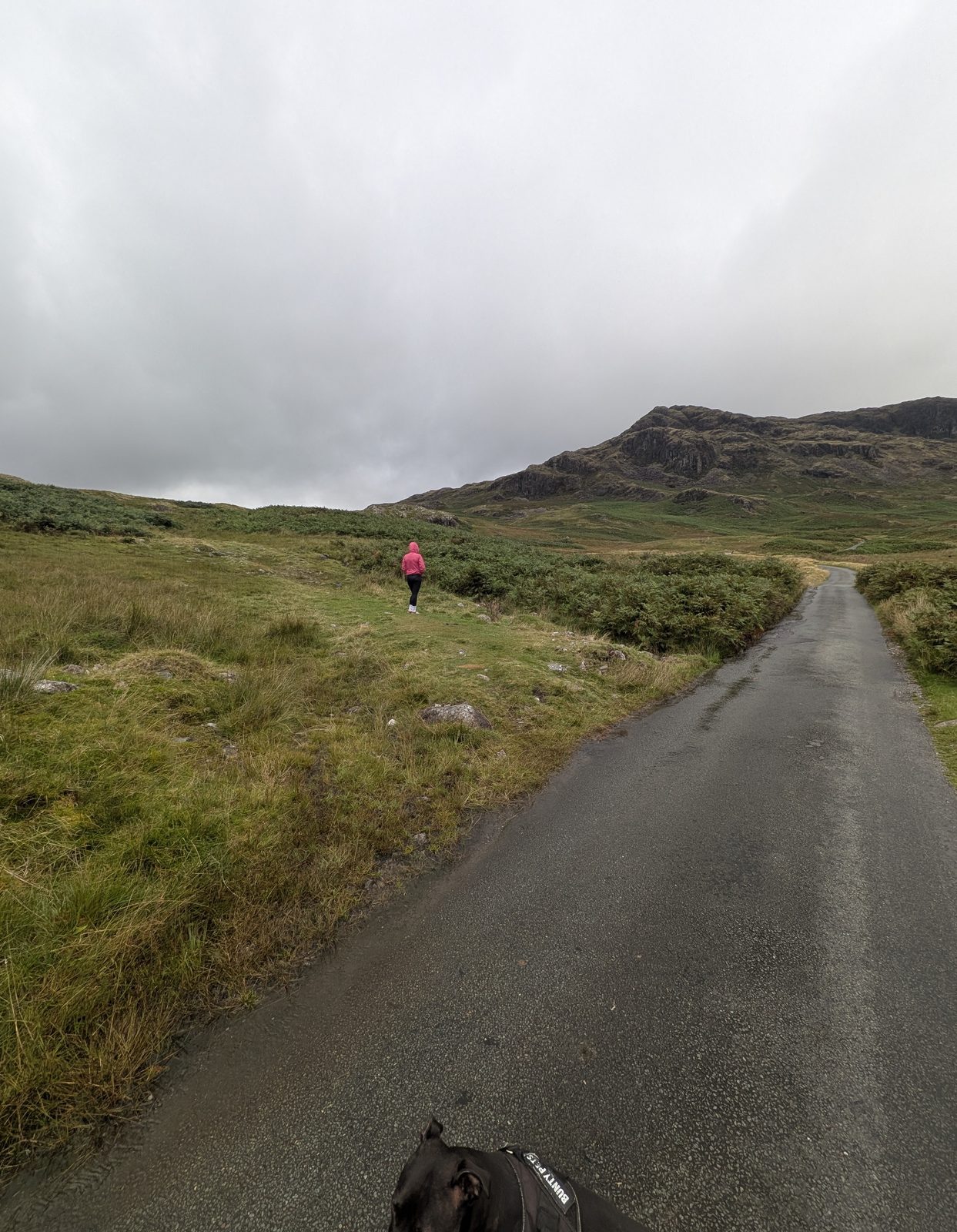
From there you walk up beside the road to the fort. There is no entrance building and no gate to speak of, just the fellside opening out to the left of the road with the fort on the shelf above. Dogs are welcome on leads, per the English Heritage sign at the site, and the sign also asks you not to climb on the walls.
The way up from the southern parking: the road, with the fellside and the fort off to the left
Around the fort
Nearby
The fort sits at the head of one of the quietest valleys in the National Park, with the coast at the bottom of it and a second pass over the top.
Yes. It is an English Heritage free site with no ticket, no admission point and nobody on duty. You park on the pass road below and walk up onto the fellside; the fort is accessible at any reasonable time. Check the English Heritage website before you travel if anything about your visit depends on it.
What was Hardknott Roman Fort called?
The Roman name recorded for it is Mediobogdum. Almost everybody, including English Heritage, calls it Hardknott Roman Fort, and that is the name to search for and the name on the signs.
How long was the fort in use?
Barely twenty years. The interpretation boards on site date its construction to around AD 120, in the reign of Hadrian, and say it went out of use around AD 140, after a larger fort had been built at Ravenglass on the coast. Roman rule in Britain went on for nearly three more centuries; Hardknott did not.
Do you have to drive Hardknott Pass to reach the fort?
The fort sits on the Hardknott Pass road itself, on the Eskdale side, so you reach it along that road from one direction or the other. Coming up from Eskdale you arrive at the parking below the fort before the road reaches its summit. Read our Hardknott Pass guide first: it covers what the drive involves, and this page deliberately does not repeat it.
Can you walk around the fort, and are dogs allowed?
Yes to both. It is an open fellside site and you can walk through the gateway, along the walls and round the buildings freely. The English Heritage sign on site welcomes dogs on leads. Cass, our Staffordshire Bull Terrier, walked the whole site with us on hers. Climbing on the walls and metal detecting are prohibited.
What can you actually see there today?
A lot more than most Roman sites in the north. The fort walls stand to about two metres in places, which English Heritage describes as the best preserved in Britain. Inside them you can trace the main gateway, the two granaries with the rows of stone piers that carried their raised floors, one range of the commanding officer's house, and the square angle towers at the corners. Outside the walls are the bath house and its circular laconicum, and above the fort the levelled parade ground.
Who were the Dalmatians?
The garrison. The Fourth Cohort of Dalmatians was an auxiliary unit of around five hundred soldiers recruited in the Balkans, from the Roman province of Dalmatia in what is now Croatia. Auxiliaries were not Roman citizens when they enlisted: those who survived twenty-five years of service were granted citizenship at the end of it.
These questions were written from the search terms for the fort. No People Also Ask capture exists for them yet; revise against one when Peter has it.