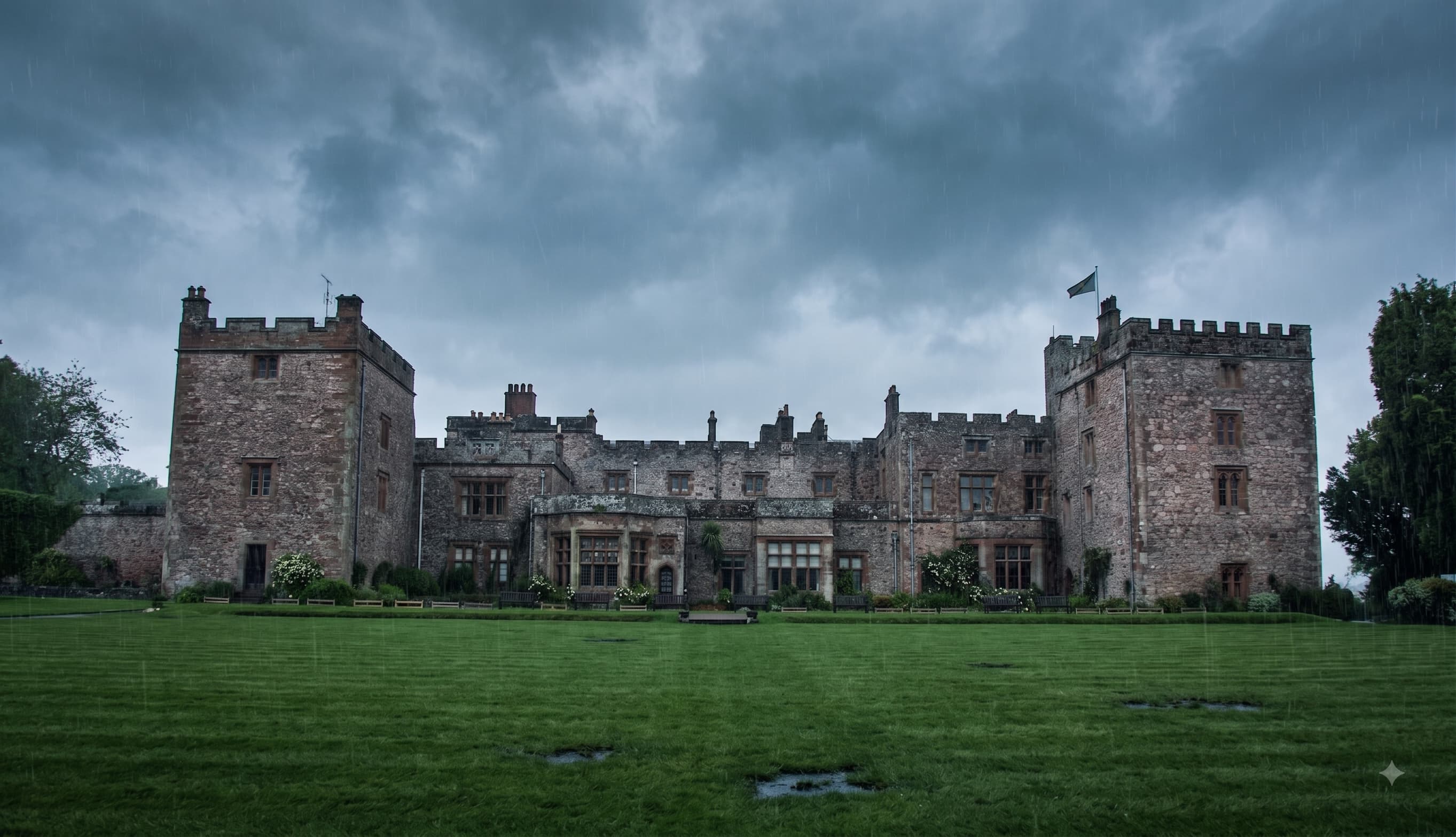
A castle that has been the same family's home since 1208, with birds of prey, 70 acres of gardens and a heron feed on the lawn. Here are the honest answers — starting with what it costs and the discount codes that don't exist.
The question everyone asks
Start with the good news: there is one general admission pass, and it covers the lot — the castle, the gardens, the Hawk & Owl Centre, the flying displays and the have-a-go sessions in The Weapons Hall. No add-ons to price up, no working out which combination you need.
On the 2-for-1 question, be careful. Muncaster publishes no 2-for-1 offer and no NHS discount on its own website. Search either phrase and you will find coupon sites advertising large percentages off — those sites are not affiliated with Muncaster, and we would not plan a day around them. We are telling you what the operator publishes, which is what anyone can actually verify.
What genuinely reduces the price:
We don't print the figures, because they move and a page full of stale prices is worse than no prices at all. The operator's admission page always carries the current ones.
Before you travel
Muncaster is not open year-round, and the pattern matters more than any single day's hours:
The one to watch: the castle interior can be closed on individual dates for private functions, and on those dates castle tickets are not available to buy at all. If the house itself is the reason you're going — rather than the gardens or the birds — check that specific date before you set off, not the season.
We deliberately don't publish daily hours here; they vary through the season and a wrong time costs you a day. Take the pattern above for planning, then confirm on the operator's plan-your-visit page.
Arriving
Parking is free, all day. No charge, no tariff board, no machine to feed — which, on a west-coast day out, is a genuinely pleasant surprise.
In the main season, use sat nav CA18 1RD for the main car park.
From November to Easter, this changes — and it's the single easiest thing to get wrong here. In that period, parking and entry for all customers is via the Church Gate entrance, a third of a mile south of the main car park on the A595. Turn in at the usual gate on a winter visit and you'll be looking at a closed one.
Mobility parking sits in the heart of the estate and is reached via Church Gate as well — sat nav CA18 1RQ. That's the coach entrance too, and coach parking is also free. Extra parking opens up for the major festivals.
Clearing up the big one
Muncaster is not National Trust. It is privately owned, and a Historic Houses member property — so an NT card gets you nothing at the gate, while a Historic Houses card gets you in free. Enough people assume otherwise that it's worth saying plainly before you drive across the county.
It has been the home of the Pennington family since 1208 — more than 800 years — and it is still their home today. That's the thing to hold on to as you walk round: this isn't a preserved museum of a family that left, it's a house that has never stopped being lived in.
With the dog
Yes on the estate — no inside the castle, and no inside the Hawk & Owl Centre. That second exclusion is the one that catches people out, because of what it means for the displays.
The World of Owls display is held indoors, inside the Hawk & Owl Centre — so dogs cannot attend it at all. The Sky Hunters display is usually outdoors on The Flying Meadow, which has a dog seating area — but on some days it moves indoors, and on those days dogs can't watch that one either. If seeing a flying display with the dog is the point of your visit, it's worth a call ahead rather than a hopeful drive.
Dog tickets are bought on arrival — dogs are charged, so factor that in.
The other half of the ticket
Muncaster's Hawk & Owl Centre is one of the main places to see birds of prey in the Lake District, and it is included in the same ticket as the castle — aviaries and mews set within the gardens, plus daily-timetabled flying displays: the Sky Hunters display, and the indoor World of Owls.
A note on the name: the Hawk & Owl Centre was formerly called the World Owl Centre, and plenty of third-party listings still use that old name. It is one place under two names, not two separate attractions — some sites mistakenly list both. The current name, and the one to search for, is the Hawk & Owl Centre.
The bit almost nobody writes about, and the best reason to stay late: wild herons come in to feed on Cannon Bank, just below the castle entrance, at the end of the afternoon. They aren't captive birds put on for the crowd — they come from a colony that has been resident on the estate for centuries, and they turn up because they choose to.
The time shifts with the season, so we won't print one and send you to an empty lawn — check the day's timings when you arrive, and plan your afternoon around it rather than the other way round.

Outside the walls
Roughly 70 acres of gardens, best known for their rhododendrons and azaleas and set against the Lakeland fells — which is the combination that makes them worth the trip in their own right, not just as something to walk through on the way to the castle door.
Spring is rhododendron season, and that's when the gardens are at their most spectacular. Come outside it and you get the setting, the scale and the views without the colour.


With children
The Weapons Hall runs have-a-go sessions that are included with every ticket — not a paid extra, which is worth knowing before someone tries to talk you out of it at the gate:
Beyond the Weapons Hall there are playgrounds and the MeadowVole Maze in the grounds, and the flying displays tend to hold children better than a room of portraits does. The age limits above are the thing to check against your group before you build the day around archery.
Refuelling
Yes — The Stables Café, with gift shops also on site. If you hold a Muncaster annual or premium membership, you get 10% off Muncaster food in the café, which quietly makes the membership stack up faster than people expect.
Planning the day
Historic Houses recommends a minimum of two and a half hours, and notes that groups often spend five hours or more. That range is about right for what's here, and the published structure explains why.
The flying displays run to set times, so the day tends to arrange itself around one of them. The castle interior opens later than the grounds, so arriving early means gardens and birds first. And the heron feed is at the end of the afternoon, which pulls the day long at the other end. Put those together and a rushed visit fights the timetable the whole way.
Treat it as a half day at the absolute minimum, and a full one if you want the castle, a display and the gardens without watching the clock.
The stories
Tom Fool. The castle's jester, commonly credited as the origin of the word "tomfoolery" — a derivation that's widely repeated and enjoyable, and one we'd file under tradition rather than settled etymology.
The haunting. Muncaster carries a long-standing reputation as one of Britain's most haunted houses, and it sells bookable ghost sits on the strength of it. What we can tell you is that the reputation is real and the ghost sits are genuinely sold; whether anything walks the corridors is not something a travel page can settle, and we're not going to pretend otherwise or attach a number to it.
The Luck of Muncaster. A glass bowl said to have been given to the family by Henry VI in 1464, carrying the legend that the Penningtons will prosper as long as it remains intact. That's a legend, told as a legend — and a good one.
And the daylight version: the rhododendron gardens and the Hawk & Owl Centre, which are what most people actually come for.
Road, rail and bus
By road: Muncaster sits on the A595 just east of Ravenglass, on the west coast. Postal address CA18 1RQ; for the main car park in season use CA18 1RD, and remember the Church Gate switch from November to Easter. Telephone 01229 717 614.
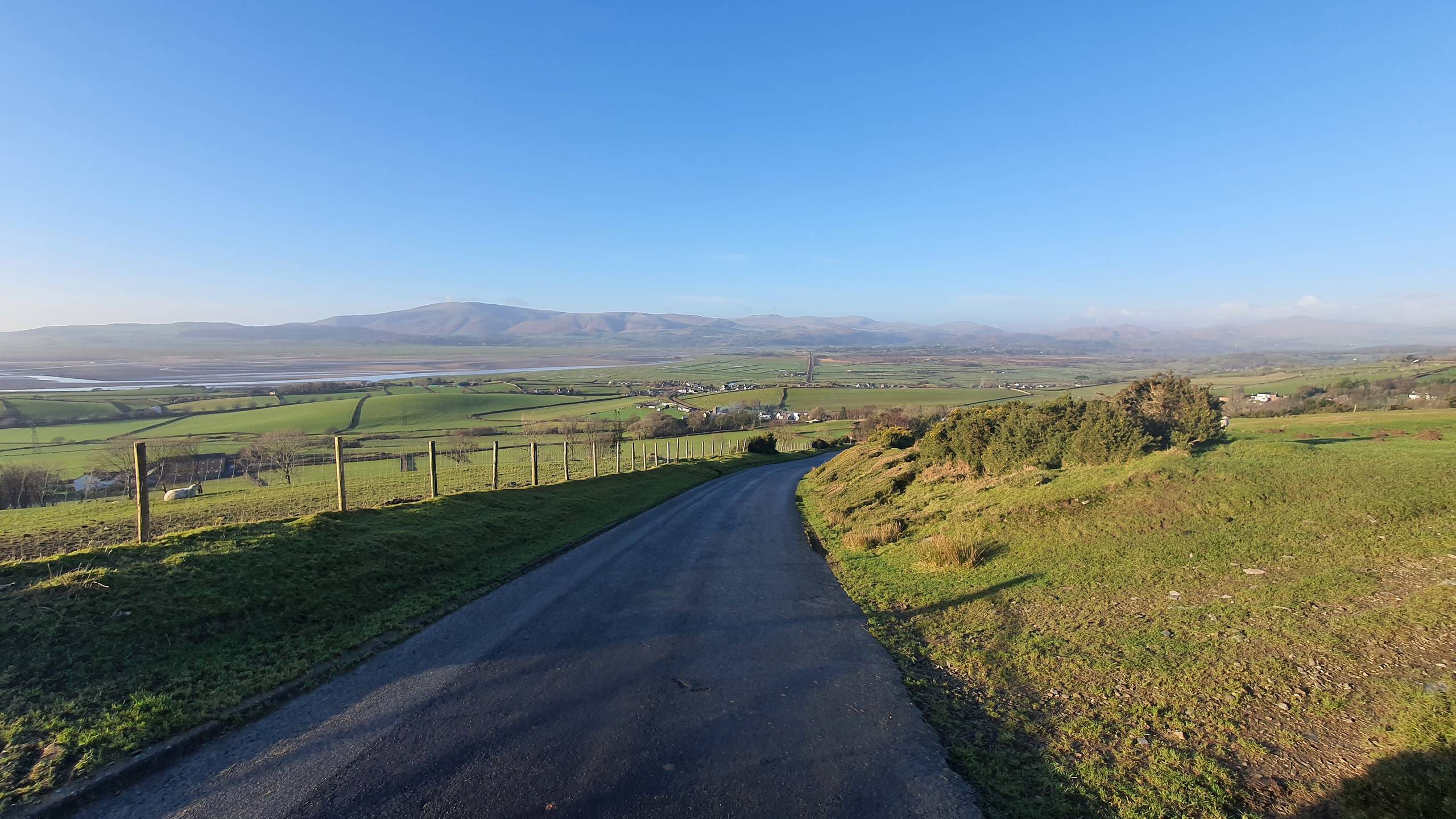
Coming from Ambleside or the central Lakes? The operator's own directions put it at roughly an hour in theory — but warn that that road is frequently closed in winter. That road is Hardknott and Wrynose, and in snow or ice it is not a route to gamble a booked day on. The long way round by the coast is the reliable winter option.
By rail: Northern's Cumbrian Coast line serves Ravenglass, connecting north to Carlisle and south to Barrow-in-Furness. It's one of the few big Lakeland attractions you can genuinely reach by train.
By bus: Stagecoach 7 and X7.
From Keswick and from Penrith, both journeys run down and around rather than straight over — the west coast is further from the northern Lakes than the map suggests, and we'd rather not quote a drive time we can't stand behind. Check live routing on the day, and add margin in winter.
Two for one day
The two pair naturally — the castle sits just east of Ravenglass, and the Ravenglass & Eskdale Railway runs from the village up into Eskdale. There is a joint ticket covering one Muncaster visit plus one return rail journey, and it includes free entry to the Ravenglass Railway museum.
Two practical details: it is online only, and it is valid within 7 days from first entry — so it works as a two-day trip as easily as a single long one. As with everything else here, we don't publish the figure; the operator does.
The honest verdict
For a family, or anyone who likes their history lived-in rather than roped off — yes. One ticket covers a castle that is still somebody's home, roughly 70 acres of gardens, birds of prey and have-a-go archery, and the parking costs nothing. Few paid attractions in Cumbria put that much in one pass.
It suits a full day, not an hour. The displays run to a timetable, the castle opens later than the grounds, and the herons come at the end of the afternoon — so a flying visit spends the whole time fighting the schedule.
It suits you less if you want a quick free stop — nothing here is free beyond the car park — or if you're basing in the central Lakes in winter, when the direct road over Hardknott and Wrynose is frequently shut and the way round is long. Go from the coast, or go in the main season, and it earns its place easily.
Common questions
The valley up the coast — Wastwater, Scafell Pike and England's favourite view.
The direct road in from the central Lakes — 1 in 3, and frequently shut in winter.
Hardknott's twin, and the other half of the same winter warning.
Where the ghost sits sit — the odder end of the Lake District day out.