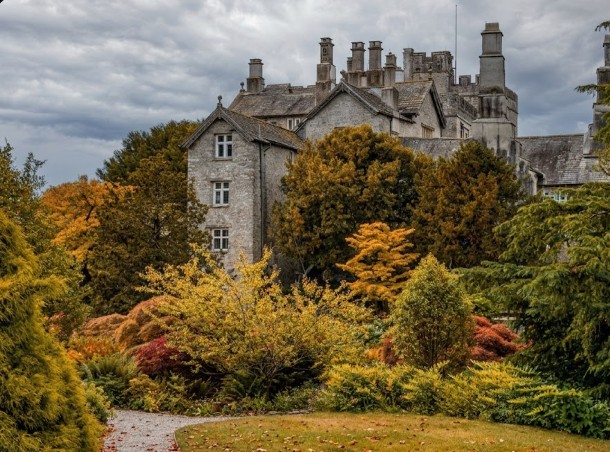
Sizergh Castle and its pele tower rising above the gardens in autumn colour, near Kendal, Lake District
National Trust Not free — members free 3 miles south of Kendal

Sizergh Castle: A Complete Visitor Guide

A National Trust castle that is still a family home after 800 years, a garden with a nationally important rock garden, and 1,600 acres to walk. Here are the honest answers — starting with the one everyone asks.

800+
Years the Strickland family home
1,600
Acres of estate, gardens & lakes
3 mi
South of Kendal · LA8 8DZ
1.5 km
Holeslack accessible trail
Is it free? Parking Who owns it Café What to do Walks Getting there Accessibility FAQ

The question everyone asks

Is Sizergh Castle free?

No. The National Trust's own access guide is unambiguous: the areas of Sizergh that are free to access for all visitors are none. If you are not a National Trust member, you pay for admission and you pay for parking. If you are a member, both are free.

That makes the sums simple: Sizergh is excellent value for NT members and a paid day out for everyone else. We don't publish the admission figures — they change, and the National Trust's Sizergh page always has the current ones.

Before you get out of the car

Parking at Sizergh

The car park is pay and display, tiered by how long you stay — one hour, two hours, four hours or all day — and free for National Trust members and Blue Badge holders. Current charges are on the National Trust's site; we deliberately don't print them.

The detail that actually saves your visit: the parking machine takes coins only. If you don't carry change — and who does — don't stand there patting your pockets: you can pay by card at reception instead. That one fact is worth more than any tariff table.

The car park is roughly 250 yards from the main entrance, with the Visitor Centre — reception, café and shop — right beside it.

The Visitor Centre and car park at Sizergh Castle, near Kendal
The Visitor Centre sits in the main car park — reception, café and shop together.

The best fact on the page

Who owns Sizergh — and does anyone still live there?

Sizergh is owned and managed by the National Trust — and it has been the home of the Strickland family for more than 800 years. Here is the part that makes it genuinely unusual: the family still live there.

Most historic houses are museums of the people who left. Sizergh is a National Trust property that remains an actual family home — you are visiting a house that is still being lived in by the family whose name has been attached to it for the better part of a millennium. That single fact answers two of the most-asked questions about the place, and it is a better story than any ghost.

One naming note: the National Trust brands the property simply as Sizergh. Nearly everyone else — including, statistically, you — calls it Sizergh Castle. Both are right.

Refuelling

Is there a café at Sizergh?

Yes. The café is in the Visitor Centre, alongside reception and the shop, in the main car park — so it works as the first stop or the last one. It serves breakfast, lunch and afternoon tea, along with sandwiches and baked goods, and the entrance is via steps or a ramp.

Because it sits with reception rather than deep in the property, it is also where you solve the coins-only parking machine problem — pay for parking by card here.

The day itself

What to do at Sizergh

The house is the headline — the Strickland home, opened to visitors. One scheduling note: during the summer holidays, house entry between 12:00 and 12:30 is by timed ticket from Visitor Welcome because of high numbers, with free-flow entry from 12:30 to 15:15 and last entry 45 minutes before closing. Open on Bank Holidays; seasonal detail varies, so check the National Trust's page before a special trip.

The garden deserves equal billing: a limestone rock garden, a kitchen garden, orchards, herbaceous borders and two lakes, set in roughly 1,600 acres of estate. Free-range chickens and beehives live on site, and there is a play trail for children.

Then there is the estate itself — the walking is a genuine part of the visit, and it gets its own section below.

The gardens at Sizergh Castle — limestone rock garden, borders and lakes below the house
The limestone rock garden and borders — the garden is half the reason to come.
The house at Sizergh Castle, home of the Strickland family for more than 800 years
Still a family home after 800 years — which is the whole point of Sizergh.

Planning the time

How long does a visit take?

We haven't stopwatched it for you, and we won't pretend to. What the published structure tells you is this: there are three distinct things here — house, gardens, estate walks — and each can carry a chunk of a day. The estate paths alone run from 1.3-mile strolls to a 3.25-mile walk to Kendal.

The practical constraints to plan around: in the summer holidays the house runs a timed-ticket window from 12:00 to 12:30 with free flow from 12:30 to 15:15, and last entry is 45 minutes before closing. So see the house before mid-afternoon rather than gambling on the end of the day, and let the gardens and a walk fill whatever remains — a couple of hours if you are pushing on, comfortably a full day if you are not.

On foot

Walks from Sizergh

The estate is laced with paths, and three settlements anchor them: Levens (1.3 miles), Brigsteer (1.3 miles) and Kendal — 3.25 miles, about 1 hour 45, on a trail that follows the River Kent. Walking out from Kendal and arriving at a castle is a genuinely good way to earn the café.

The Lake District Boundary Walk passes near the pedestrian entrance, and the Holeslack accessible trail is a 1.5 km route up to Holeslack and through Holeslack wood — a proper waymarked option rather than an afterthought.

For the town end of that River Kent trail, and everything else on foot nearby, see our Kendal walks guide.

A walker on the Sizergh estate paths, on the route between the castle and Kendal
1,600 acres of estate — the walking is part of the visit, not an extra.

Road, train, bike, foot

Getting to Sizergh

By road: Sizergh is about 3 miles south of Kendal — postcode LA8 8DZ — with brown signs from the M6, the A591 and the A590. One of those signs comes up shortly after the Brettargh Holt roundabout, so be in the right-hand lane or you'll sail past it. There are two speed humps on the drive, and the car park is roughly 250 yards from the main entrance.

By train: Oxenholme is the nearest station — 4.4 miles away, about 11 minutes in a taxi, or a 4.2-mile cycle via Natland and Sedgwick on largely traffic-free lanes.

By bike: National Cycle Route 70 — the Walney to Wear — passes the main gate and connects to Oxenholme; from Kendal, Route 6 links across to Route 70.

On foot: the River Kent trail from Kendal, 3.25 miles — see walks above.

Contact: 01539 560951 · sizergh@nationaltrust.org.uk

For every visitor

Accessibility at Sizergh

The essentials are genuinely good: 12 designated Blue Badge bays, the nearest just 10 m from visitor reception, and a flat tarmac path from the car park to the garden. A wheelchair is available on site, mobility scooters can be hired through Lake District Mobility, and there are accessible toilets in the Visitor Centre and the Old Forge. Reception has an induction loop, a 76 cm desk height, and chairs for anyone who finds queueing difficult. The 1.5 km Holeslack accessible trail is covered in the walks section above.

The honest counterweight: away from that tarmac spine, the garden has grass and loose gravel paths, steep slopes, terraces and uneven surfaces, and the parkland beyond is open countryside with gates and stiles. Plan the garden loop rather than the far estate if that matters. The full professional survey is on AccessAble.

The local comparison

Sizergh or Levens Hall?

They sit a few miles apart south of Kendal and get compared constantly, but they are different propositions rather than rivals. Sizergh is National Trust — members visit free. Levens Hall is a separate, privately owned house with its own admission, best known for its historic topiary garden. Choose by what your membership covers and which garden style appeals; we are not going to score one against the other.

Out of season

Winter at Sizergh

Sizergh runs a separately ticketed winter event, and it changes the shape of a normal visit: ordinary daytime visiting runs in the morning only, with a Winter at Sizergh ticket needed for the house and gardens from midday. The gardens close in the late afternoon because the paths are unlit, while the café and shop run on into the evening. Parking during the event has its own tariff — still free for members.

Dates, times and tickets are on the National Trust's Sizergh page — check before travelling in the darker months, because the offer genuinely differs from summer.

The honest verdict

Is Sizergh Castle worth visiting?

For National Trust members, unreservedly — entry and parking are free, and you get a lived-in castle, a garden built around a nationally important limestone rock garden, two lakes and 1,600 acres of walking. It is the easiest yes in the south Lakes.

For non-members, it is a paid day out, and worth treating as one: come for the day rather than an hour, see the house before mid-afternoon, and let the gardens and an estate walk do the rest. Garden people and family-history people will be in their element; if what you want from a castle is battlements, dungeons and a gift-shop sword, a ruin like Kendal Castle — free, on the hill above the town — may scratch the itch better.

Who it suits least: anyone expecting free access to any of it — nothing here is free to non-members, and it is better to know that in the car park than at reception.

Still asked

Sizergh Castle, answered

Did Katherine Parr live at Sizergh Castle?
No — this is a common mix-up. Sizergh has been the Strickland family's home for more than 800 years. Katherine Parr's family seat was Kendal Castle, on the hill above the town, and local tradition places her birth there in 1512 — though historians debate her exact birthplace. If you're following the Parr trail, Kendal Castle is the one to visit: free, open access, above the market town. More on both in our Kendal guide.
How do you pronounce Sizergh?
It is commonly given as "SIZE-er", with a silent gh — though you'll hear variations locally. The National Trust brands the property simply as Sizergh; nearly everyone searching for it types Sizergh Castle. Both are understood, and nobody at reception will mark you down.
Is Sizergh Castle haunted?
The National Trust publishes no ghost story for Sizergh, and we're not going to invent one. The genuinely remarkable thing about this castle is the living family — the Stricklands, still in residence after 800 years — not a legendary one.

Nearby & related