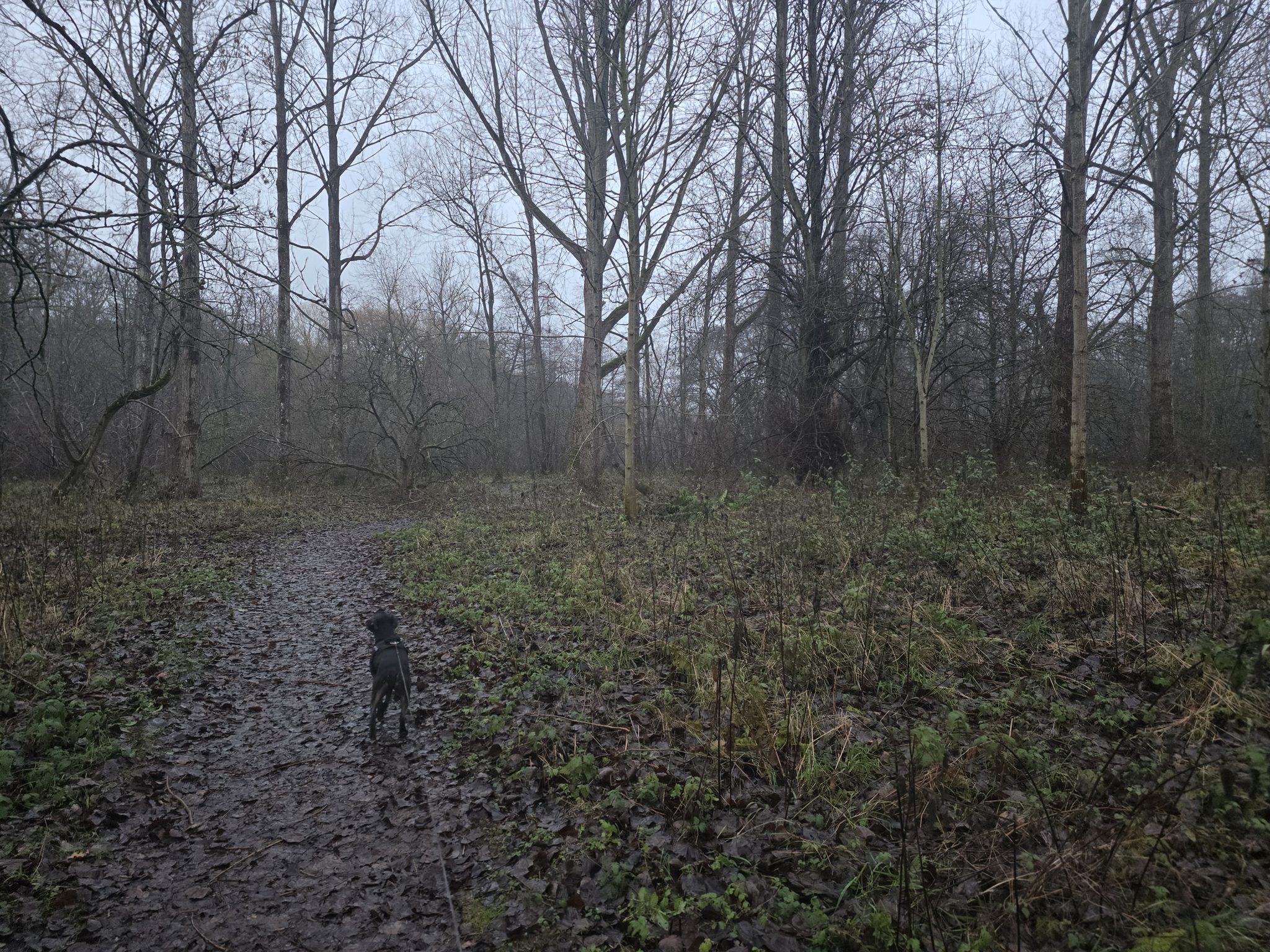
Cass the Staffordshire Bull Terrier on a leafy path through bare woodland on the north side of the wood at Acorn Bank
National Trust · Temple Sowerby, near Penrith

Acorn Bank: the woodland walk to the watermill and the old gypsum mine

A short figure of eight through the woods, with the house in the middle: one loop out to the watermill, the other to the site of the old gypsum mine.
Written and walked by Peter Visited Saturday 28 November 2026
National Trust

Estate near Penrith

1.1 miles

Our walk · 1.75 km

About 30 minutes

26 min 54 s, tracked

Dogs on leads

Around farm animals

The walk

A short walk through the woods at Acorn Bank

Acorn Bank Garden & Watermill is a National Trust estate at Temple Sowerby, about 8 miles by road from Penrith. Behind the house there's a short walk through the woods. Peter, Ellie, Aimee and Cass the Staffordshire Bull Terrier walked it on Saturday 28 November 2026, a wet afternoon with the house and garden closed for the winter.

The walk is a figure of eight with the house where the two loops cross. One loop goes west through the woods to the watermill and back. The other goes east, past the weir on Crowdundle Beck, to the site of the old gypsum mine and back. We tracked it from the house: 1.75 km (1.1 miles), 34 m of ascent and 26 minutes 54 seconds. The car park adds about 50 yards.

It's short, with very little climbing, and the trees give some shelter, so it works on a wet day. On ours the paths were covered in leaves and muddy. The National Trust lists red squirrels and otters among the wildlife in the woods.

Getting there & parking

Getting to Acorn Bank from Penrith

Acorn Bank is at Temple Sowerby, near Penrith (CA10 1SP), about a mile off the A66 and signed with brown signs. From the middle of Penrith it's about 8 miles by road.

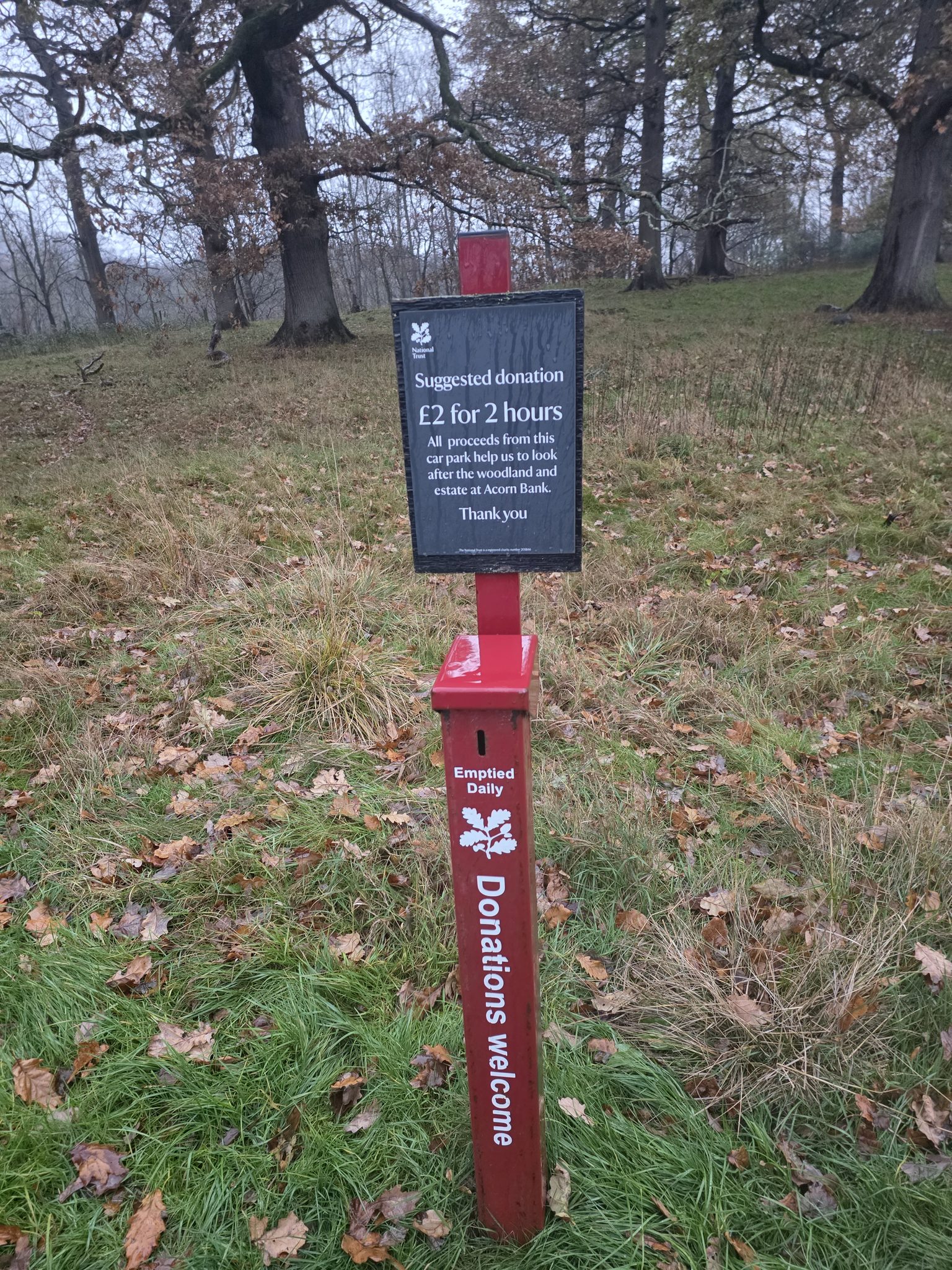
We drove in through the estate gates and parked in the National Trust car park. There's a donation post in the car park asking for a contribution towards looking after the woodland.

The house, garden, café and watermill close for the winter. On our visit the gates were open and we walked the woods, but the Trust lists the car park and parkland as closed over winter, so check the National Trust's Acorn Bank page before you travel. In season the gates are locked at closing time, so check before visiting.

Postcode
CA10 1SP
Road
About a mile off the A66, brown signs
From Penrith
About 8 miles by road
/// what3words, Acorn Bank entrance ///speedy.passports.tennis
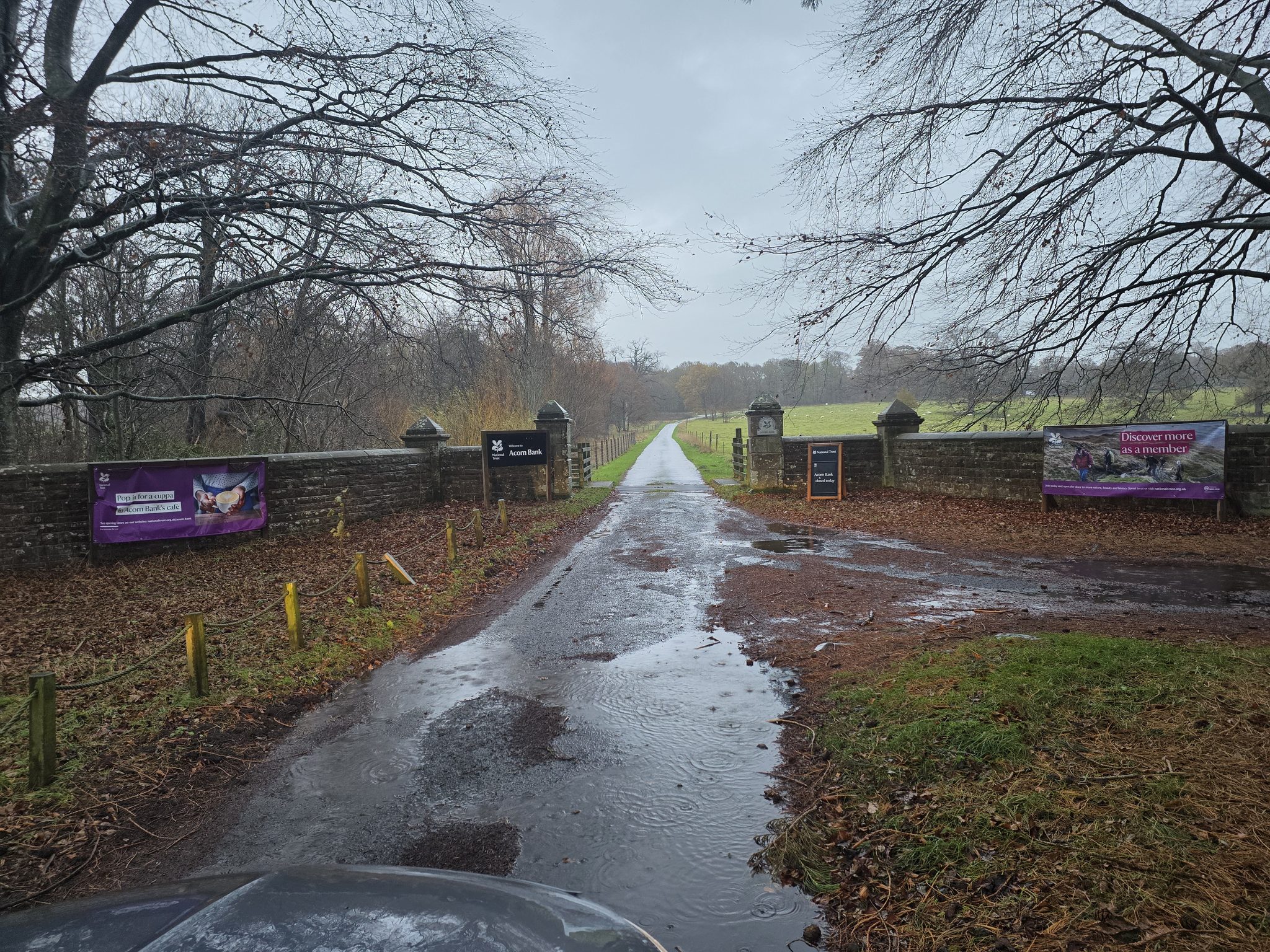
The stone gateposts and wet drive at the entrance to the Acorn Bank estate
The estate entrance gates.
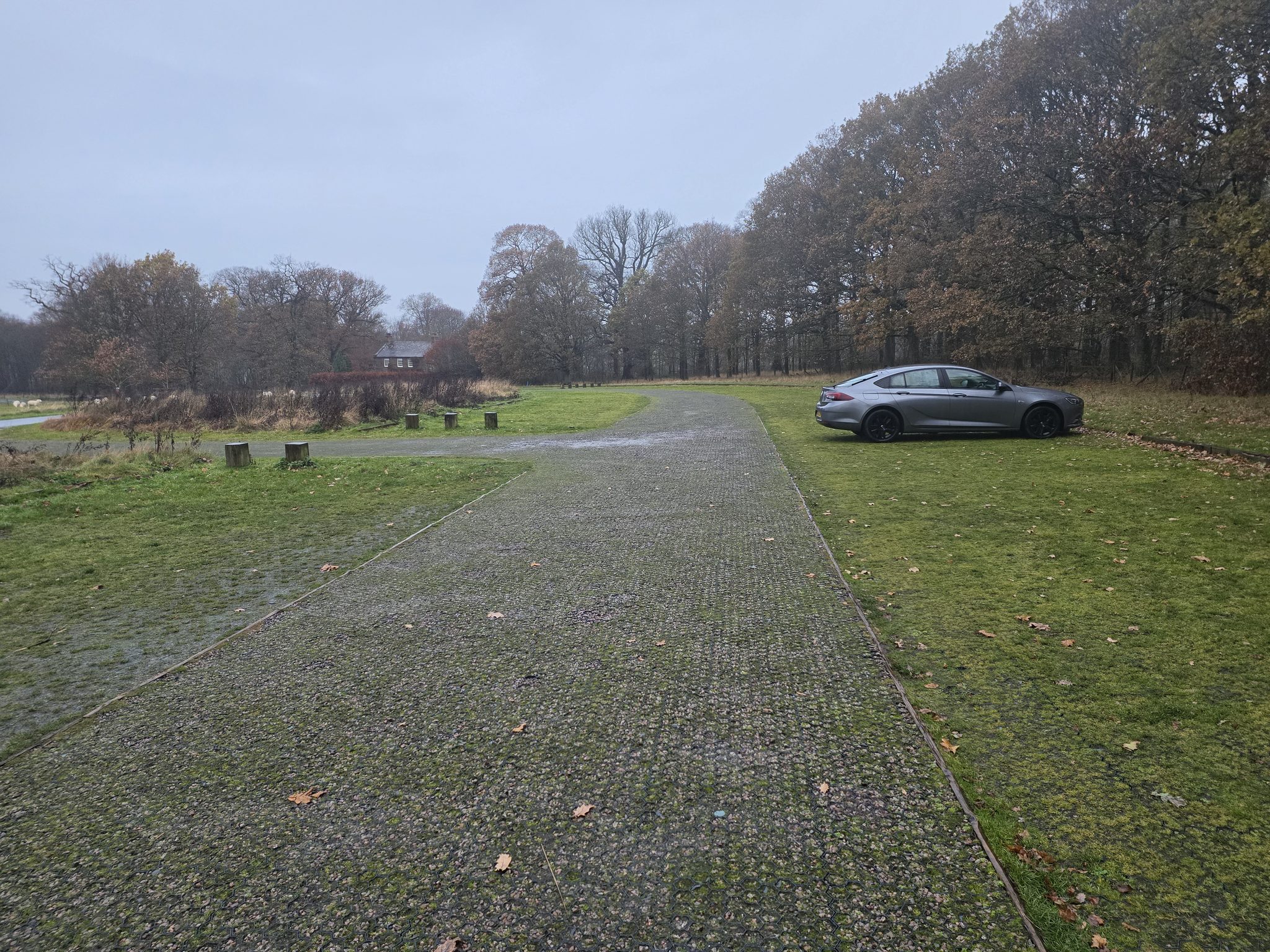
The grass-reinforced National Trust car park at Acorn Bank, edged by trees
The car park.
A red National Trust donations post with a sign in the Acorn Bank car park
The donation post in the car park.

Step by step

Our route through the woods at Acorn Bank

We did the watermill loop first and the mine loop second. The route is obvious most of the way. The one place to watch is the gate with the new bridge on the second loop (step 7).

1

From the car park to the fingerpost by the house

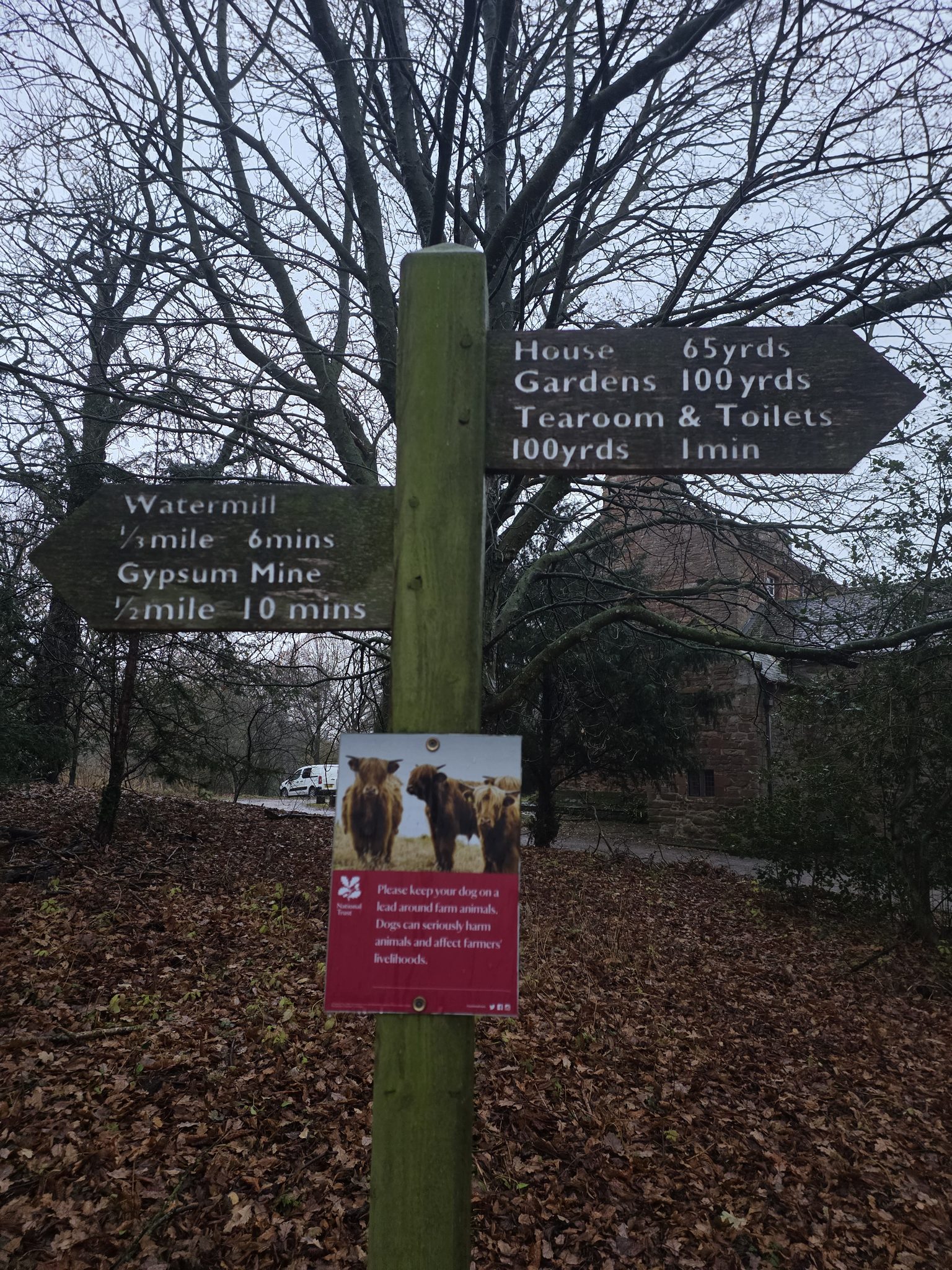
Walk up from the car park towards the house. The fingerpost by the house points one way to the House (65 yds), the Gardens (100 yds) and the Tearoom & Toilets (100 yds, 1 min). The other arms point to the Watermill (⅓ mile, 6 mins) and the Gypsum Mine (½ mile, 10 mins). A sign on the post asks you to keep dogs on leads around farm animals. Just north of the house is a picnic area, with the woodland path beside it. We started tracking here.

Wooden fingerpost by the house at Acorn Bank pointing to the house, gardens, tearoom, watermill and gypsum mine
The fingerpost by the house.
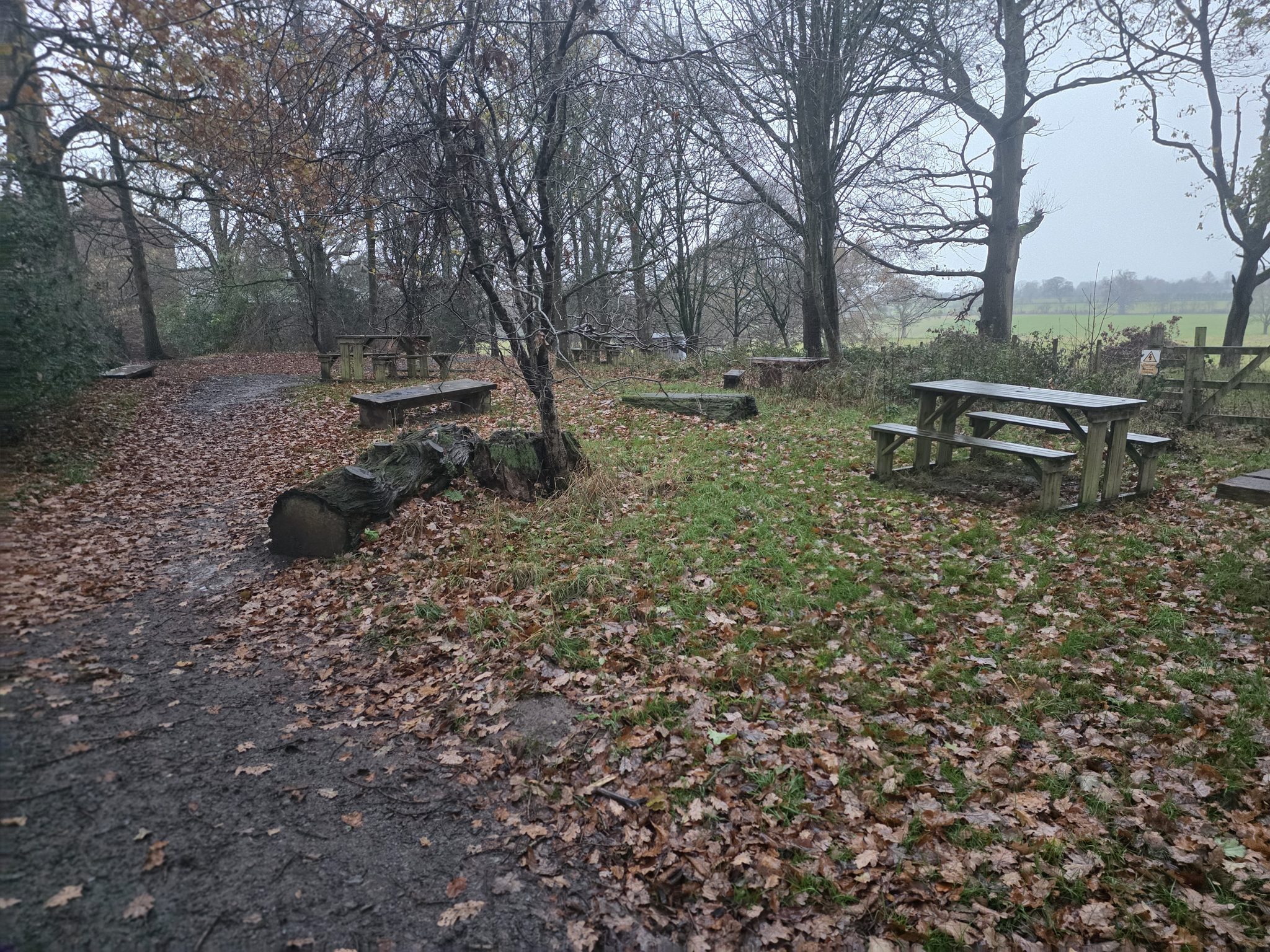
Picnic tables among the trees at the start of the woodland path at Acorn Bank
The picnic area at the start of the woodland path.
2

Loop one: west through the woods

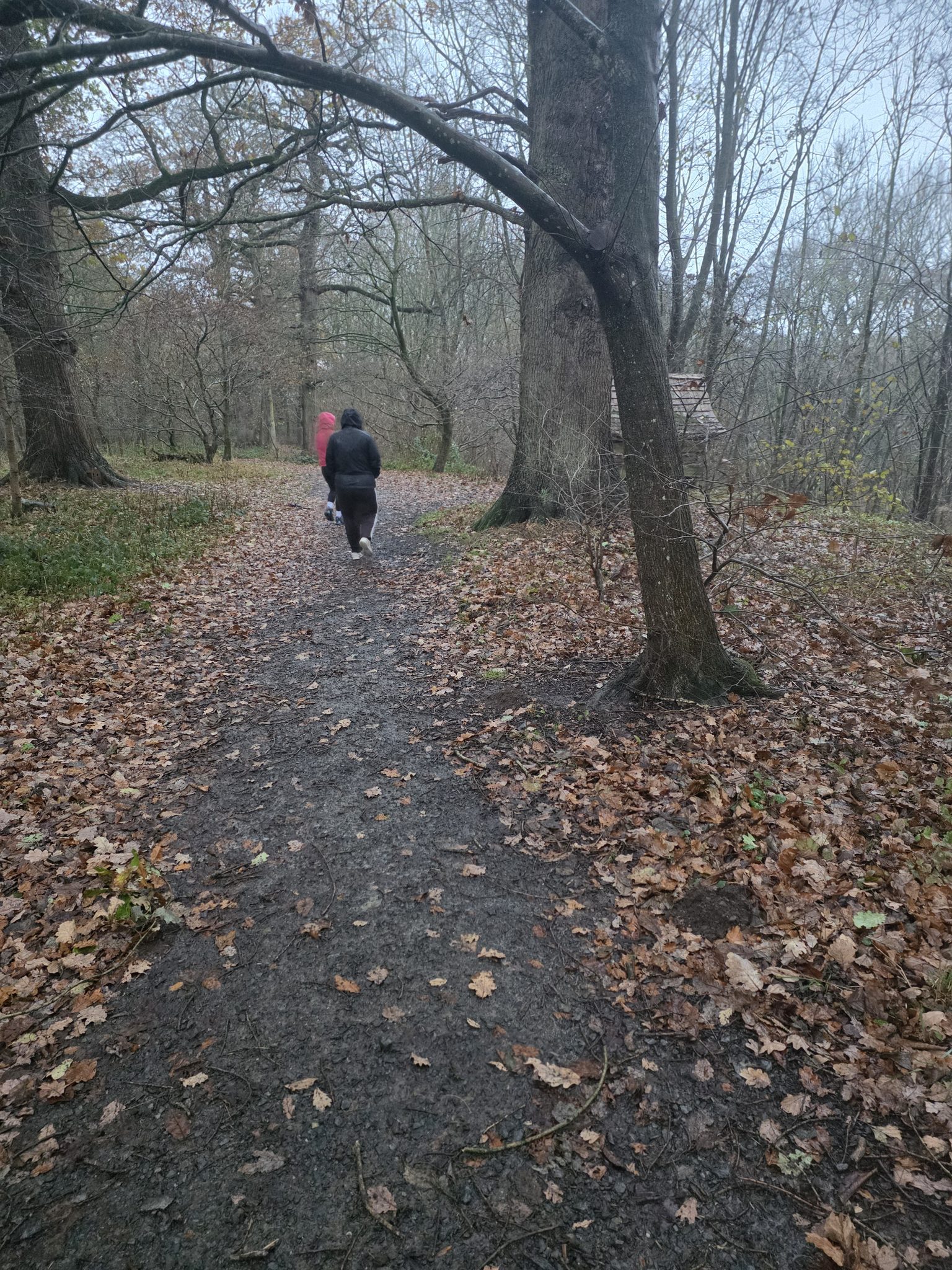
Follow the woodland path west towards the watermill. Early on you pass a timber shelter among the trees.

Ellie and Aimee walking away along a leafy woodland path at Acorn Bank
Ellie and Aimee setting off along the woodland path.
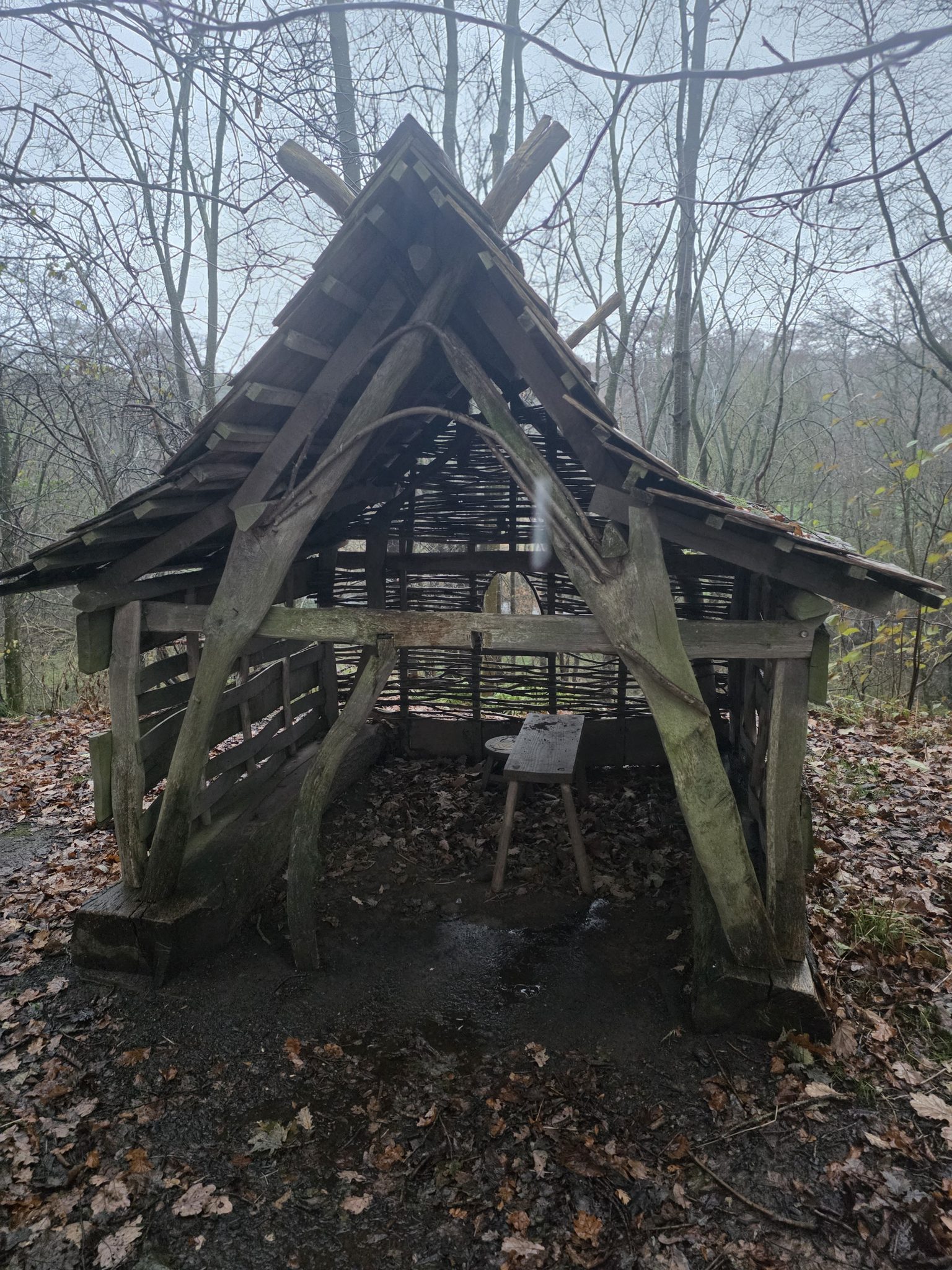
A steep-roofed timber shelter in the woods at Acorn Bank
The timber shelter in the woods.
3

The carved stool and the wooden chimes

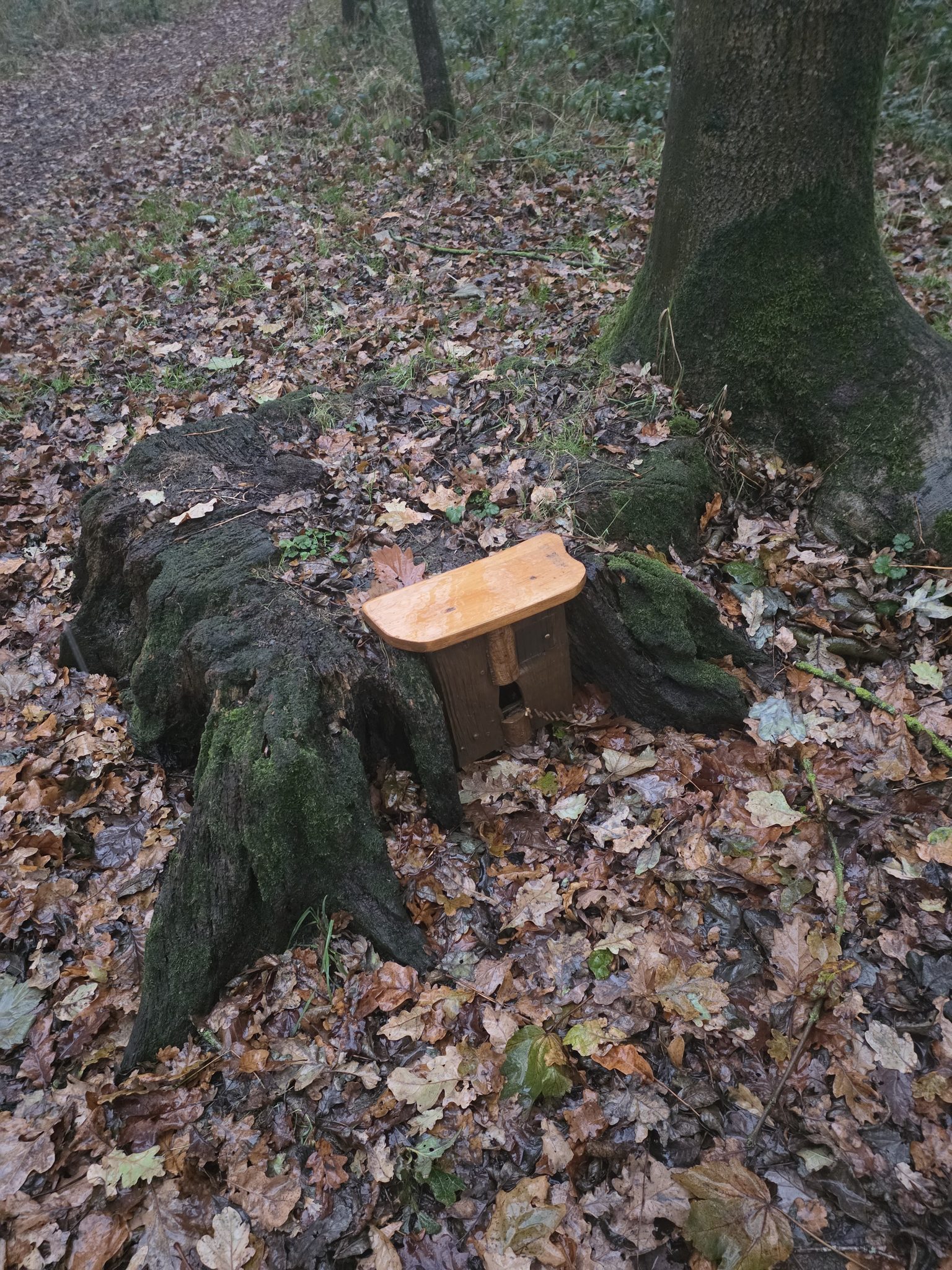
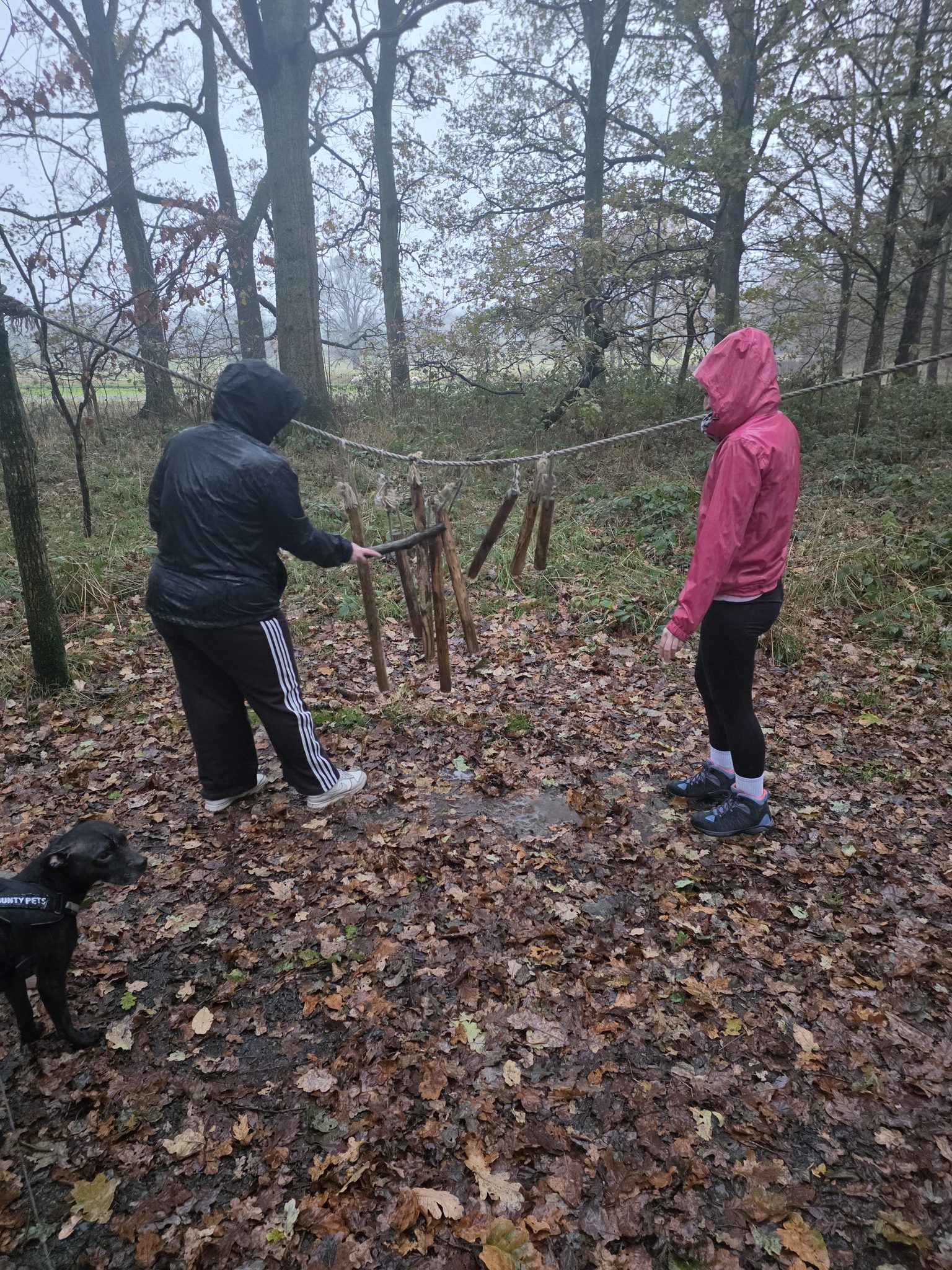
Further along there's a carved wooden stool set into an old tree stump, then a row of hanging wooden chimes beside the path.

A small carved wooden stool on a mossy tree stump among fallen leaves
The carved stool at a tree stump.
Aimee in a black jacket and Ellie in a pink jacket trying the hanging wooden chimes, with Cass the Staffordshire Bull Terrier beside them
Aimee and Ellie trying the wooden chimes, with Cass.
4

The watermill

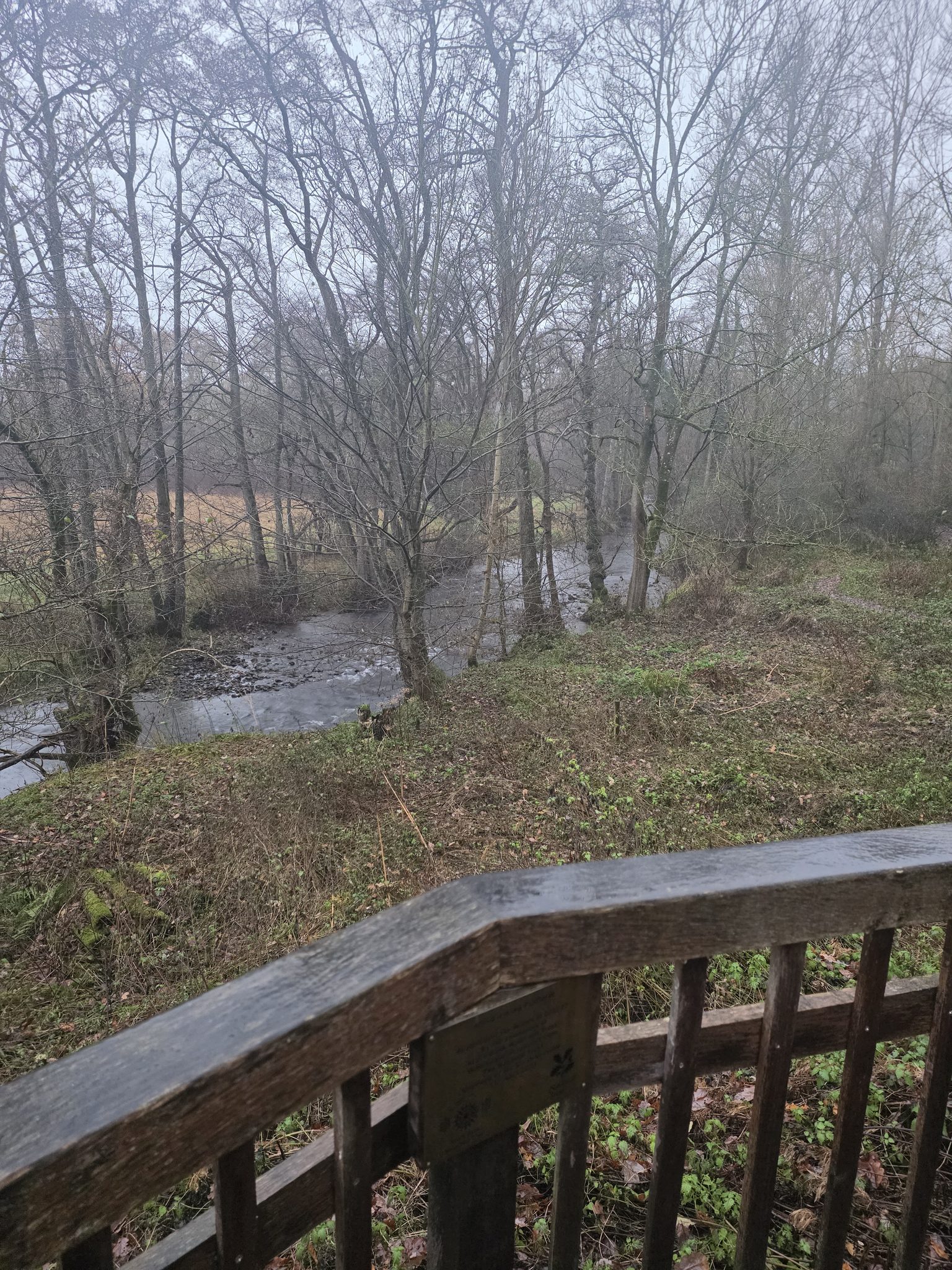
The watermill is at the west end of the first loop, beside Crowdundle Beck. From the platform by the mill you look down on the beck. There's more about the mill below.

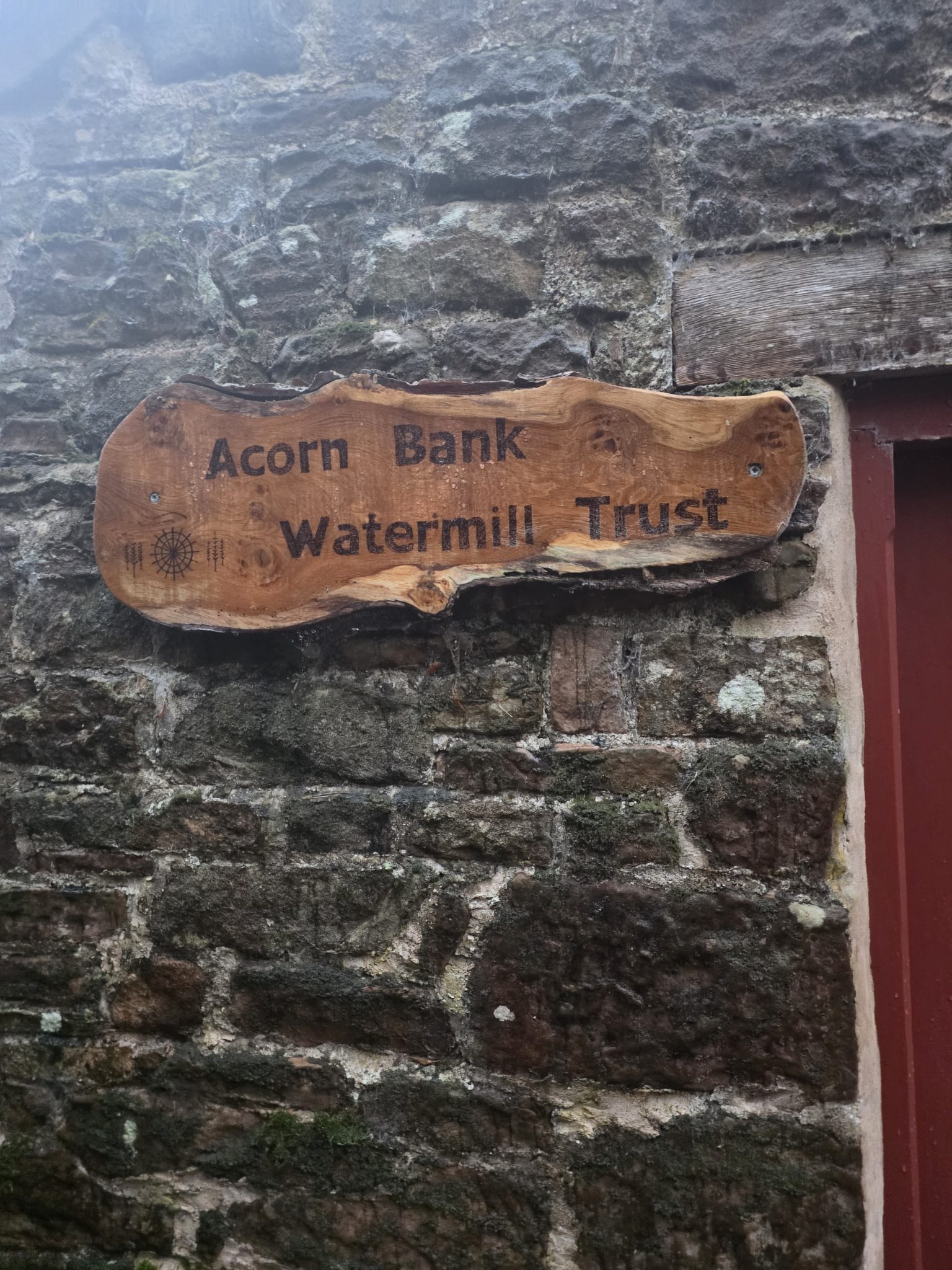
A carved wooden Acorn Bank Watermill Trust sign on the stone wall of the mill
The Acorn Bank Watermill Trust sign.
Crowdundle Beck running through bare trees, seen over the wooden rail of the watermill platform
Crowdundle Beck from the watermill platform.
5

Back along the north side of the wood

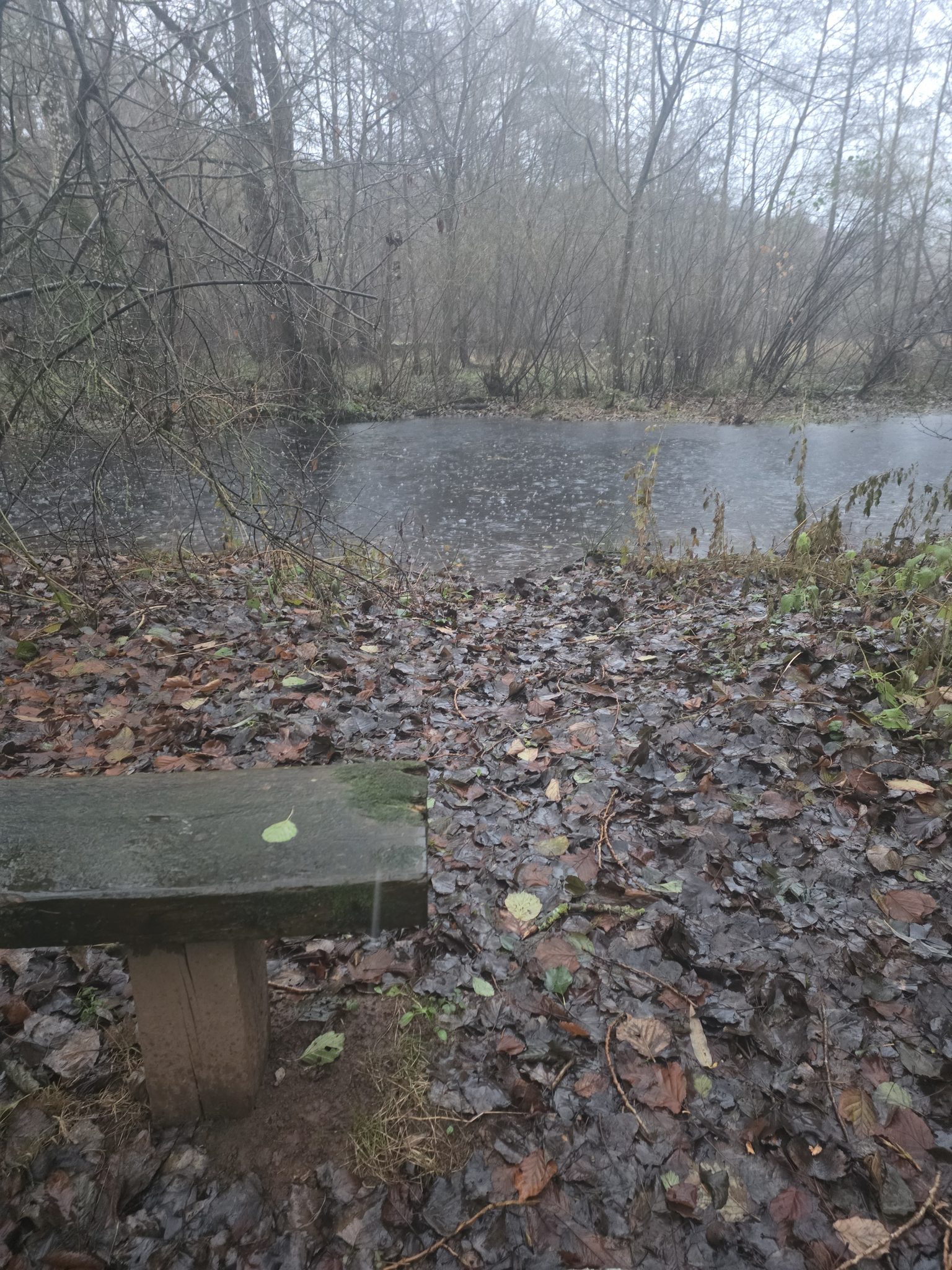
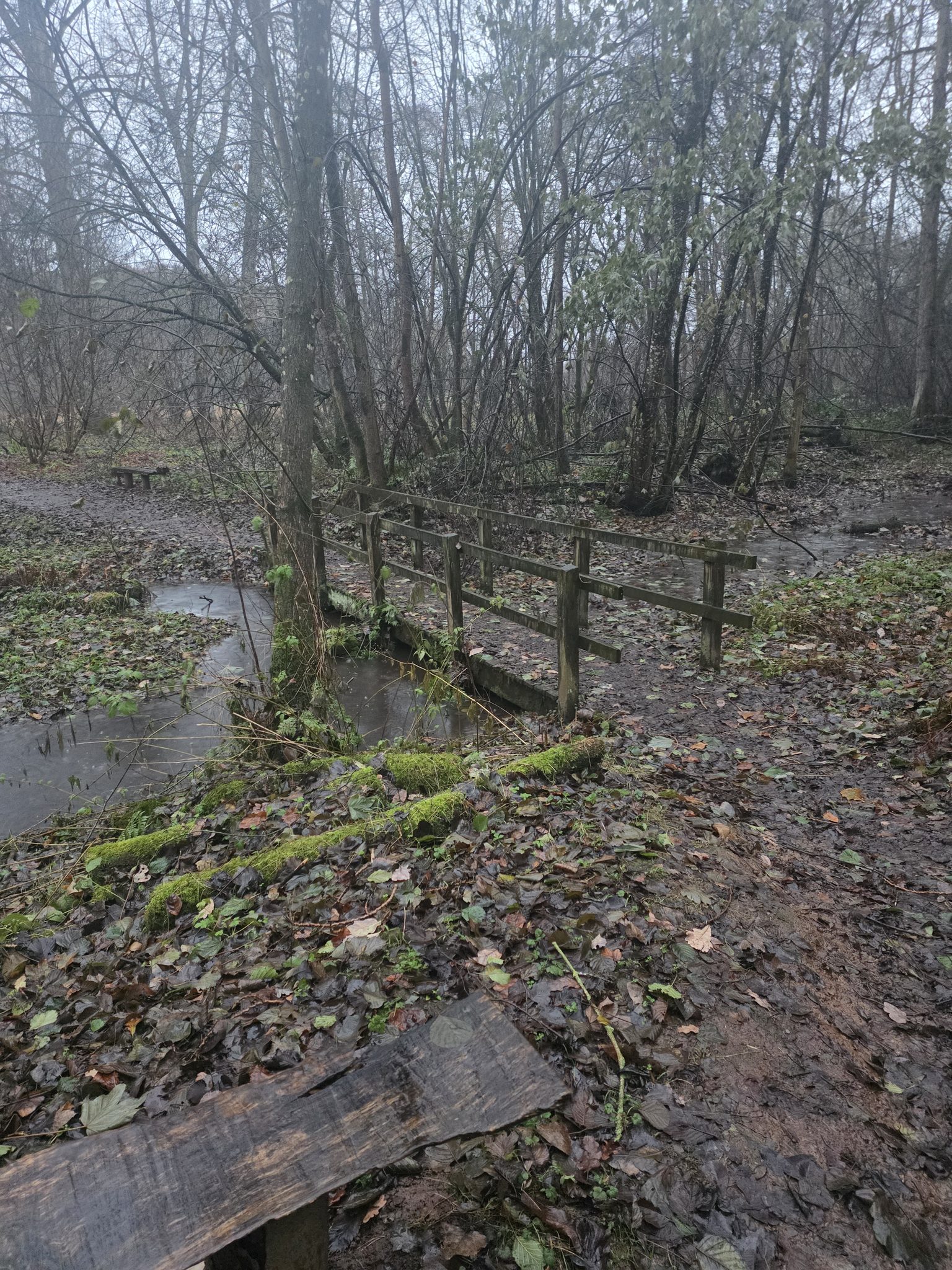
Head back east along the north side of the wood. You pass a pond with a bench, then cross a small wooden footbridge on the way back to the house.

A wooden bench beside a woodland pond, with fallen leaves on the ground
The pond and bench on the way back.
A small wooden footbridge over wet ground in the woods at Acorn Bank
The footbridge on the return path.
6

Loop two: east to the weir

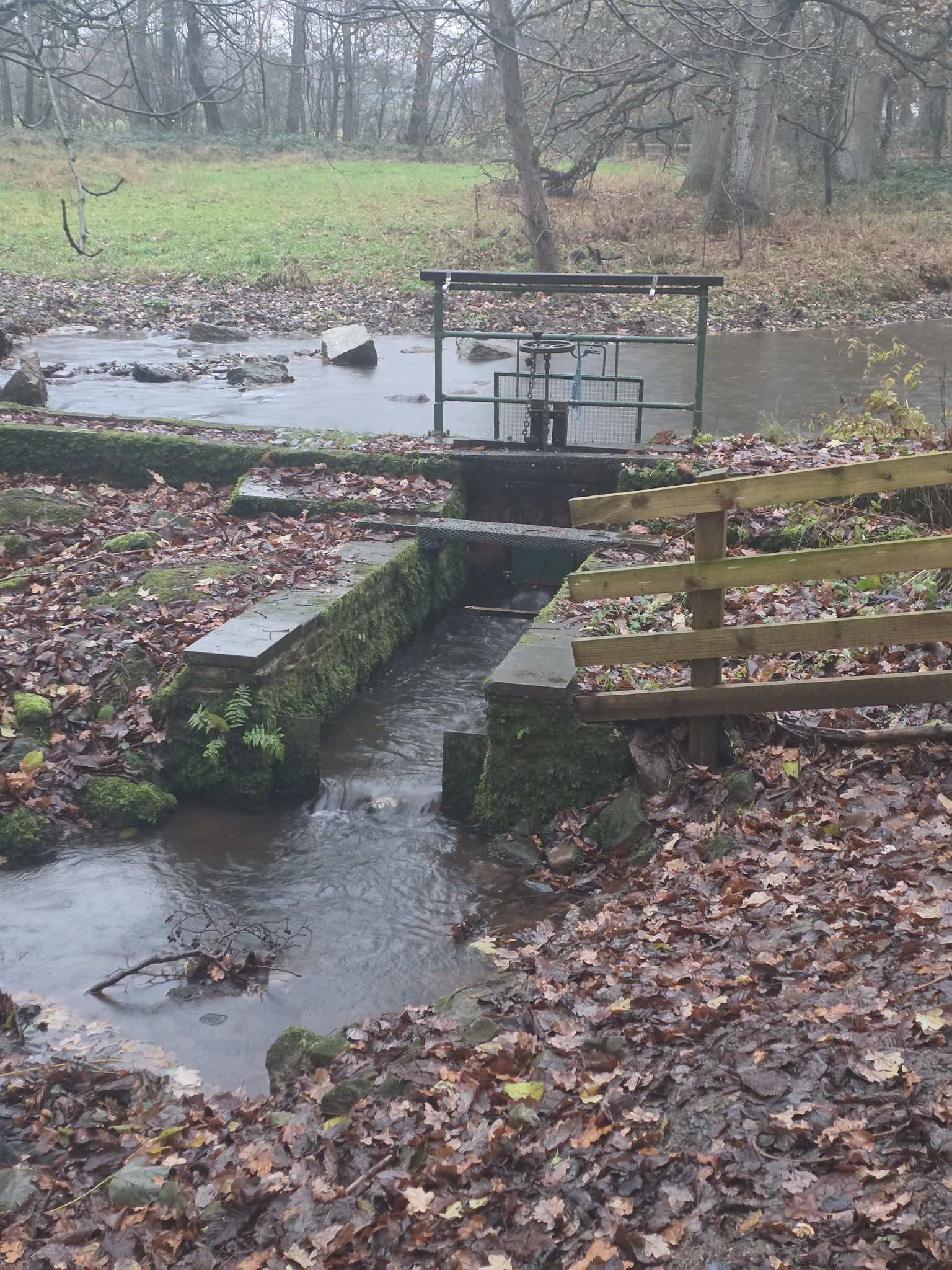
Past the house, the second loop goes the other way, east. You come to a stone weir and sluice on Crowdundle Beck. This is where the water for the watermill leaves the beck.

7

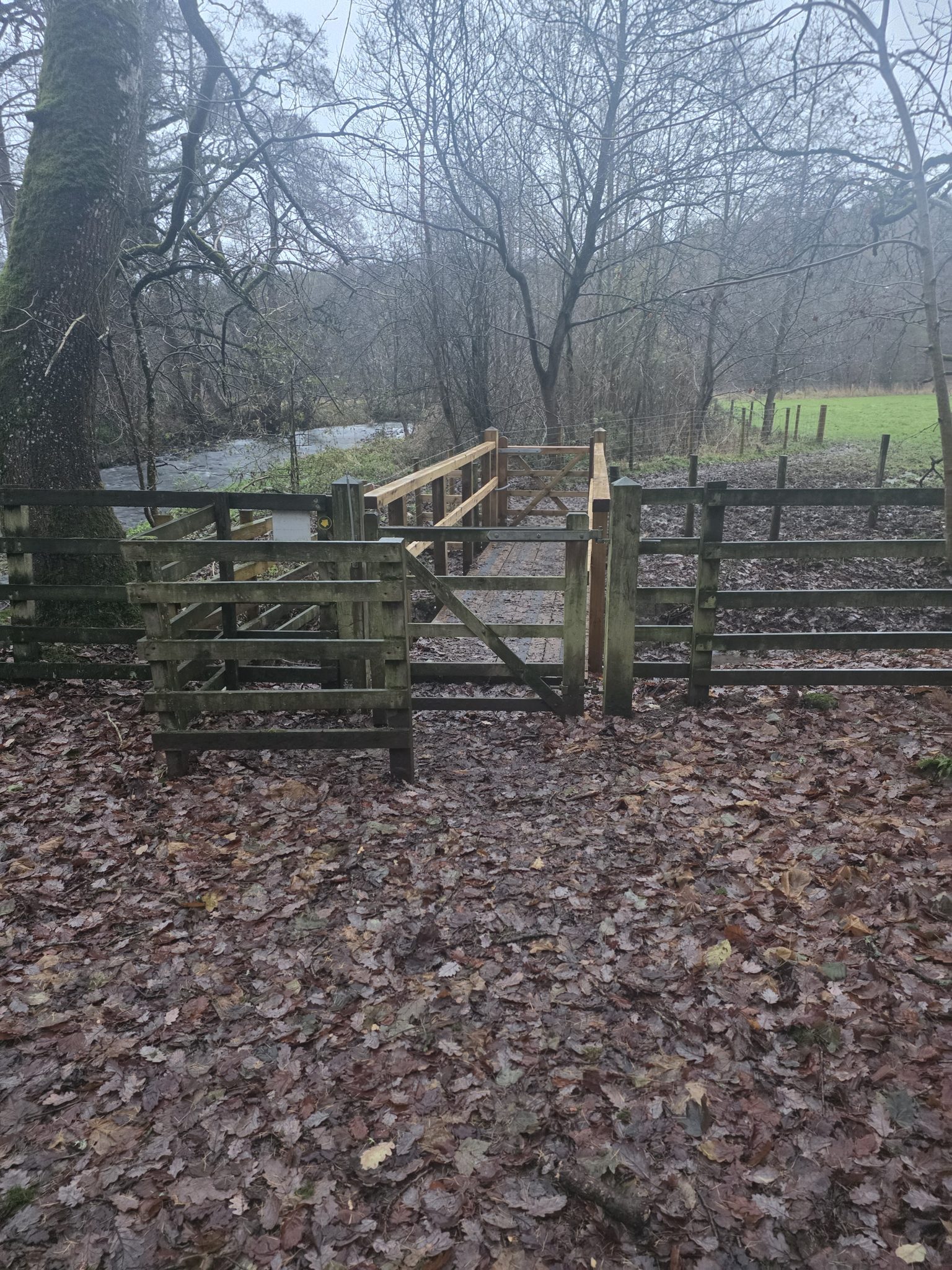
The gate with the new bridge: turn right

Further on there's a gate with a new wooden bridge beyond it. Don't go through. That's a different, longer walk. Turn right here.

The stone weir and metal sluice on Crowdundle Beck, with a channel leading off it
The weir and sluice on Crowdundle Beck, where the water for the mill leaves the beck.
A wooden gate in a fence with a new wooden footbridge beyond it
The gate with the new bridge beyond. Turn right here, don't go through.
8

Through the woods, then left for the mines

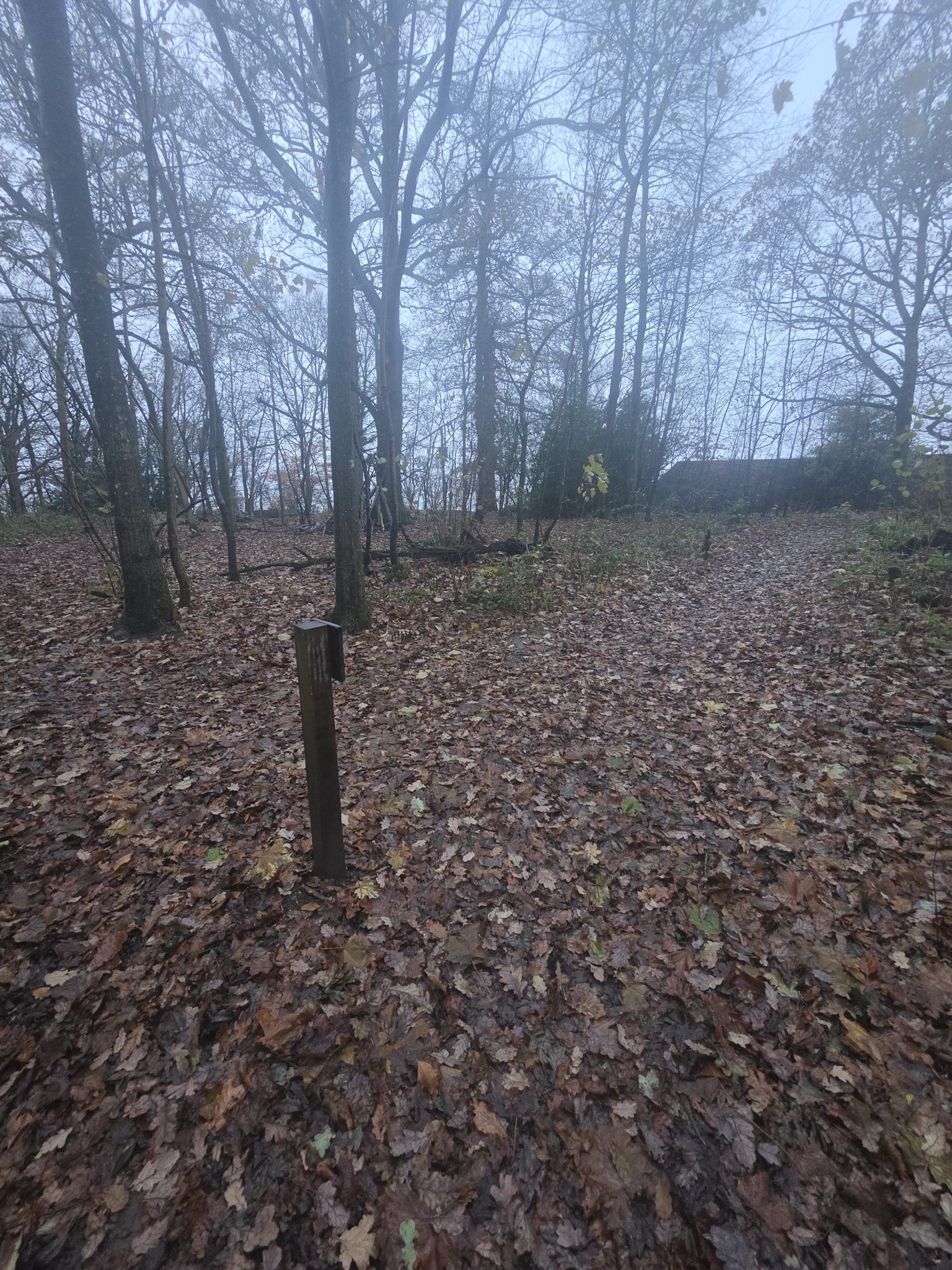
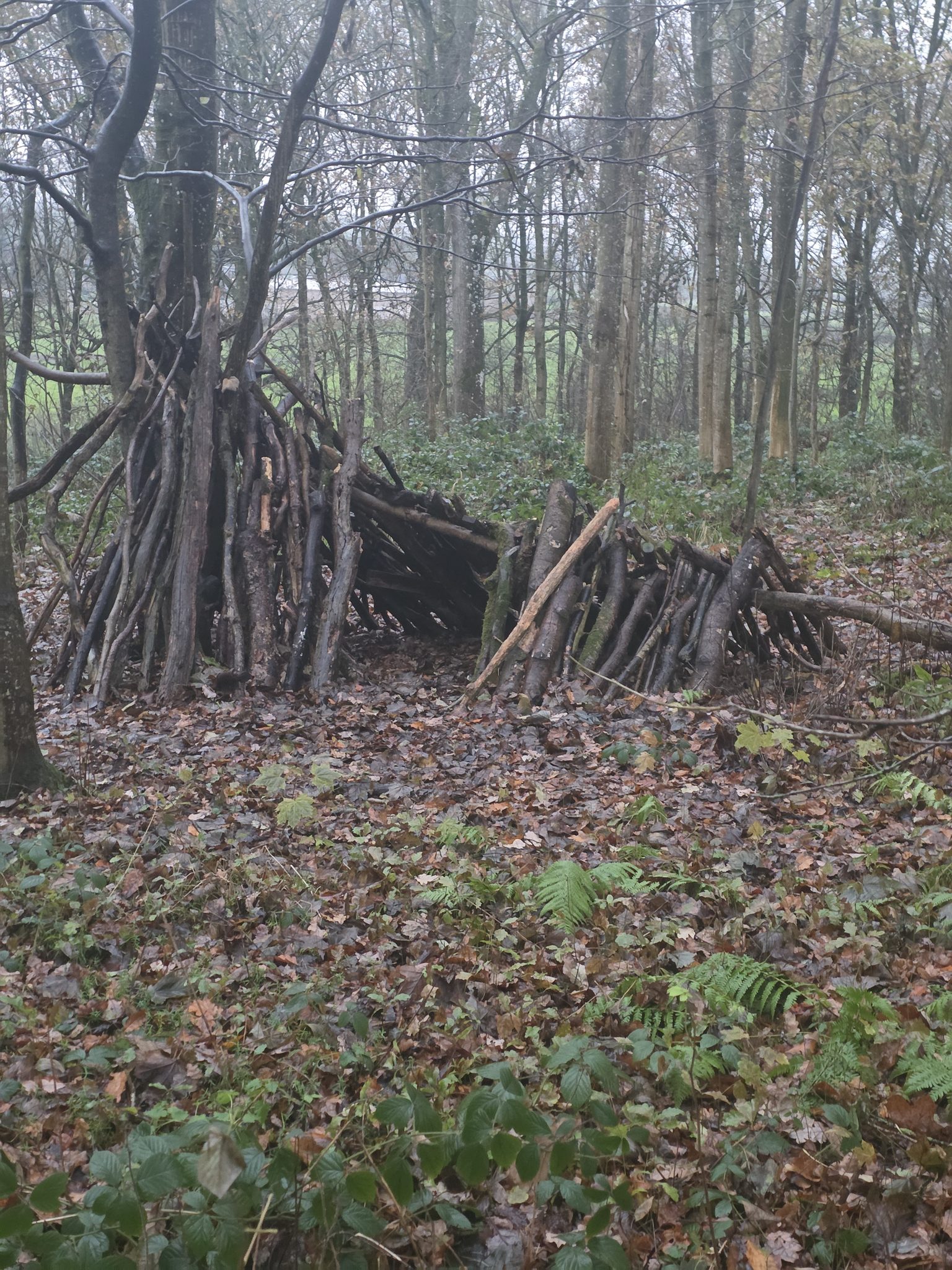
The path carries on through the woods, past a waymark post and a den made of sticks. Further on, turn left for the mines area.

A short waymark post on a leaf-covered path through the woods
A waymark post in the woods.
A den built from leaning sticks against a tree in the woods
The stick den in the woods.
9

The gypsum mine, then back the way you came

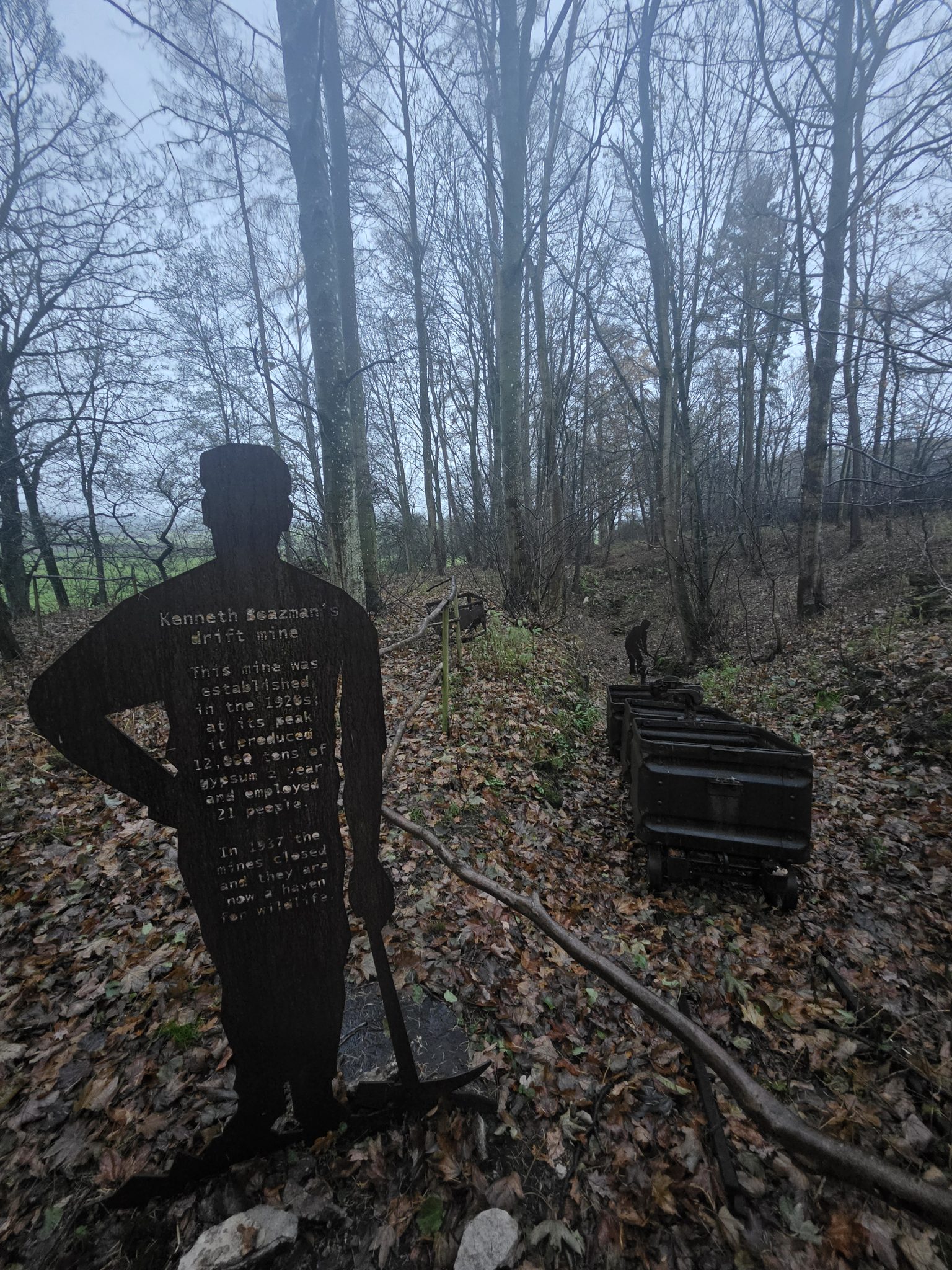
At the south-east end of the walk is the site of Kenneth Boazman's drift mine, marked by a silhouette board and old ore tubs. There's more about the mine below. From here, come back on yourself.

10

Back to the house by the garden wall

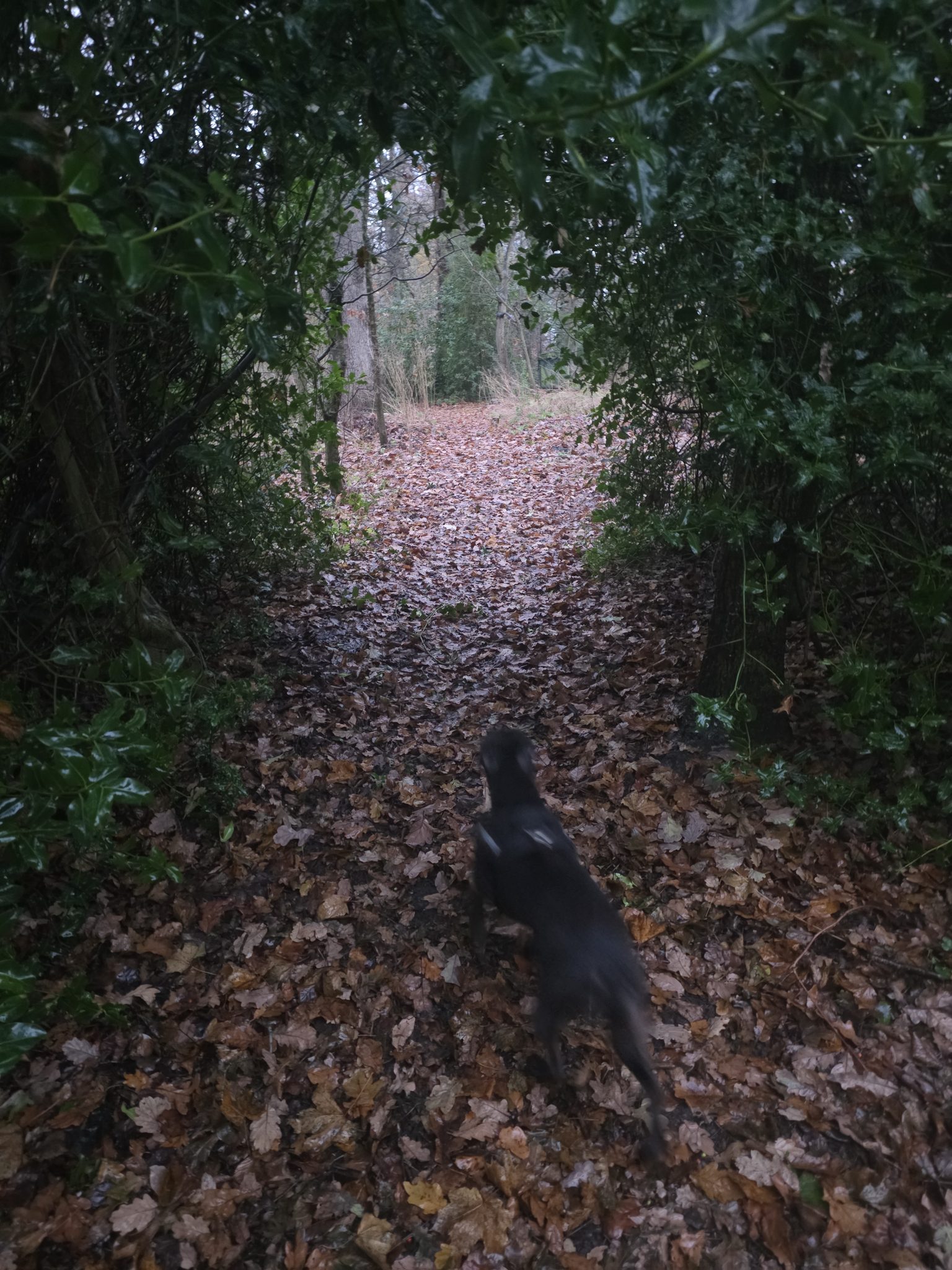
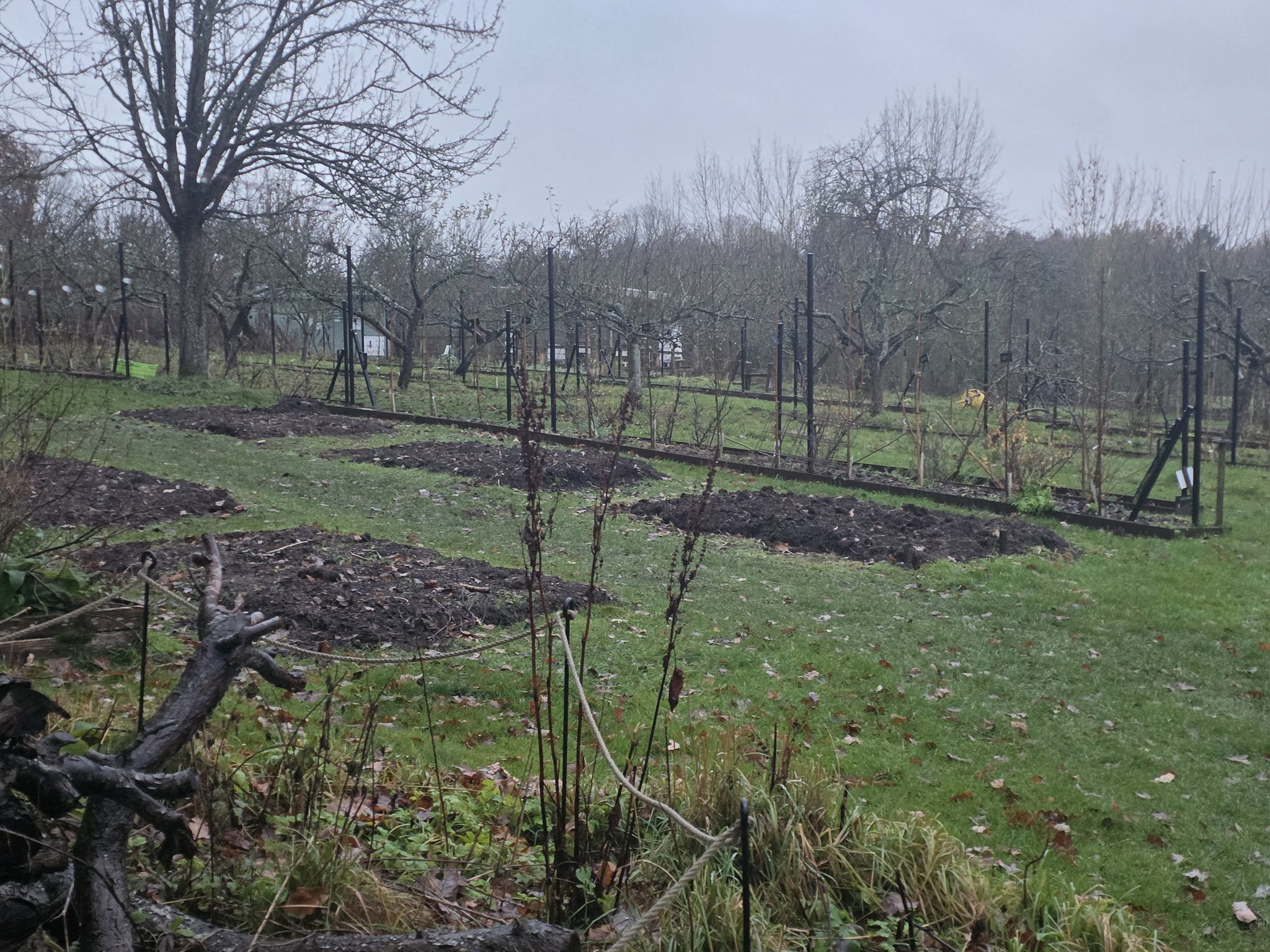
The way back runs near the garden wall, under an arch of holly, with the orchard beside the path.

Cass the Staffordshire Bull Terrier on a leafy path under an arch of holly
The holly arch on the way back, with Cass.
The Acorn Bank orchard in winter, with fruit trees and bare beds, seen from the path
The orchard, seen from the path.

The watermill

Acorn Bank watermill

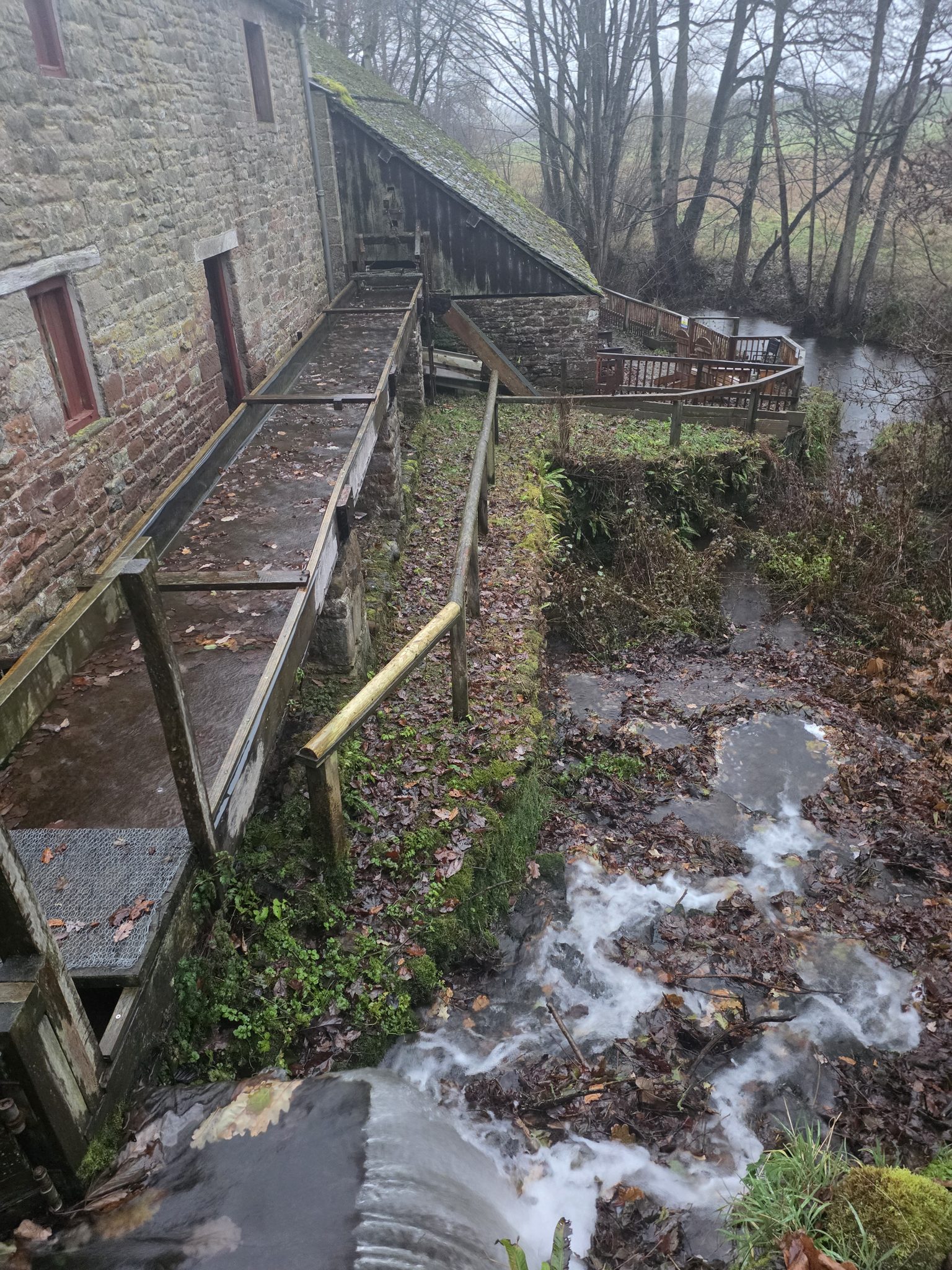
The watermill is a 19th-century mill on a much older site. Historic England lists it at Grade II*, together with its weir, as "Acorn Bank Mill with associated weir".

The mill's water comes from the weir on the second loop. Historic England's listing says it is taken from Crowdundle Beck at a stone weir about 350 m east-south-east of the mill, which is the weir at step 6. So the mill race links the two loops of this walk as well as the house does.

The National Trust began restoring the mill in the 1990s, when it also opened up the estate walks. Volunteers from the Acorn Bank Watermill Trust, a registered charity (no. 1193320), now run it. In season, the National Trust says, the mill grinds wholemeal flour at weekends and on bank holidays.

The stone watermill at Acorn Bank with its long timber launder above Crowdundle Beck
Acorn Bank watermill and its timber launder beside Crowdundle Beck.

The gypsum mine

Kenneth Boazman's drift mine

According to the National Trust, the Boazman family mined gypsum at Acorn Bank from the 1880s. At the far end of the second loop, a silhouette board marks Kenneth Boazman's drift mine.

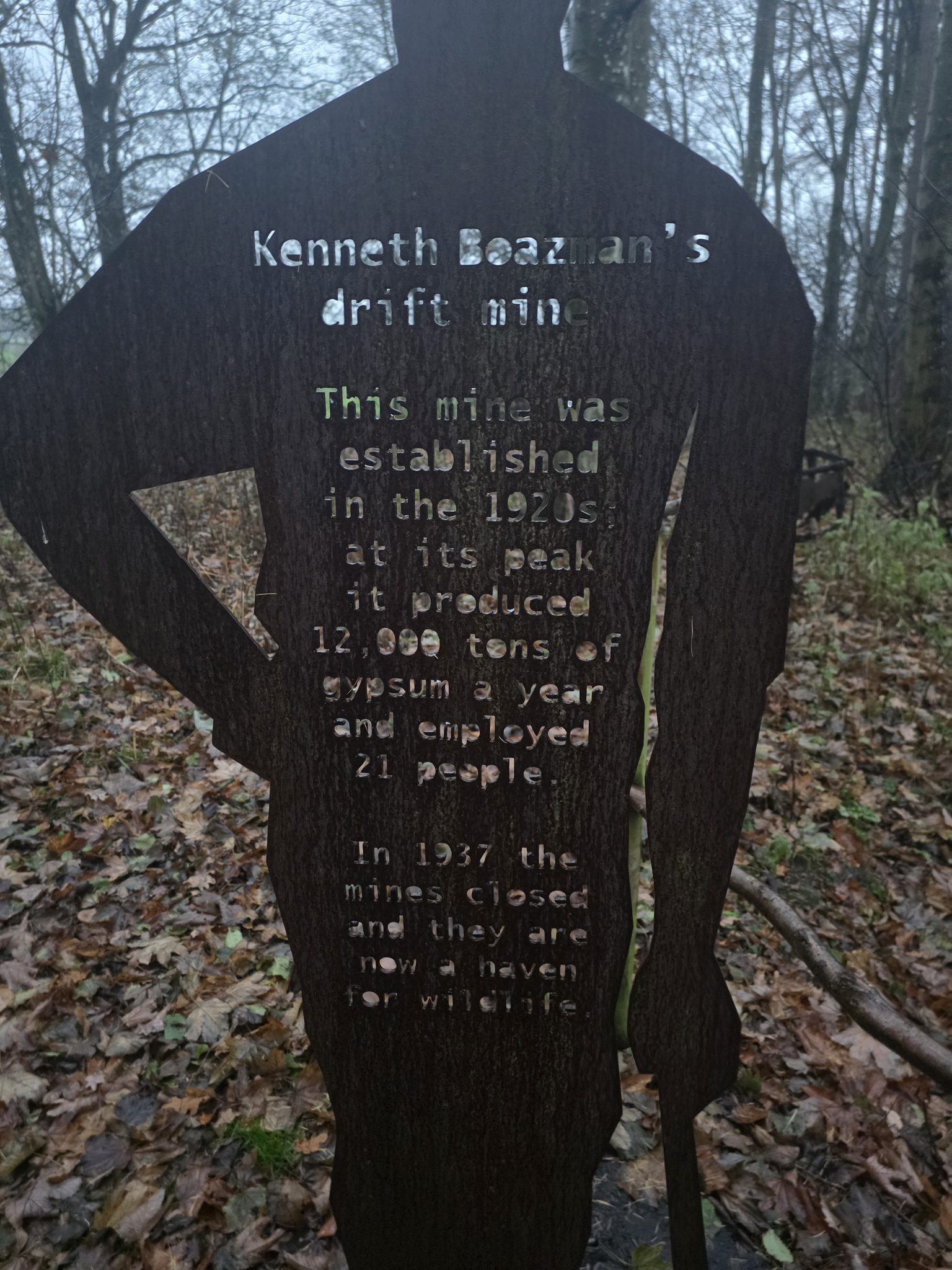
The board says the mine was established in the 1920s, and at its peak it produced 12,000 tons of gypsum a year and employed 21 people. The mines closed in 1937, and the board says they are now a haven for wildlife.

The mine and the mill were connected. Historic England records that in the early 1920s the mill's second waterwheel position was converted to power a rope haulage system and a pump for the gypsum mine.

A metal silhouette board of a miner and two old ore tubs among the trees at Acorn Bank
The silhouette board and ore tubs at Kenneth Boazman's drift mine.
Close-up of the drift mine board, with text about the mine cut into the miner's silhouette
The board at the drift mine.

Make it longer

Longer walks at Acorn Bank

Start from the lay-by by the bridge

About half a mile along the lane there's a roadside lay-by where the road crosses the bridge. You can park there and walk in. We haven't walked in from there ourselves.

The paths beyond our route

The woodland paths go further than we went, including through the gate with the new bridge at step 7. We haven't walked them, so we can't tell you where they lead.

The Trust's walk to Temple Sowerby

The National Trust publishes a 3.2-mile Acorn Bank to Temple Sowerby walk, starting and finishing at the Acorn Bank car park. We haven't walked it.

Walk in from the villages

The Trust says public footpaths lead into the estate from Temple Sowerby (1.3 km) and from Newbiggin (1.2 km).

Visiting

When Acorn Bank Garden & Watermill is open

The house, garden, café and watermill close for the winter. In season the Trust opens part of the week, spring to autumn, and in recent years it has reopened at weekends from February. The gates are locked at closing time, so check before visiting.

On our visit in late November the gates were open and we walked the woods. The Trust lists the car park and parkland as closed over winter, though, so check its page before travelling.

In season the garden and estate are ticketed. For anyone who isn't a National Trust member, Acorn Bank is a paid attraction. Members get in free.

Dogs are welcome on the estate and in the courtyard. Only assistance dogs are allowed in the gardens.

Opening times and tickets on the National Trust site

Common questions

Acorn Bank, answered

Is Acorn Bank worth visiting?
For a short woodland walk, we think so. On our wet visit in late November the house and garden were closed, but in under half an hour the walk through the woods still took us to the watermill, the weir that feeds it and the site of the old gypsum mine. In season the garden, café and watermill open as well.
What is the history of Acorn Bank?
Acorn Bank is a National Trust estate of 180 acres of woodland and parkland at Temple Sowerby. The Boazman family mined gypsum here from the 1880s, and a board in the woods says Kenneth Boazman's drift mine opened in the 1920s and closed in 1937. The watermill is a 19th-century mill on a much older site, listed at Grade II* together with its weir on Crowdundle Beck. The Trust opened up the estate walks and began restoring the mill in the 1990s.
Where do you park for the Acorn Bank walk?
We parked in the National Trust car park at Acorn Bank, Temple Sowerby (CA10 1SP), about a mile off the A66 and signed with brown signs. The what3words for the entrance is ///speedy.passports.tennis. A donation post in the car park asks for a contribution towards the woodland. The Trust lists the car park as closed over winter and locks the gates at closing time in season, so check its website before you travel. There is also a roadside lay-by about half a mile along the lane, by the bridge, where you can park and walk in.
When is Acorn Bank open?
The house, garden, café and watermill close for the winter. In season the Trust opens part of the week, spring to autumn, and in recent years it has reopened at weekends from February. On our visit in late November the gates were open and we walked the woods, but the Trust lists the car park and parkland as closed over winter, so check its page before travelling.
Do you need a ticket for Acorn Bank?
In season, yes, unless you are a National Trust member. The garden and estate are ticketed, so for non-members Acorn Bank is a paid attraction, and members get in free. Check current prices on the National Trust's website.
Can you walk to Acorn Bank from Temple Sowerby?
Yes. The National Trust says public footpaths lead into the estate from Temple Sowerby (1.3 km) and from Newbiggin (1.2 km). It also publishes a 3.2-mile Acorn Bank to Temple Sowerby walk that starts from the Acorn Bank car park. We haven't walked either.

Nearest pub

The Kings Arms, Temple Sowerby

Known for

The Kings Arms is in Temple Sowerby village (CA10 1SB), just south of Acorn Bank. Its own site lists nine en-suite rooms, food from breakfast through to dinner, a games room and a beer garden.

The Kings Arms website

Keep exploring

More around Penrith