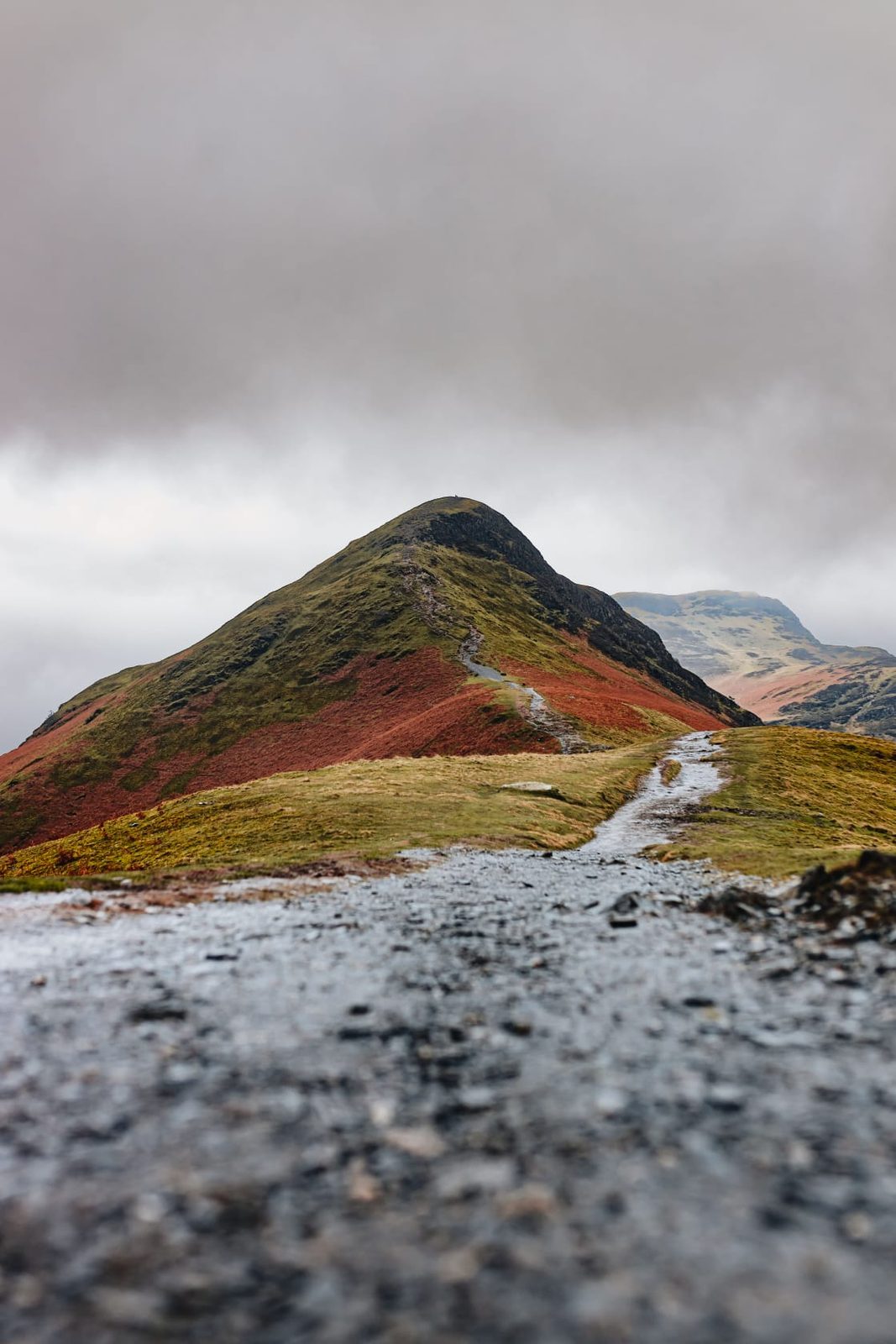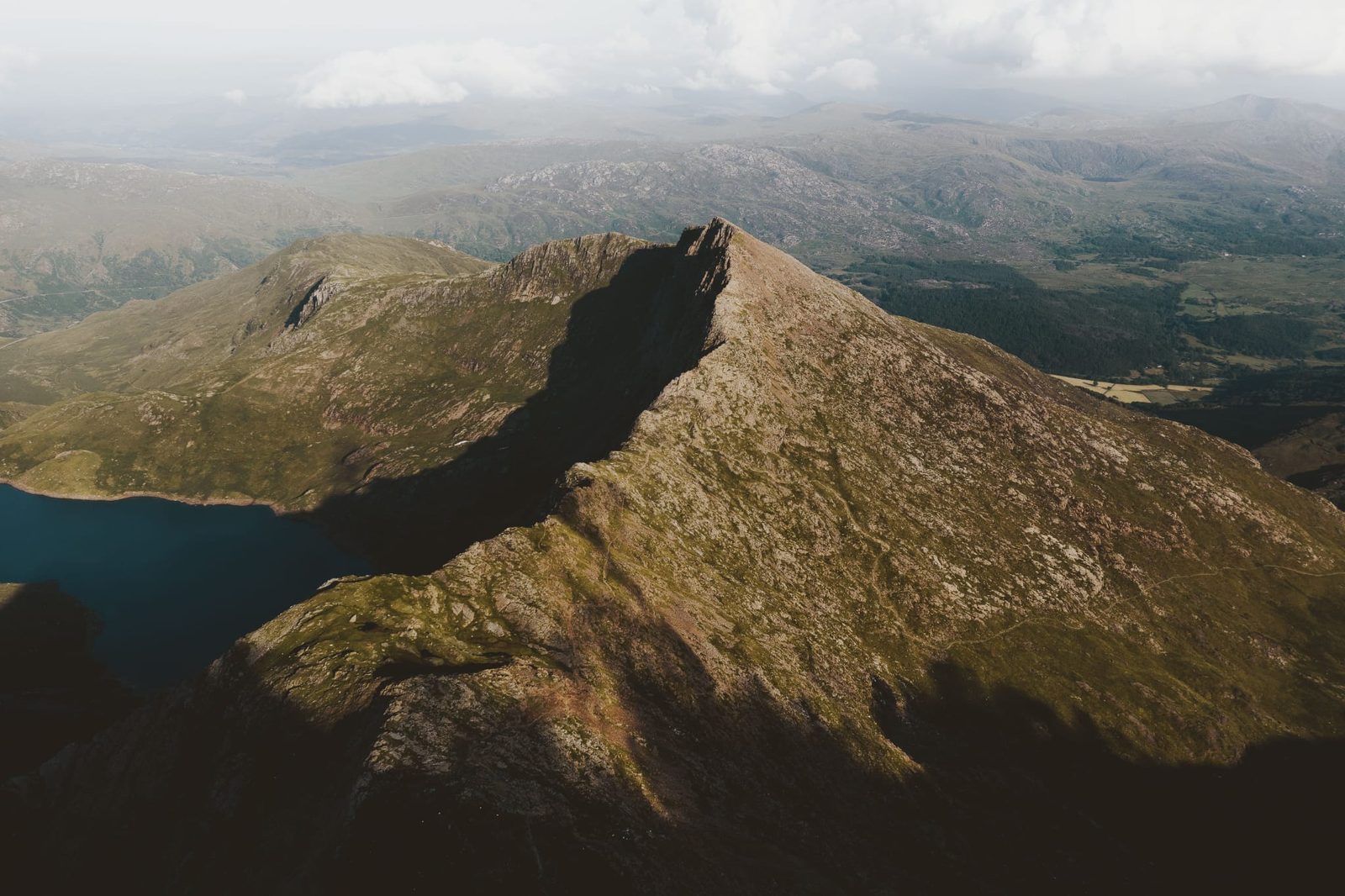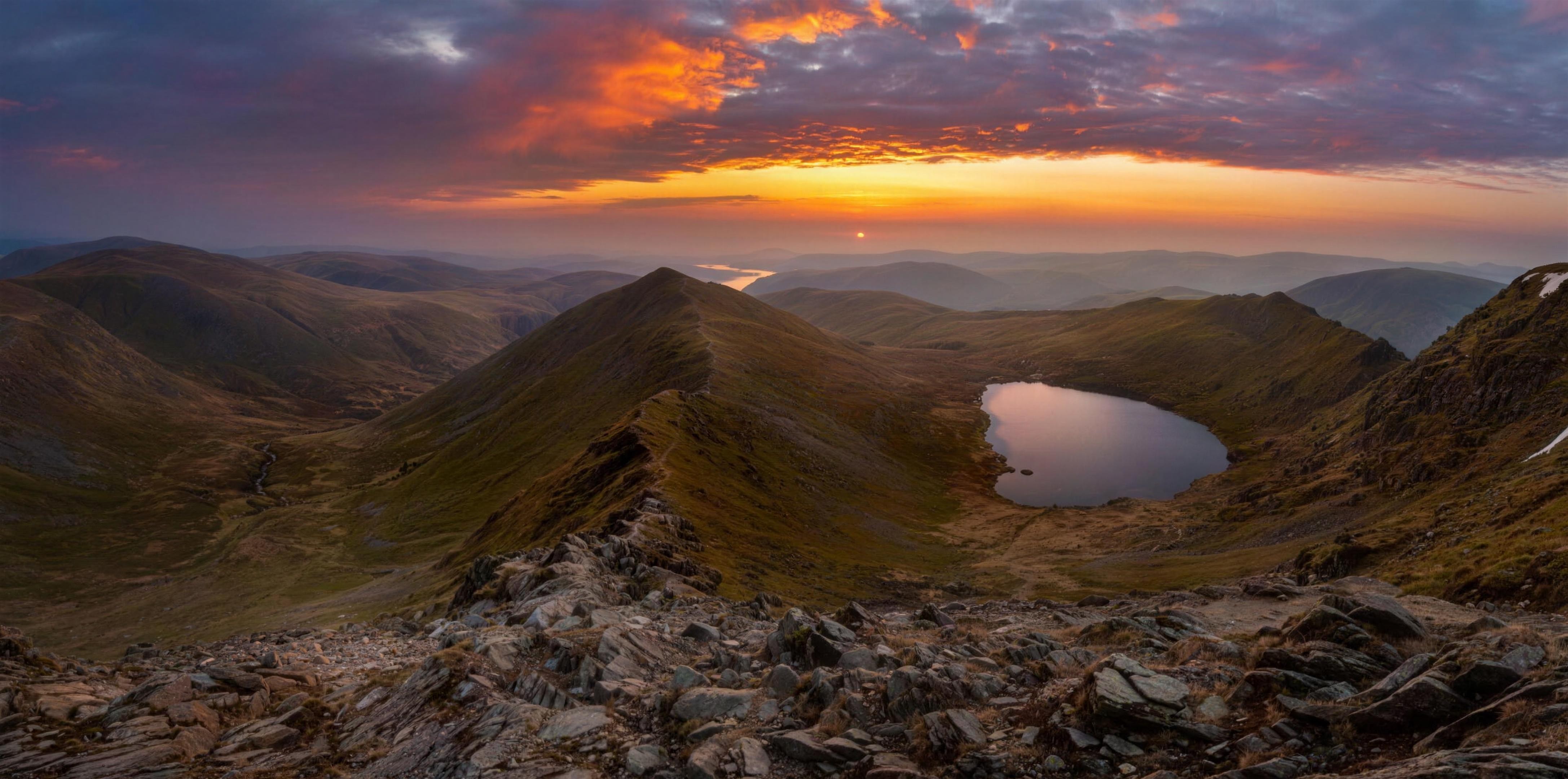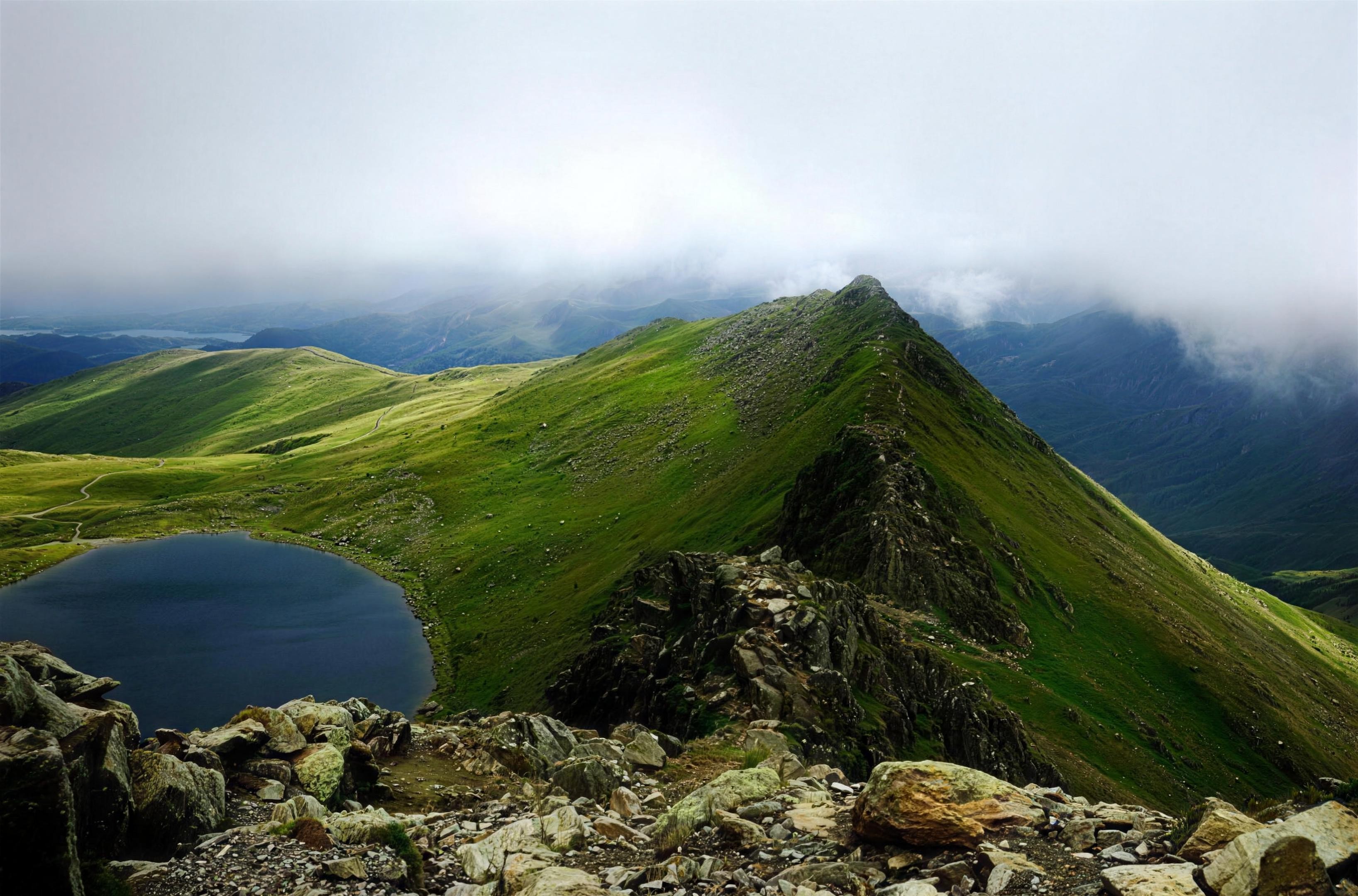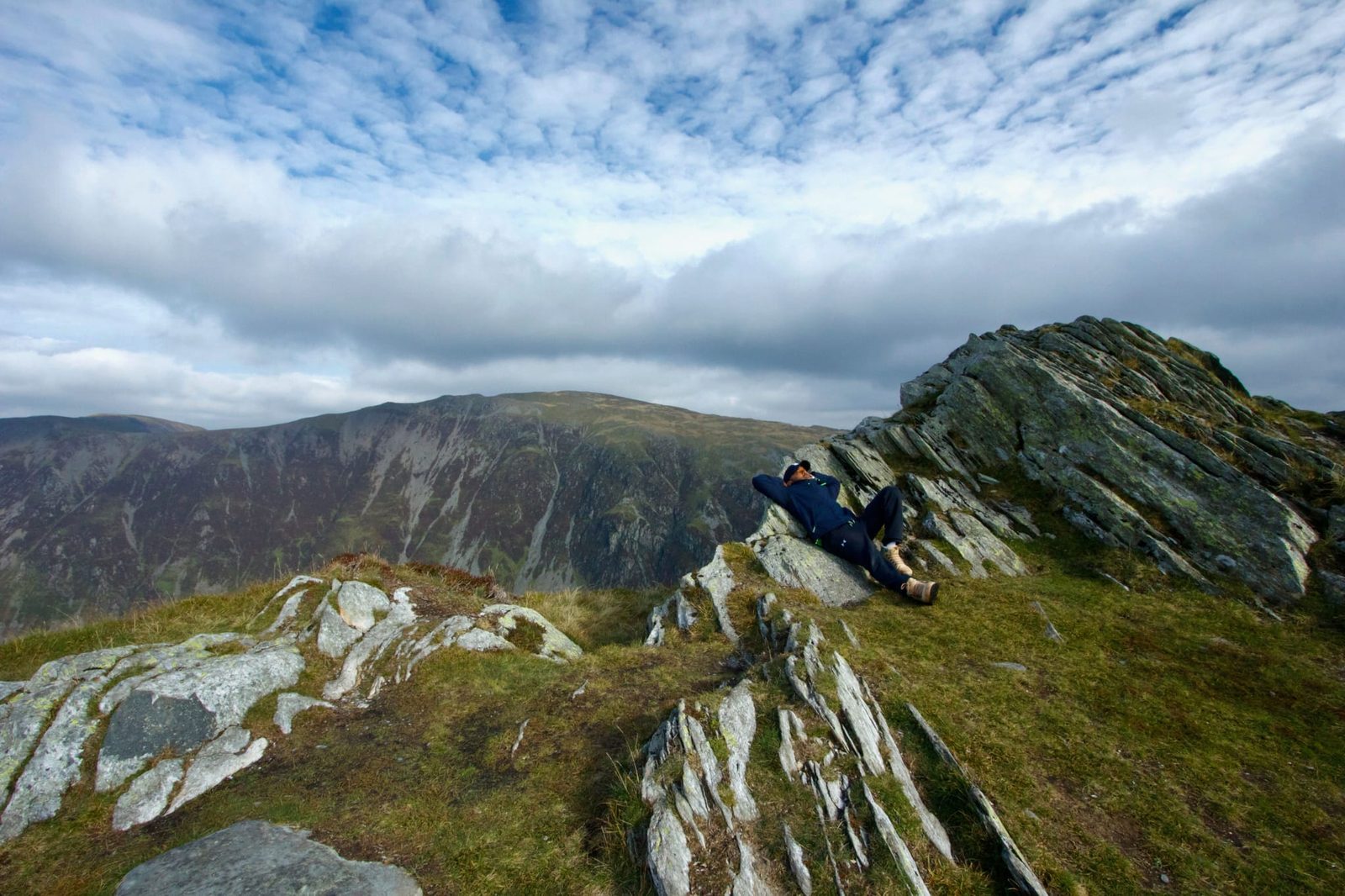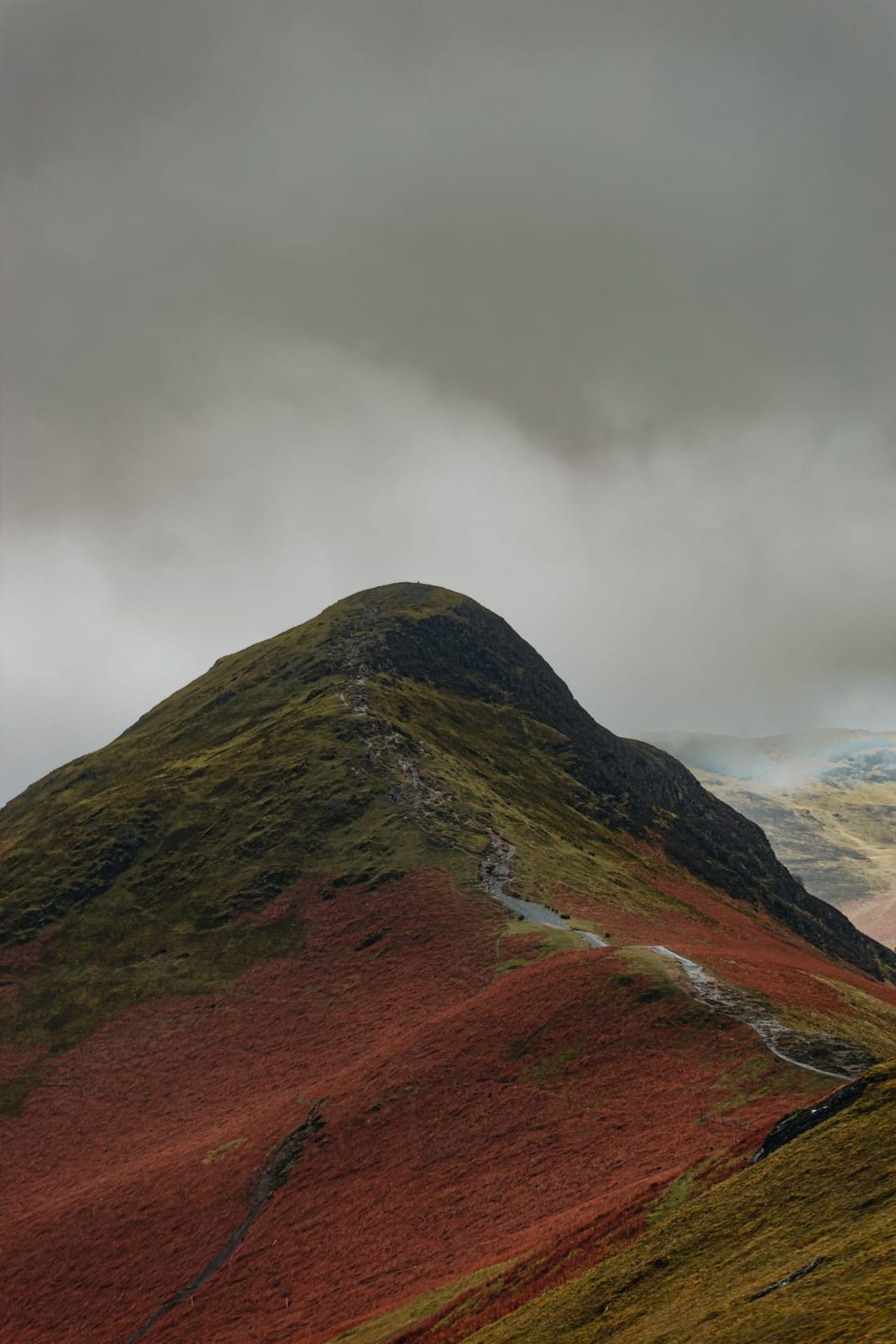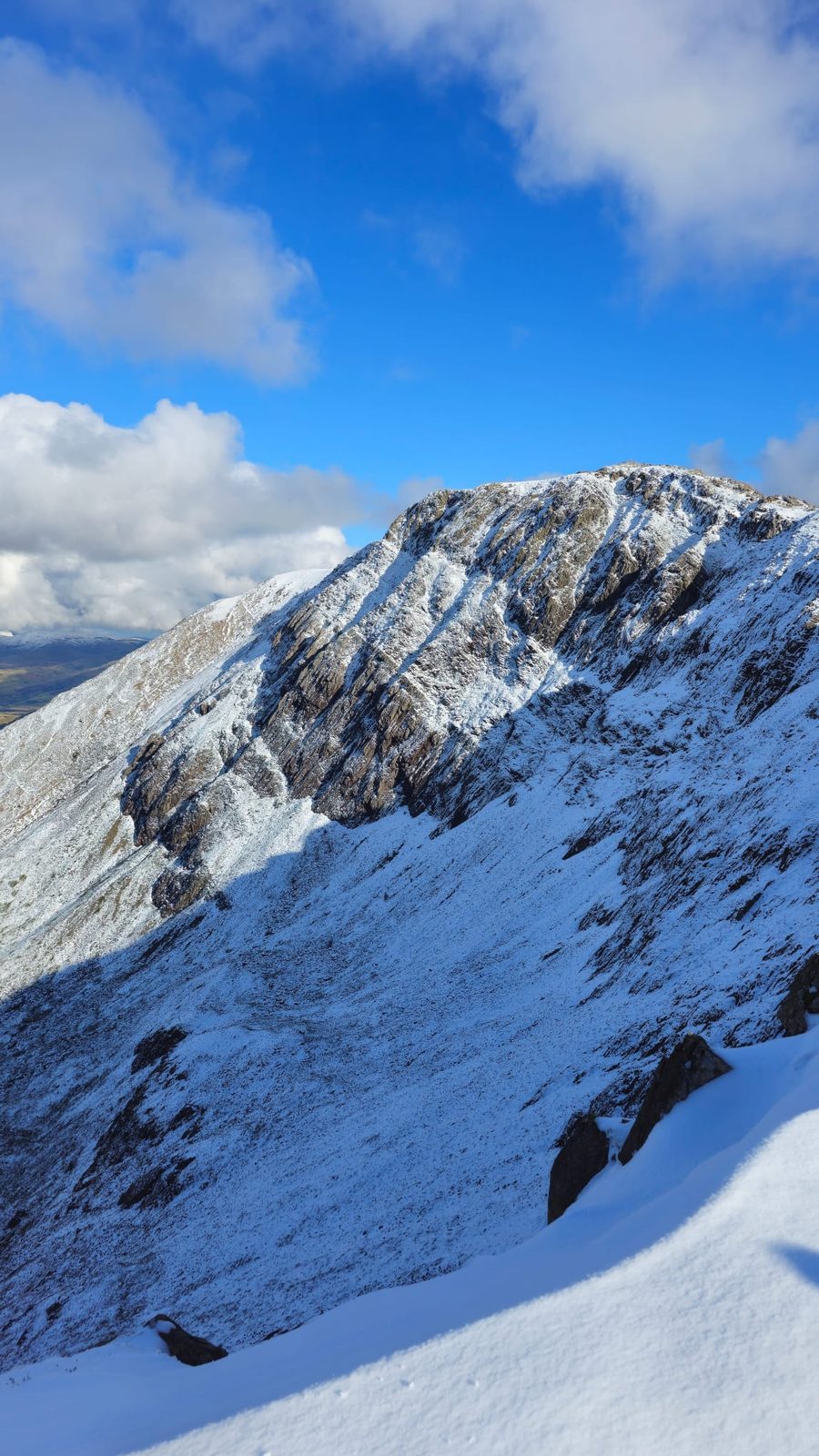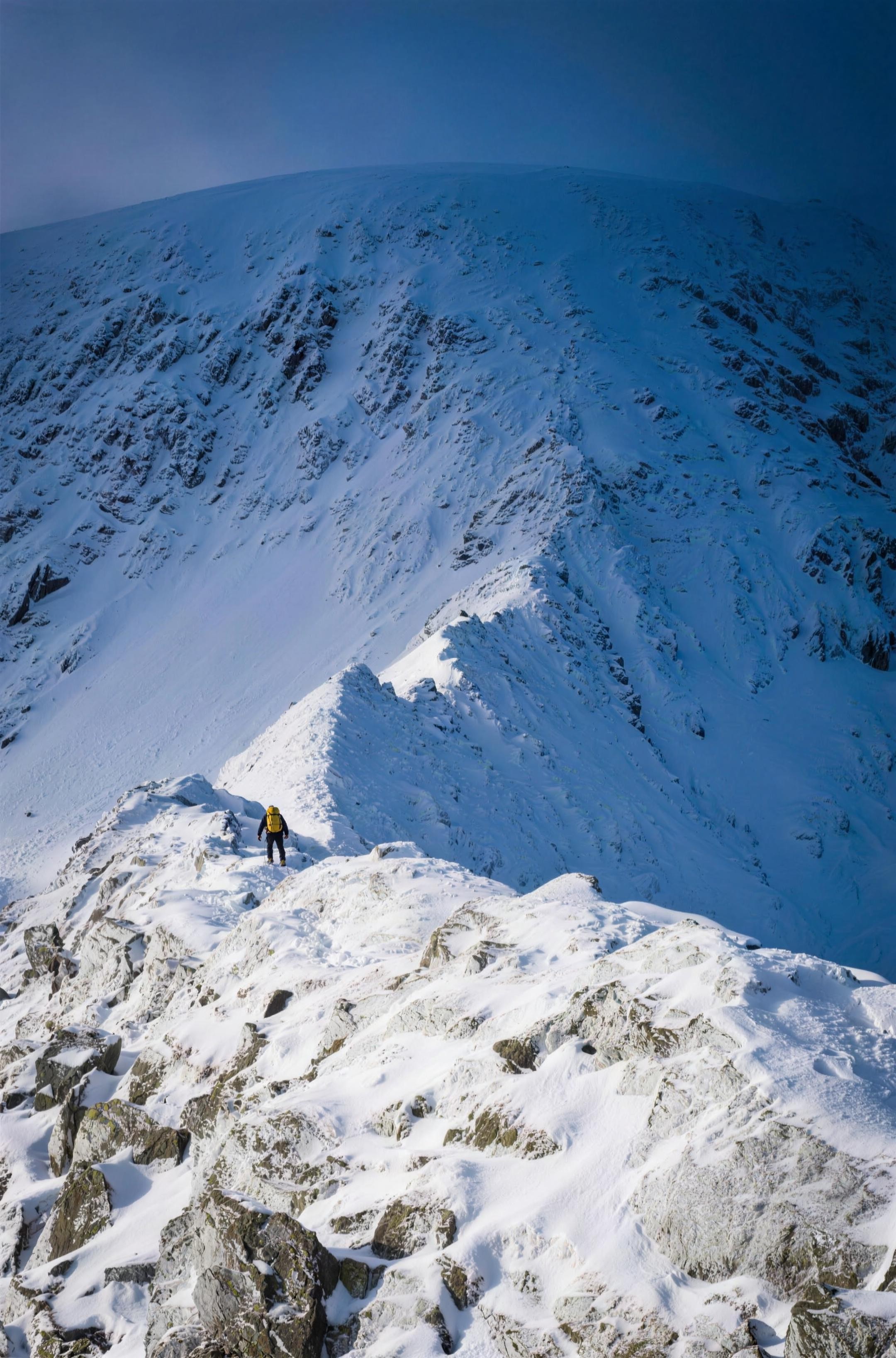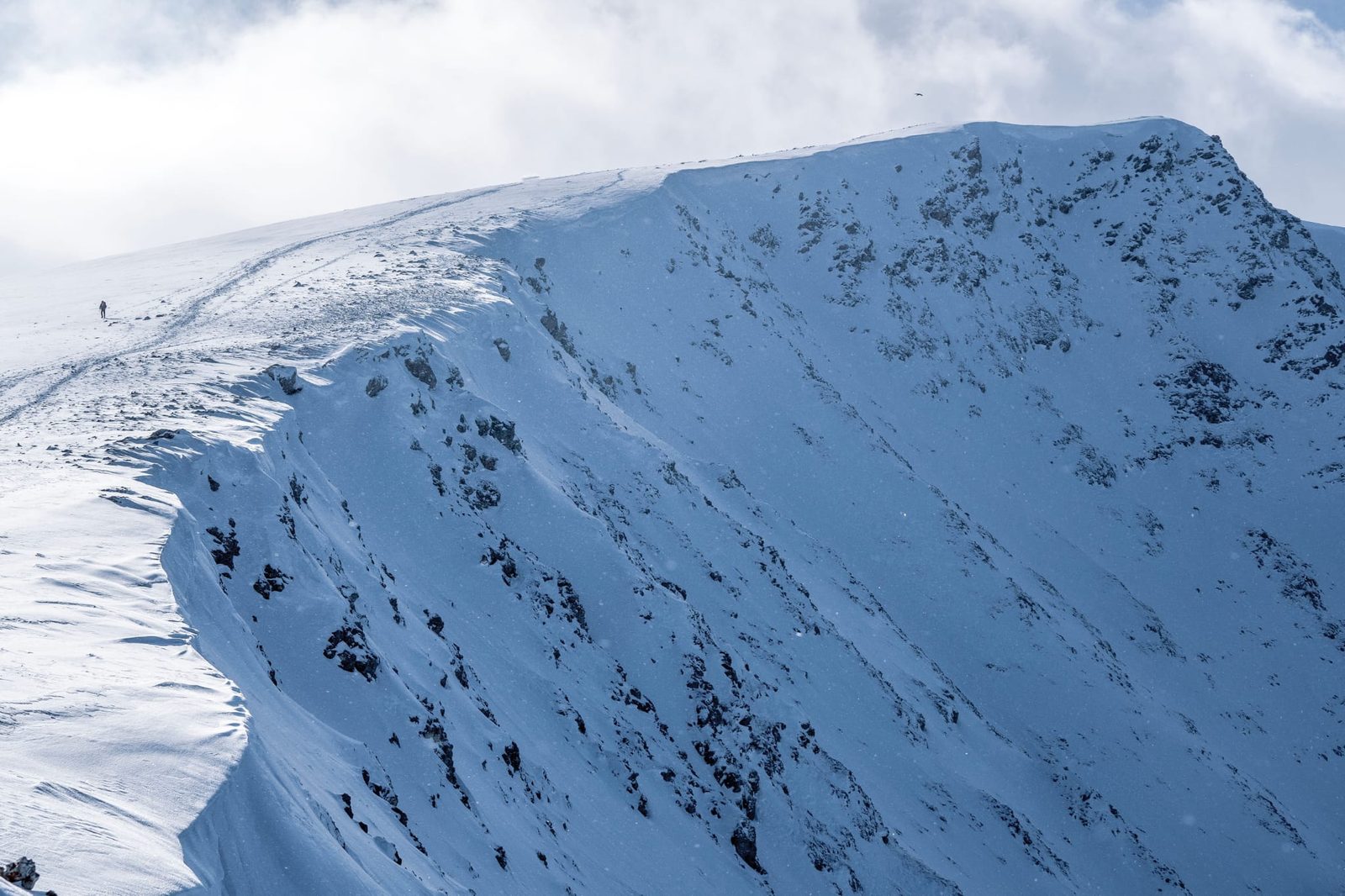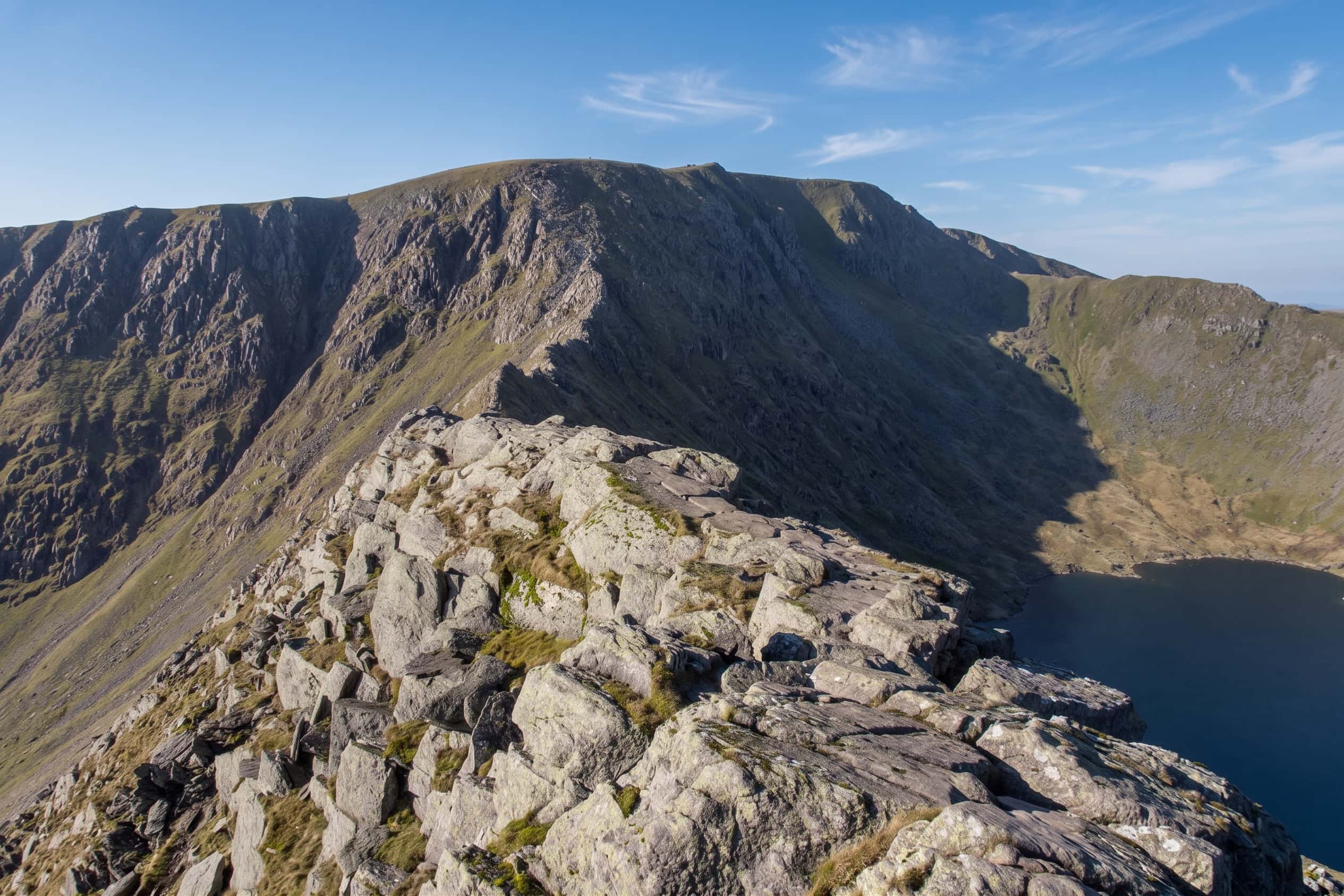
The knife-edge arête of Striding Edge leading to Helvellyn, Lake District
Grade 1 scramble · Helvellyn · Serious exposure

Striding Edge

Britain's most famous ridge — a genuine knife-edge arête leading to the summit of Helvellyn. It's a magnificent thing to cross, and a serious one. This is an honest guide to what Striding Edge actually involves, who should attempt it, and how to stay safe — or how to reach the same summit without it.
Grade 1

Scramble (summer)

Severe

Exposure — both sides

Yes

Bypass path exists

~2 km

Hole-in-the-Wall → summit

What it actually is

Britain's most famous ridge, honestly explained

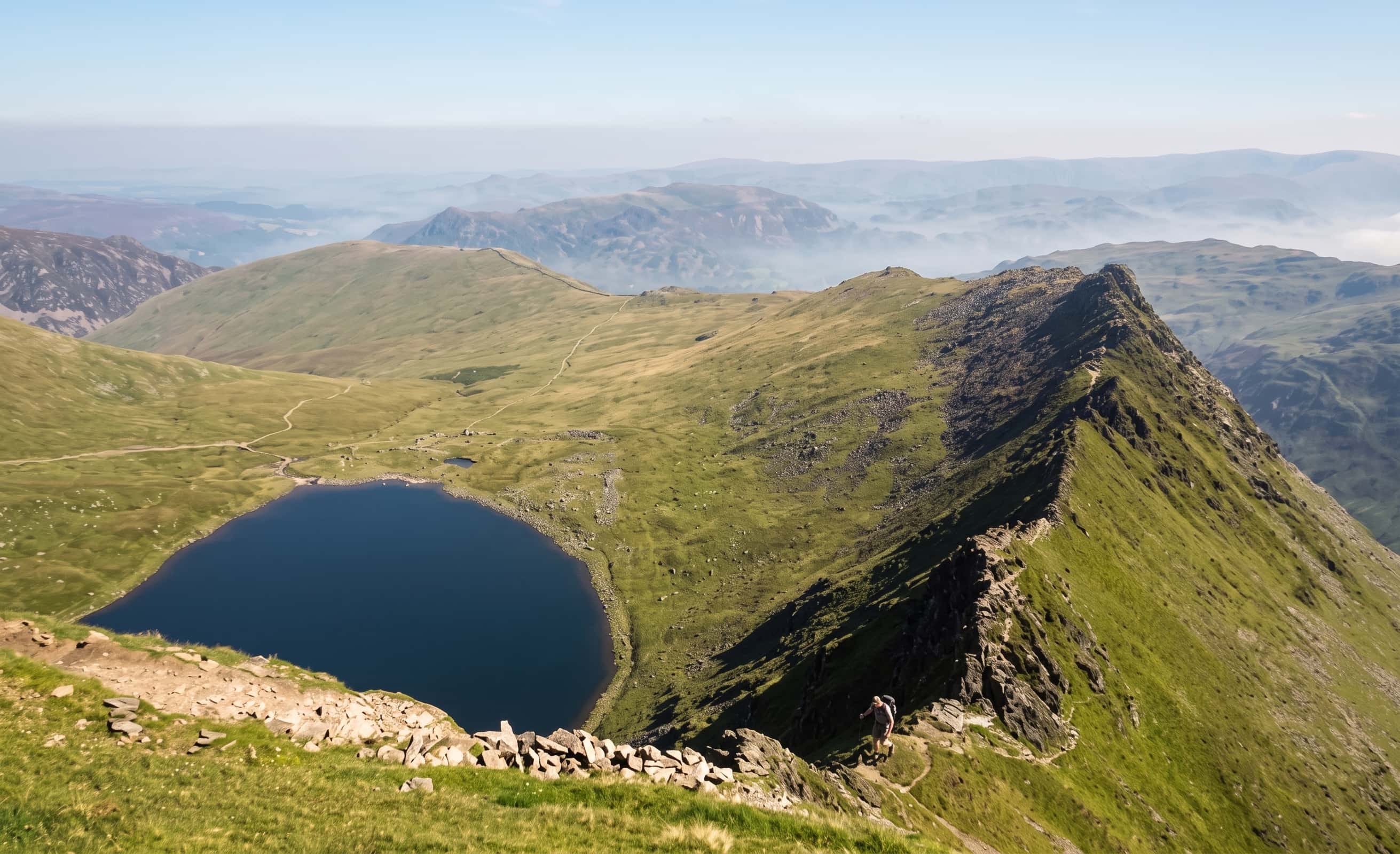
Striding Edge is the narrow, rocky arête that forms the south-eastern approach to Helvellyn's summit. From the gap known as the Hole-in-the-Wall (reached in about 45 minutes from Glenridding), the ridge runs roughly two kilometres west to the summit, climbing around 260 m. For much of its length it's a true edge: the ground falls away steeply on both sides — into Red Tarn's corrie to the north and Nethermost Cove to the south.

In summer and good conditions it's graded a Grade 1 scramble — hands-on in places, but within the reach of confident, sure-footed walkers. It is also, rightly, one of the most respected routes in the Lakes. The rest of this page is about being honest with you: the real risks, who should and shouldn't be up here, and the safer choices available — because that honesty is the whole point.

Grade and difficulty here are indicative only. On a still, dry summer morning this is a very different proposition from the same ridge in wind, rain, cloud or ice. Always match your plan to the actual conditions.

The knife-edge of Striding Edge leading to the summit of Helvellyn above Red Tarn, Lake District
Striding Edge, on the approach to Helvellyn

The honest answer

Is Striding Edge dangerous?

Yes — it deserves to be taken seriously. Striding Edge is a genuinely exposed mountain ridge, and a fall from the crest could be fatal. Fatalities and serious injuries do happen here. We won't put a false precision on how many — dependable figures simply don't exist — but the pattern matters far more than any number: the serious incidents come overwhelmingly in winter, in poor weather, or from a single lost foothold, with ice, high wind, wet rock and low cloud that hides the route doing most of the damage. On a fine summer day, for a careful and competent walker who respects it, this is a very different place.

What matters far more than a number is your judgement on the day. In dry, calm summer weather, a fit walker with a head for heights who takes their time is generally fine. In bad weather, in winter, or if you're unsure of your footing or nervous of the drops, the sensible and experienced choice is to turn around — or to have chosen a walkers' route up Helvellyn in the first place. The mountain will still be there another day.

The single most useful safety fact: a lower bypass path runs along the northern flank, below the crest, avoiding the most exposed scrambling. If a section of the true edge feels like too much, you don't have to commit to it — drop onto the bypass. Knowing this before you go removes most of the pressure that gets people into trouble.

On Striding Edge, Helvellyn — a photo by The Lakes Planner
On Striding Edge
On Striding Edge, Helvellyn — a photo by The Lakes Planner
On the crest of Striding Edge

Who should attempt it

Can beginners do Striding Edge?

With honest caveats, yes — many people's first proper scramble is Striding Edge. A fit, sensible first-timer with a genuine head for heights can cross it in good, dry summer conditions, going carefully and using the bypass path where the exposure feels too much. But it is not a beginner's walk in the ordinary sense, and it's the wrong place to discover you're frightened of heights.

Don't attempt it if you're nervous of drops, if you're taking young or unwilling children, if the weather is poor or windy, or if it's winter. In any of those cases, the grown-up decision is to take one of the non-scramble routes up Helvellyn instead — same summit, no knife-edge.

The Bad Step explained

Near the Helvellyn end of the ridge comes the crux most people remember: the Bad Step (sometimes the "Chimney"). It's a short rock tower requiring a downclimb of a few metres — awkward rather than technical, and the moment where nerves usually show. The good news: an easier alternative line exists just to the side, so you're not forced onto the hardest moves. Face inwards, take it slowly, test your holds, and it passes quickly. After it, a final steep pull lands you on the summit plateau.

On Striding Edge, Helvellyn — a photo by The Lakes Planner
On Striding Edge, Helvellyn

How it compares

Striding Edge vs the others

Swirral Edge vs Striding Edge

Swirral Edge is the ridge most people use to descend after Striding Edge. It's shorter and a little less exposed than Striding, which is why some walkers who want a single ridge choose to go up Swirral only. But don't underestimate it: the top of Swirral, where it meets the summit plateau, is steep and loose, and finding the correct start of the descent has caught many people out — several incidents happen right there. Treat both edges with equal care.

Striding Edge vs Crib Goch

The two are often compared, and honestly: Crib Goch in Snowdonia is the harder, more sustained and more exposed of the two. Striding Edge has more escape options and a lower bypass; Crib Goch commits you to a longer, narrower knife-edge higher up. If you've comfortably enjoyed Striding Edge, Crib Goch is the natural (bigger) next step — not the other way round.

On Striding Edge, Helvellyn — a photo by The Lakes Planner
On Striding Edge
On Striding Edge, Helvellyn — a photo by The Lakes Planner
On the ridge

Winter — where the danger multiplies

Under snow and ice, Striding Edge stops being a scramble and becomes a genuine winter mountaineering route. Verglas (thin invisible ice) on the rock, cornices overhanging the northern drop, and strong wind on the crest turn it into serious ground where an ice axe, crampons and the trained skill to use them are essential — not optional. The great majority of serious incidents on the edge happen in these conditions. If you are not an experienced winter mountaineer, do not go on Striding Edge in winter: choose summer, or go with a qualified guide.

On Striding Edge, Helvellyn — a photo by The Lakes Planner
On Striding Edge

The safe plan

How to do it safely — or avoid it entirely

If you're going for it

  • Pick a dry, calm, clear summer day — and check the forecast the night before and the morning of.
  • Start early to beat crowds and afternoon weather.
  • Carry a map and compass and know how to navigate — cloud can arrive fast.
  • Use the northern bypass path for any section that feels too exposed — there's no prize for staying on the crest.
  • Take the Bad Step slowly, or the easier line beside it.
  • Be willing to turn back. Deciding not to cross is a valid, experienced choice.

If in doubt, take the safe way up

There is no shame at all in skipping the edge. You can reach the exact same Helvellyn summit on non-scramble walkers' routes — from Thirlmere over Browncove Crags, or from Glenridding avoiding the ridges entirely. It's the right call for beginners, families, anyone uneasy with heights, and anyone facing less-than-perfect conditions.

The safe routes up Helvellyn

Check conditions first, every time. The Lake District Weatherline publishes a daily fell-top report with the actual summit weather and, in winter, the ground conditions — the single best tool for deciding whether today is a Striding Edge day at all.

On Striding Edge, Helvellyn — a photo by The Lakes Planner
On Striding Edge
On Striding Edge, Helvellyn — a photo by The Lakes Planner
On the ridge, Helvellyn ahead
On Striding Edge, Helvellyn — a photo by The Lakes Planner
On Striding Edge

Keep exploring

More walks & guides

On Striding Edge, Helvellyn — a photo by The Lakes Planner
On Striding Edge, Helvellyn

Common questions

Striding Edge, answered honestly

Has anyone died on Striding Edge?
Yes. Striding Edge is a genuinely exposed mountain ridge, and fatalities do occur here — overwhelmingly in winter and in poor conditions such as high wind, ice or low cloud. We won't put a false precision on how many, because dependable figures don't exist; the honest message is simply that this is a serious place where a mistake can be fatal, and it deserves real respect rather than being treated as a casual walk.
Can beginners do Striding Edge?
Only with real caution. Striding Edge is a Grade 1 scramble with severe exposure, so it is not a beginner's walk in the ordinary sense. A fit, sensible first-timer with a genuine head for heights can do it in good, dry summer conditions, going carefully and knowing that a lower bypass path exists on the north flank for the most exposed section. If you are nervous of heights, the conditions are poor, or it is winter, do not attempt it: take one of the non-scramble walkers' routes up Helvellyn instead.
What is the most dangerous climb in the Lake District?
There isn't a single official answer, but Striding Edge and its partner Swirral Edge are consistently among the most serious routes that ordinary walkers attempt, because they combine easy access and huge popularity with real exposure. Most incidents happen in winter conditions or when people are caught out by weather. Treated with the right experience, kit and forecast, the ridge is a wonderful outing; treated casually, it is unforgiving.
What is the Bad Step on Striding Edge?
The Bad Step (sometimes called the Chimney) is the trickiest moment on the ridge — a short rock tower near the Helvellyn end that involves a downclimb of a few metres. It's the bit people most often find awkward, but an easier alternative line exists just to the side, and taking your time on it makes a big difference.