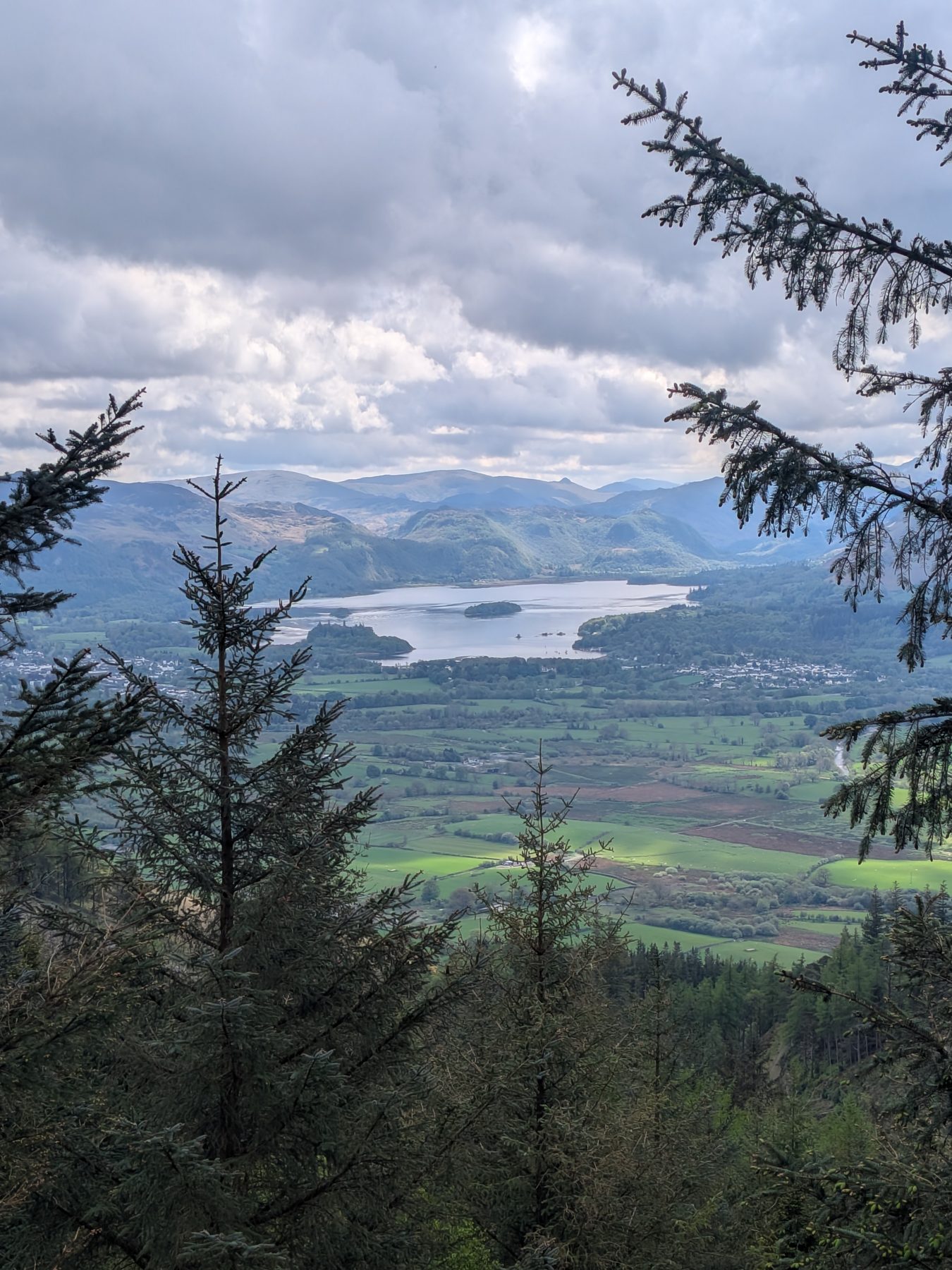
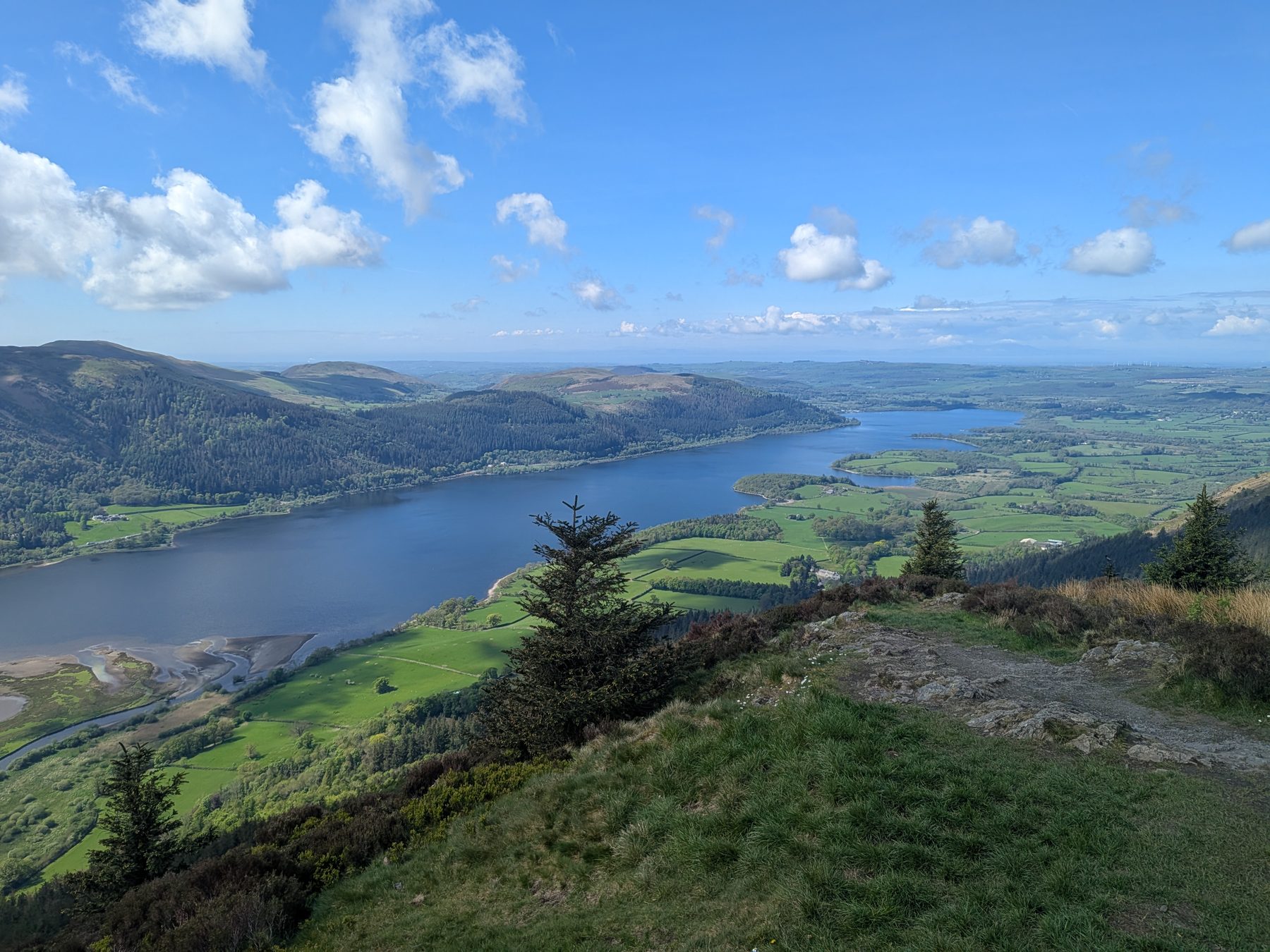
The view over Bassenthwaite Lake from the slopes of Dodd, above Dodd Wood
Bassenthwaite Lake · 3 miles north of Keswick

Dodd Wood: Walk, Ospreys & the Old Sawmill

A Forestry England woodland with a Wainwright at the top of it, ospreys over the lake in summer, and Mirehouse directly across the road.

502m
Dodd summit — a Wainwright
2001
Ospreys returned to Bassenthwaite
2–3hrs
Round trip to the summit and back
Free
The walk — you pay only to park
The walk Parking Douglas firs Ospreys Bishop of Barf Tearoom Getting here FAQ

The northern Lakes' quiet classic

What is Dodd Wood?

Dodd Wood is a Forestry England woodland on the eastern shore of Bassenthwaite Lake — the only body of water in the Lake District officially called a lake (the full story of that is on our 16 lakes page). The wood climbs the lower slopes of Dodd, a 502-metre fell and a genuine Wainwright, from a car park on the A591 about three miles north of Keswick. At the entrance sit public toilets and the Old Sawmill Tearoom; directly across the road is Mirehouse & Gardens, the historic family home that actually runs the tearoom — the two make a natural paired day out.

Three things bring people here. The walk to Dodd summit — one of the best effort-to-view climbs in the northern Lakes. The ospreys, which returned to Bassenthwaite in 2001 and still fish the lake each summer. And the trees themselves — a dark, steep, atmospheric forest of towering conifers threaded with waymarked trails, cool on hot days and sheltered on foul ones.

It stays quieter than almost anything this good in the Lakes. Keswick's crowds head for Catbells and Derwentwater; Dodd Wood gets the locals, the bird-watchers and the people who know. The free Lakes Planner can build it into a full northern-Lakes day with Mirehouse and Keswick.

Bassenthwaite Lake seen from Dodd Wood
Bassenthwaite Lake, below Dodd Wood — the only one of the 16 officially called a "lake"

On foot

The walk to Dodd summit

A steady forest climb to a 502-metre viewpoint over Bassenthwaite and Skiddaw — and a Wainwright tick for the effort.

Dodd summit from the Old Sawmill

The standard route — waymarked all the way

Moderate

Distance

~3 mi (4.8 km)

Time

2–3 hrs

Ascent

~390 m

Is it a hard walk? Honestly: no — but it is a persistent one. The route climbs steadily from the car park on good forest tracks, zig-zagging up through the conifers with the gradient rarely letting up until the final push out of the treeline. There's no scrambling and nothing exposed; it's simply "up" for an hour or so. Reasonably fit families with school-age kids do it all the time.

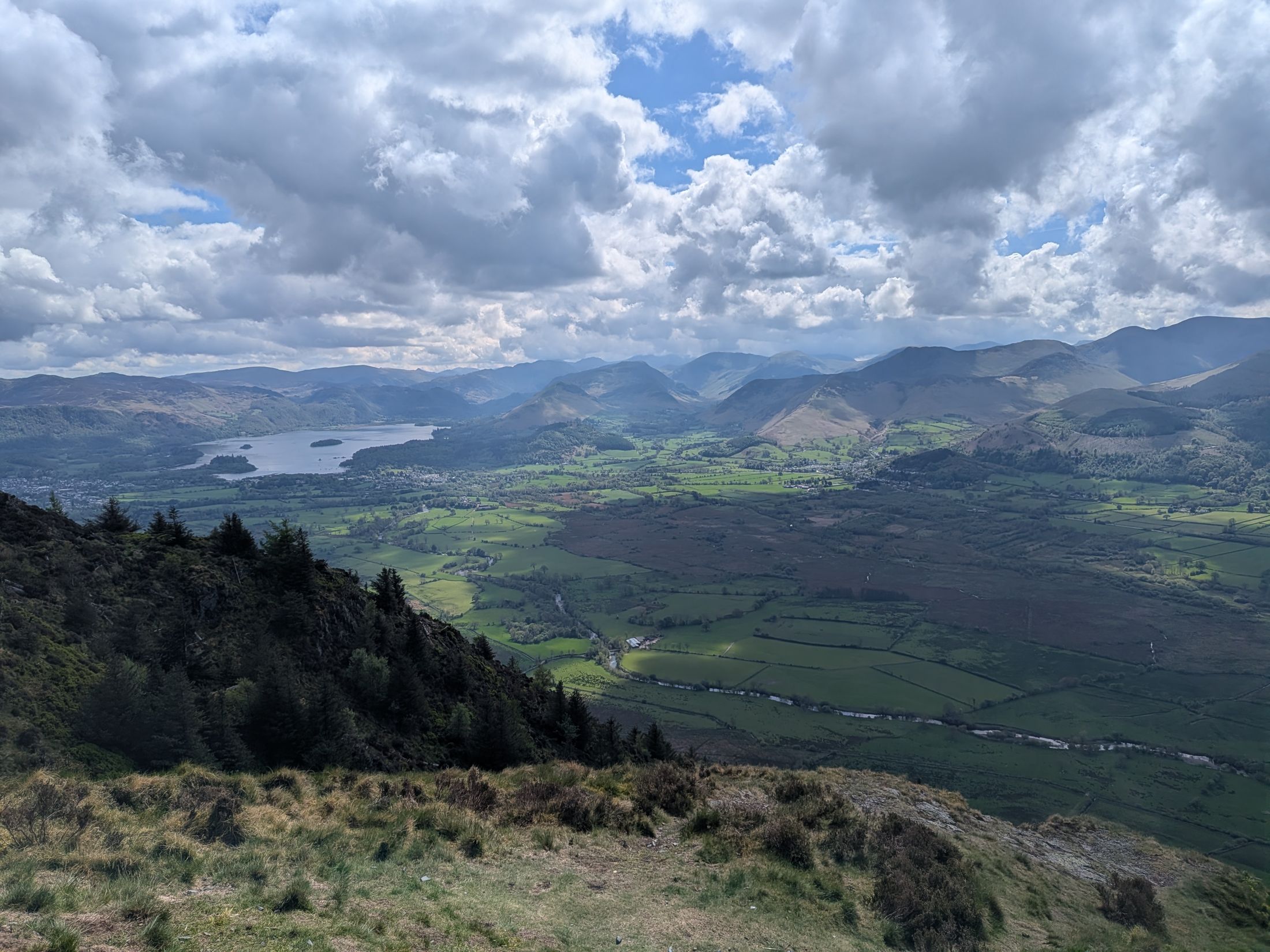
The reward is out of proportion to the effort. Dodd's summit sits clear of the forest, marked by a memorial stone, with Bassenthwaite Lake spread below you, Skiddaw filling the sky behind, Derwentwater and Keswick to the south, and — on the right day — the Solway Firth and the hills of southern Scotland on the horizon. Because Dodd is an outlier of the Skiddaw group, nothing blocks the view westwards.

And yes — Dodd is a Wainwright (Book Five, The Northern Fells), which makes this one of the friendliest first Wainwrights going. Our Wainwrights guide explains the 214-fell obsession.

Start: Dodd Wood car park, by the Old Sawmill Tearoom · A591 · sat-nav CA12 4QE

Where to park

Dodd Wood car park & charges

One car park, right where you need it — this is also the sensible answer to "where do I park for Bassenthwaite Lake?".

Dodd Wood / Old Sawmill car park

Forestry England · ANPR pay on exit · toilets · tearoom · CA12 4QE

The only one you need

The car park runs on an ANPR "pay on exit" system — cameras log your number plate when you drive in, and you settle up before you leave. It serves the Dodd walk, the osprey viewpoints, the tearoom — and Mirehouse visitors, who park here too and cross the A591 on foot (carefully — it's a fast road).

Current charges

  • Under 20 minutes — free (drop-offs and quick looks)
  • £1.95 for the first hour, then £0.45 per 15 minutes
  • £10 all-day maximum — the summit walk plus tearoom won't exceed it
  • Card only at the machines (contactless available), or pay online within 48 hours via Park with Ease — cash is not accepted
  • Standard charges apply to Blue Badge holders; Forestry England members park free — the cameras recognise registered plates

Visiting Mirehouse too? The Mirehouse ticket office is the Old Sawmill Tearoom right here in the Dodd Wood car park, and its parking and toilets are these ones — so this is your base for both sides of the road.

Tall firs in Dodd Wood
Among the firs in Dodd Wood

The trees themselves

The Douglas firs of Dodd Wood

Part of what makes the lower forest so atmospheric is the Douglas fir — the towering, straight-trunked conifer of the Pacific Northwest, planted here in the decades after the Forestry Commission took the wood on in the early twentieth century. A century of Lakeland rain later, the tallest of them are genuinely enormous: walking beneath them on the lower tracks feels closer to British Columbia than Britain, all deep shade, soft needle floor and trunks you can't get your arms halfway round.

If you've ever searched for what a "douglas fir wood" actually looks and feels like in England, this is one of the best answers in the north. Look for the deeply furrowed, cork-like bark and the little three-pointed bracts sticking out of every cone — the identifier that separates a Douglas fir from every spruce around it. The mix of firs, larch and spruce is also exactly why red squirrels hang on here; keep half an eye up in the quieter stretches.

The honest story

Ospreys at Bassenthwaite — then and now

A conservation success story that most websites still tell ten years out of date. Here's where it actually stands.

In 2001, ospreys bred at Bassenthwaite Lake — the first wild breeding pair in the Lake District for around 150 years. The Lake District Osprey Project (a partnership of the Forestry Commission, the RSPB and the national park) built staffed viewpoints on the slopes of Dodd Wood, ran a live CCTV nest feed at Whinlatter, and over two decades turned a single nest into one of Cumbria's best-loved wildlife stories, watched by hundreds of thousands of visitors.

That project disbanded in 2022 — and it matters why. It wound down because it had worked. Ospreys are no longer a single fragile nest needing round-the-clock protection; they have re-established and spread across the Lakes and wider Cumbria — Foulshaw Moss in the south, the Thirlmere area and beyond. The staffed telescopes and the Whinlatter CCTV era ended with it, so ignore any site still promising them. What replaced the infrastructure is something arguably better: a returning population.

And Bassenthwaite still gets its ospreys. The birds return to the area each summer and fish the lake — the photographers who set up along this shore through the season are the giveaway. The Dodd Wood slopes remain the recommended place to watch: height above the water, clear sightlines the length of the lake, and legitimate parking at the bottom.

Season status — updated July 2026

The 2026 season is in full swing. Cumbria's ospreys arrived back from West Africa in late March; eggs were laid through April and the chicks hatched in late May and early June. As of mid-July this year's young are on the cusp of fledging — Foulshaw Moss's two breeding pairs both have chicks on the nest — and the adults are fishing hard, which makes right now peak watching time over Bassenthwaite from the Dodd Wood slopes. The birds head south again from late August into early September.

A word about the A66 layby

You may see photographers parked in the laybys on the A66 along the lake's western shore. We're not going to pretend it doesn't happen — but we're not recommending it either. Conservation bodies formally discourage watching from the A66 laybys: it's a fast trunk road with traffic feet away, and the shoreline below is part of a National Nature Reserve where disturbance genuinely matters. The council has bollarded off a section of layby in the past for exactly these reasons. If you want the birds, the Dodd Wood side gives you a better, safer, longer view — bring binoculars or a long lens and let the lake do the work.

Where to see ospreys in Cumbria now

Beyond a summer's afternoon watching Bassenthwaite from Dodd Wood, the most reliable dedicated site is Foulshaw Moss Nature Reserve (Cumbria Wildlife Trust, near Witherslack in the south Lakes — a short hop from Grange-over-Sands). It has accessible boardwalks and viewing platforms, two active breeding pairs with chicks in 2026, and a popular live osprey webcam in season — search "Cumbria Wildlife Trust osprey cam" for the feed. There's a third option too: on Esthwaite Water near Hawkshead, guided boat "osprey safaris" run through the summer to watch the resident birds fishing. Between them you can do everything the old project used to offer: the close-up online, and the real thing over open water.
Local legend

The Bishop of Barf

Look west across Bassenthwaite from the Dodd Wood slopes and you'll spot a single brilliant-white stone standing high on the grey scree of Barf, the abrupt little fell above Thornthwaite. That's the Bishop — and the story goes like this.

In 1783, so the legend runs, the newly appointed Bishop of Derry stopped at the Swan Hotel in Thornthwaite on his way to take ship for Ireland. Fortified by the Swan's hospitality, he bet the assembled company that he could ride his horse straight up the scree to the summit of Barf. He made it about halfway before the scree did what scree does; horse and rider fell, and neither survived the tumble. The white-painted stone high on the fellside is said to mark the point he reached, and a lower stone — the Clerk — the spot where he was buried. Locals have kept the Bishop whitewashed ever since, a job traditionally rewarded by the pub below.

Is any of it true? It's a tale told over two centuries of pints, and we tell it here strictly as folklore — but the stone is real, the whitewash is fresh most years, and once you've spotted it you'll find it every time you drive the A66. The best view of it is from exactly where you're standing: the east shore, at Dodd Wood.

Eat & drink

The Old Sawmill Tearoom

The tearoom beside the car park is the answer to "is there a café at Dodd Wood?" — but here's the detail most guides miss: the Old Sawmill belongs to Mirehouse, the historic house across the road, and it's run with the same family care as the house itself. Cumbrian specialities, proper cakes, and a terrace by the beck that catches the afternoon sun.

It earns its name honestly — the building really was the estate's sawmill. Full details, along with everything else Mirehouse offers (the house, gardens, four woodland playgrounds and the lakeshore walk to St Bega's church), are on our Mirehouse & Gardens guide.

The full Mirehouse guide
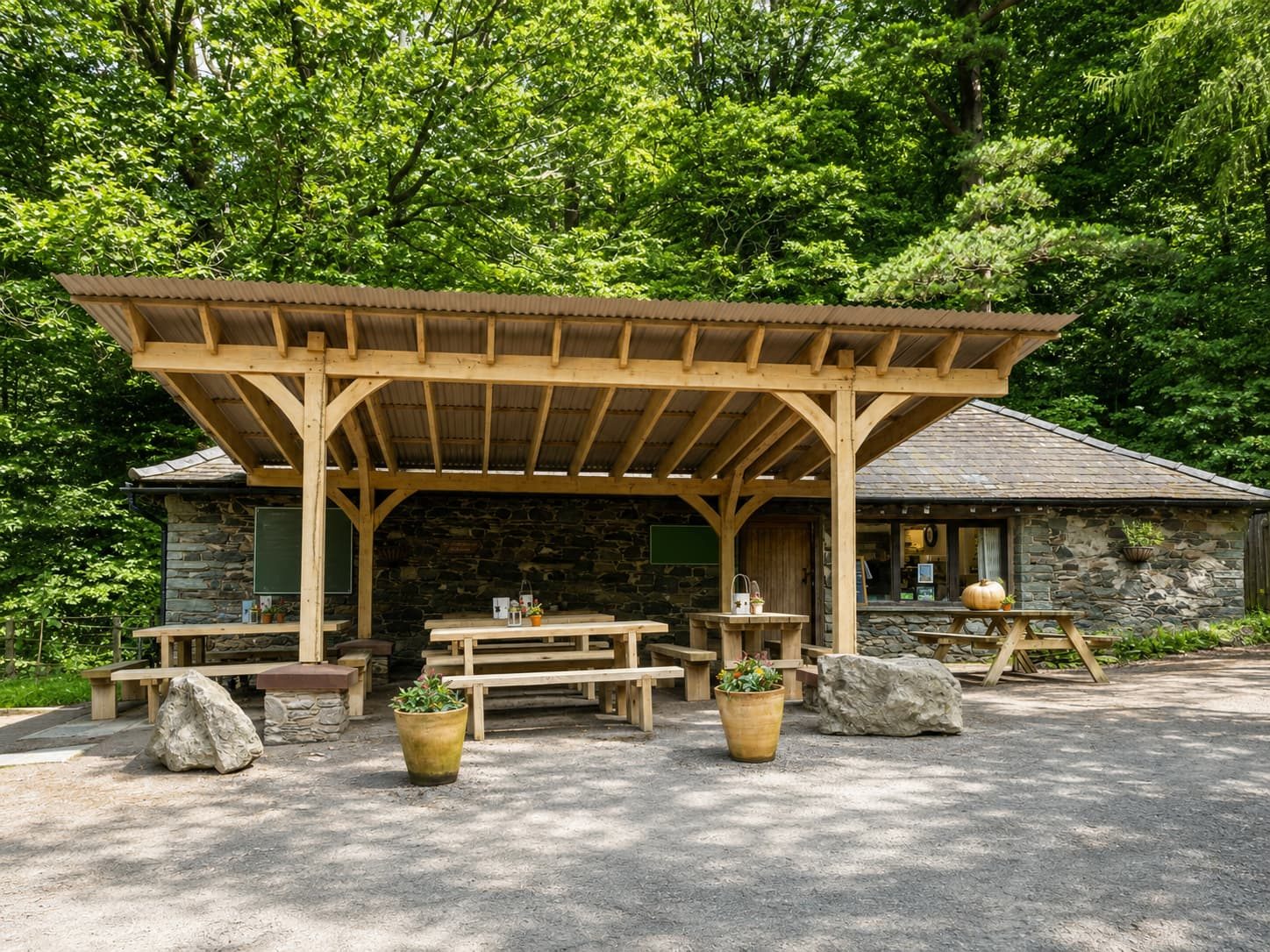
The Old Sawmill Tearoom in the Dodd Wood car park — a timber picnic shelter in front of the old stone sawmill building
The Old Sawmill Tearoom, right by the Dodd Wood car park — Mirehouse's café and ticket office.
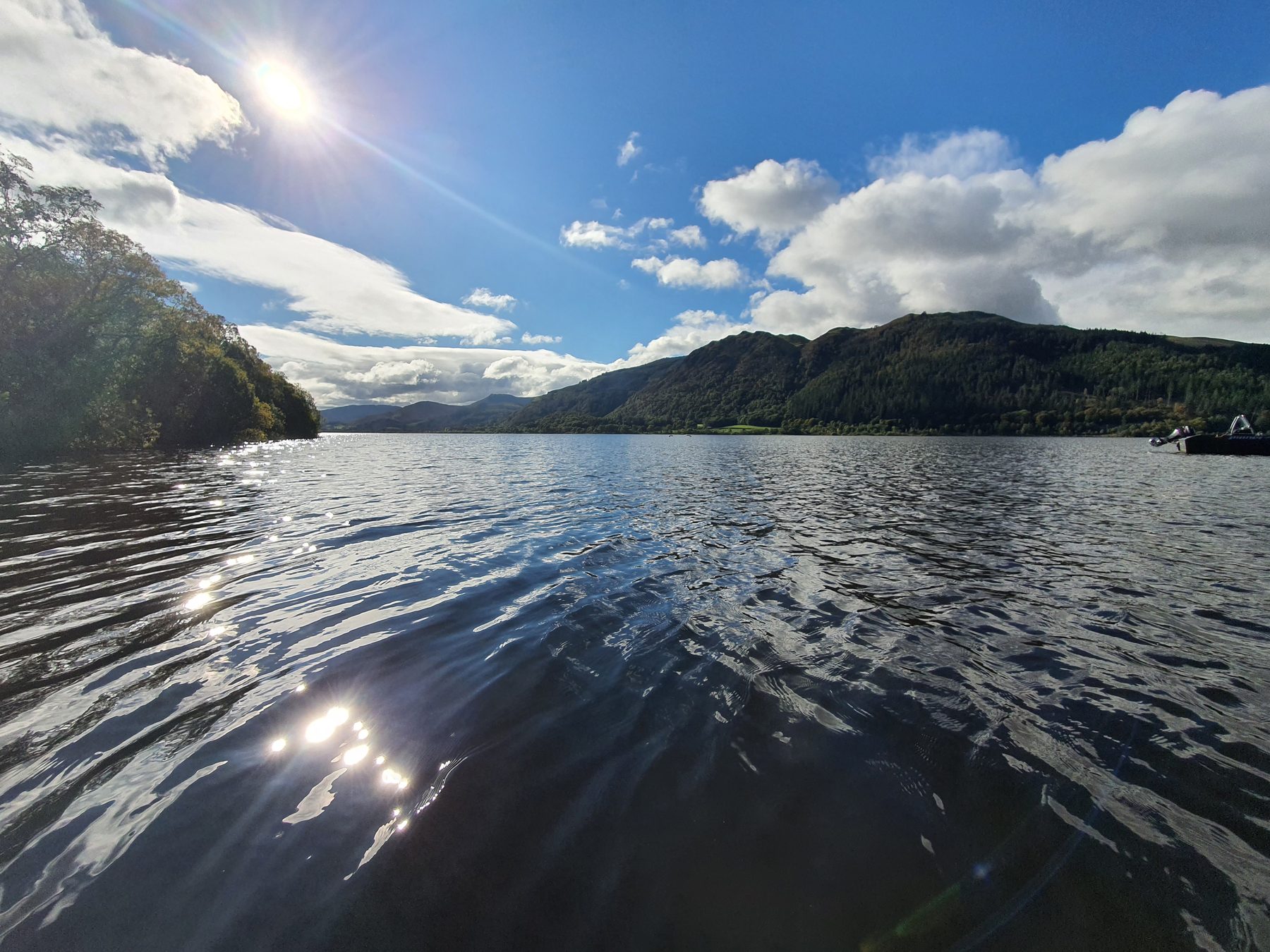
Bassenthwaite Lake seen from the Mirehouse grounds, opposite Dodd Wood
Bassenthwaite Lake from Mirehouse, directly across the road from Dodd Wood

Getting here

How to get to Dodd Wood

On the A591, three miles north of Keswick — and genuinely reachable by bus.

By car

Take the A591 north out of Keswick towards Carlisle — the Dodd Wood car park is signed on the right after about 3 miles, directly opposite the Mirehouse entrance. Sat-nav: CA12 4QE.

By bus

The X4 (Penrith–Keswick–Workington) and 555 (Lancaster–Keswick–Carlisle corridor) run along the A591/A66 through Keswick; the seasonal 73/73A "Caldbeck Rambler" (roughly late July to early September) also serves the Bassenthwaite side. Ask for the Mirehouse / Dodd Wood stop and check current timetables before travelling — rural services change by season.

By bike

A flat-ish 3-mile spin from Keswick with one honest caveat: the A591 is fast. Our cycling routes guide covers the quieter back-lane alternative via the old road.

Dodd Wood weather right now

—°C
Fetching live conditions…

Tomorrow

—°

—°

—°

Live data via Open-Meteo · updates each visit

Directly opposite

Make it a full day: Dodd Wood + Mirehouse

Climb Dodd in the morning, cross the road for Mirehouse in the afternoon — the historic house, gardens, four woodland playgrounds and the lakeshore walk to St Bega's church. One car park serves both, and Mirehouse tickets are bought at the Old Sawmill Tearoom in it.

What the Fell

The Lake District newsletter worth reading

Events, openings, quiet walks and honest tips — straight to your inbox. No spam, ever.

What the Fell newsletter
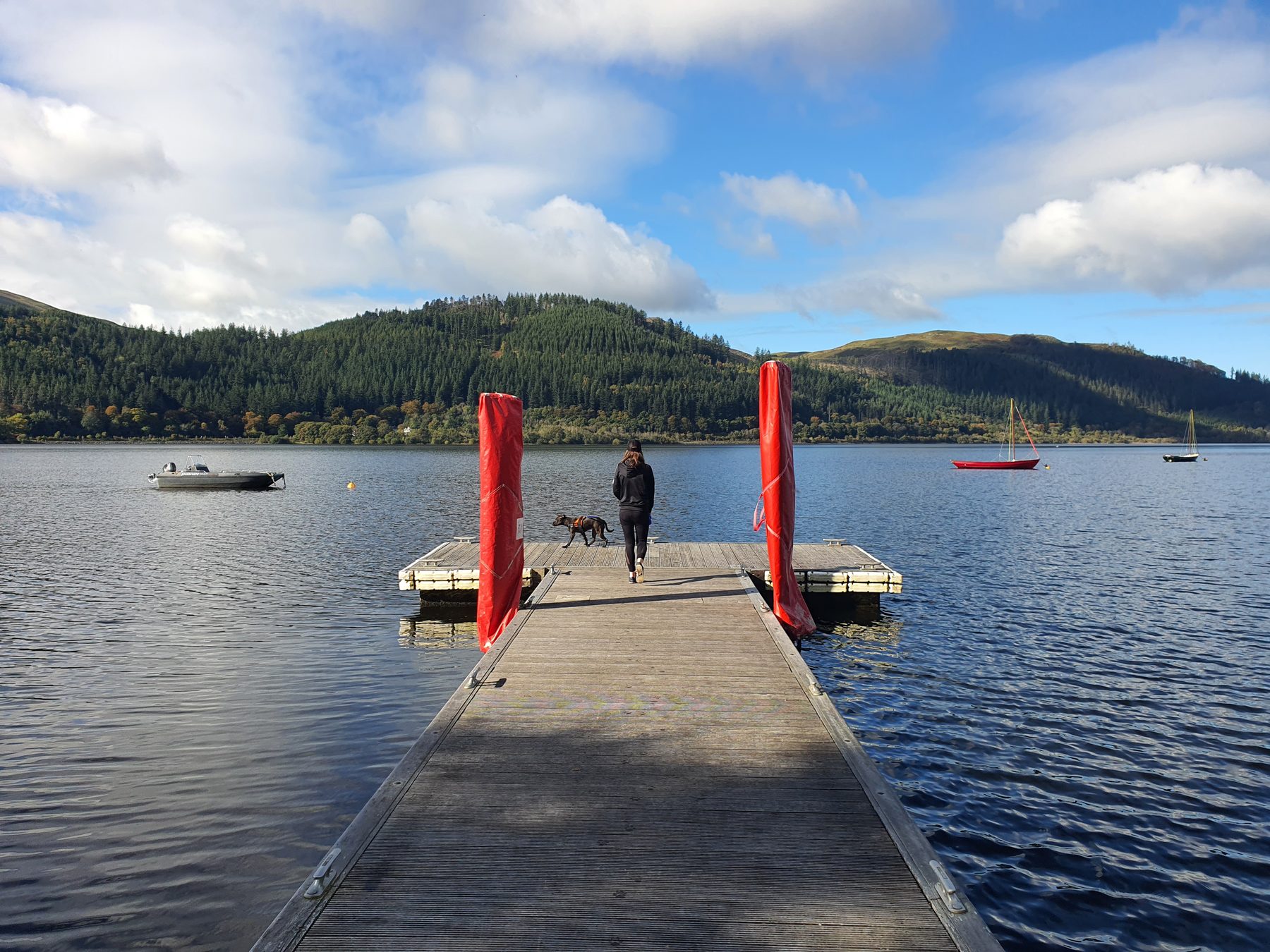
The jetty walk at Mirehouse, at the foot of Dodd Wood
The jetty walk at Mirehouse, directly below Dodd Wood

Common questions

Dodd Wood questions, properly answered

What is Dodd Wood?
Dodd Wood is a Forestry England woodland on the eastern shore of Bassenthwaite Lake, about 3 miles north of Keswick on the A591. It covers the lower slopes of Dodd, a 502-metre fell, and has a car park, public toilets, waymarked forest trails and the Old Sawmill Tearoom at its entrance. It sits directly opposite Mirehouse, the historic house and gardens across the road.
Is Dodd Wood a hard walk?
The walk to Dodd summit is moderate rather than hard. It is a steady, persistent climb on good forest tracks and paths all the way — around 3 miles (4.8 km) round trip with roughly 390 metres of ascent — with no scrambling or exposure. Reasonably fit walkers, including families with school-age children, manage it comfortably; it is one of the best effort-to-view ratios in the northern Lake District.
How long does it take to walk up Dodd Wood?
Allow 2 to 3 hours for the round trip from the Dodd Wood car park to the summit of Dodd and back, including time at the top. The route climbs steadily through forest on waymarked tracks before breaking out onto the open summit, where a memorial stone marks the 502-metre top and the view opens over Bassenthwaite Lake, Skiddaw and, on a clear day, the Solway Firth and Scotland.
Is Dodd a Wainwright?
Yes — Dodd (502 m) is a Wainwright. It appears in Alfred Wainwright's Book Five, The Northern Fells, as an outlier of the Skiddaw group. The woodland covers its lower slopes, and the walk up through Dodd Wood is the standard route of ascent, making it one of the most accessible Wainwright summits for a first-timer. See our Wainwrights guide for the full 214.
Are there still ospreys at Bassenthwaite?
Yes — ospreys still return to the Bassenthwaite area each summer and can be seen fishing the lake, and photographers still gather to watch them. What has changed is the infrastructure: the Lake District Osprey Project, which ran staffed viewpoints at Dodd Wood and a CCTV nest feed at Whinlatter after the birds first bred here in 2001, disbanded in 2022. That wind-down was a success story, not a disappearance — ospreys have re-established and spread across the Lakes, including Foulshaw Moss and other Cumbrian sites. Dodd Wood remains the recommended place to watch for them over the lake.
How do you pay at Dodd Wood car park?
Dodd Wood's car park (by the Old Sawmill Tearoom) uses an ANPR pay-on-exit system — cameras log your number plate on arrival, and you pay by card at the machine before you leave, or online within 48 hours via the Park with Ease website. Stays under 20 minutes are free; after that, charges start at £1.95 for the first hour, then £0.45 per additional 15 minutes, up to an all-day maximum of £10. Cash is not accepted, standard charges apply to Blue Badge holders, and Forestry England members park free — the cameras recognise registered plates automatically.

Explore more

Nearby & related

Everything within a short hop of the Dodd Wood car park.