Great Gable in the Lake District
Western Fells · The Wasdale pyramid · 899 m

Great Gable

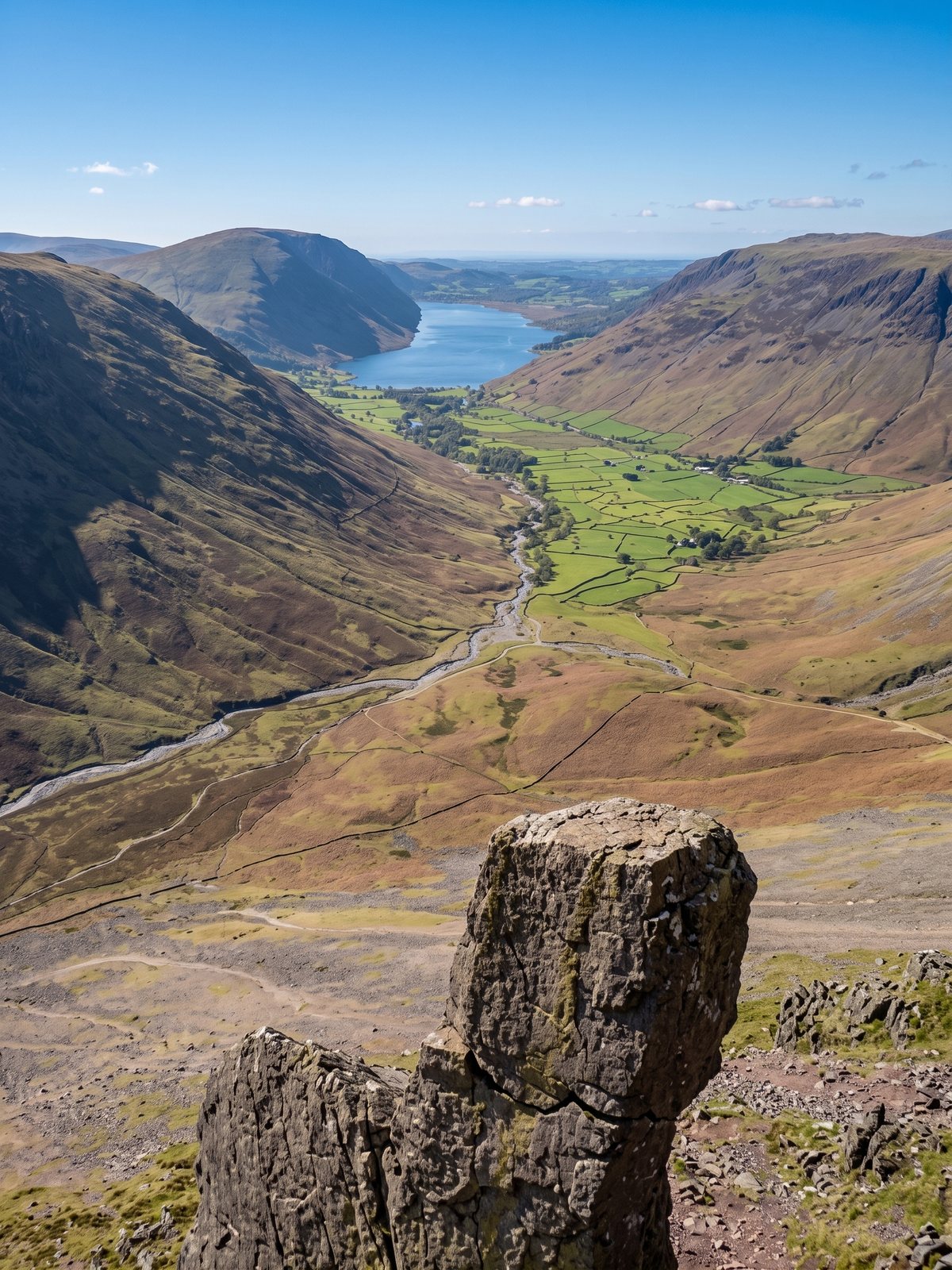
The great rocky pyramid at the head of Wasdale — 899 m, one of the best-loved of all Wainwright's fells, the birthplace of British rock climbing, and home to one of the most moving summit traditions in the country.
899 m

Height · 2,949 ft

~5–6 mi

From Seathwaite

4–5 hrs

Typical time

1886

Napes Needle first ascent

The Wasdale pyramid

One of the best-loved fells in the Lake District

Great Gable is the great rocky pyramid at the head of Wasdale — 899 m of steep, handsome mountain that closes the view up Wast Water and gives the National Park its emblem. It is one of the best-loved of all Wainwright's 214 fells, and for many walkers it is simply one of the finest.

It is a proper mountain from every side: there is no gentle route up Great Gable, only steep and steeper. But it rewards the effort with a summit rich in history — a war memorial, an annual Remembrance gathering, and the crags where British rock climbing was born.

Below: the routes by starting point, the story of the summit memorial, and Napes Needle — the pinnacle that changed mountaineering.

By starting point

Routes up Great Gable

From Seathwaite via Sty Head — the classic Borrowdale approach, sharing its first miles with the Corridor Route as far as Sty Head, then climbing the Breast Route directly to the summit. Around 5–6 miles round, 4–5 hours. A fine, scenic way up.

From Wasdale Head — the steep and direct option, up via Gavel Neese and Sty Head. It is the shortest line but the toughest on the knees, climbing hard from the valley floor.

From Honister Pass — the height head-start. Starting high at the pass, the route crosses Grey Knotts and Brandreth (or follows the Moses' Trod line) to approach Gable from the north, with the least total ascent of the three. Note that parking at Honister is at the slate mine, which is a paid visitor attraction — it is not free walkers' parking, so check its current arrangements and charges before relying on it.

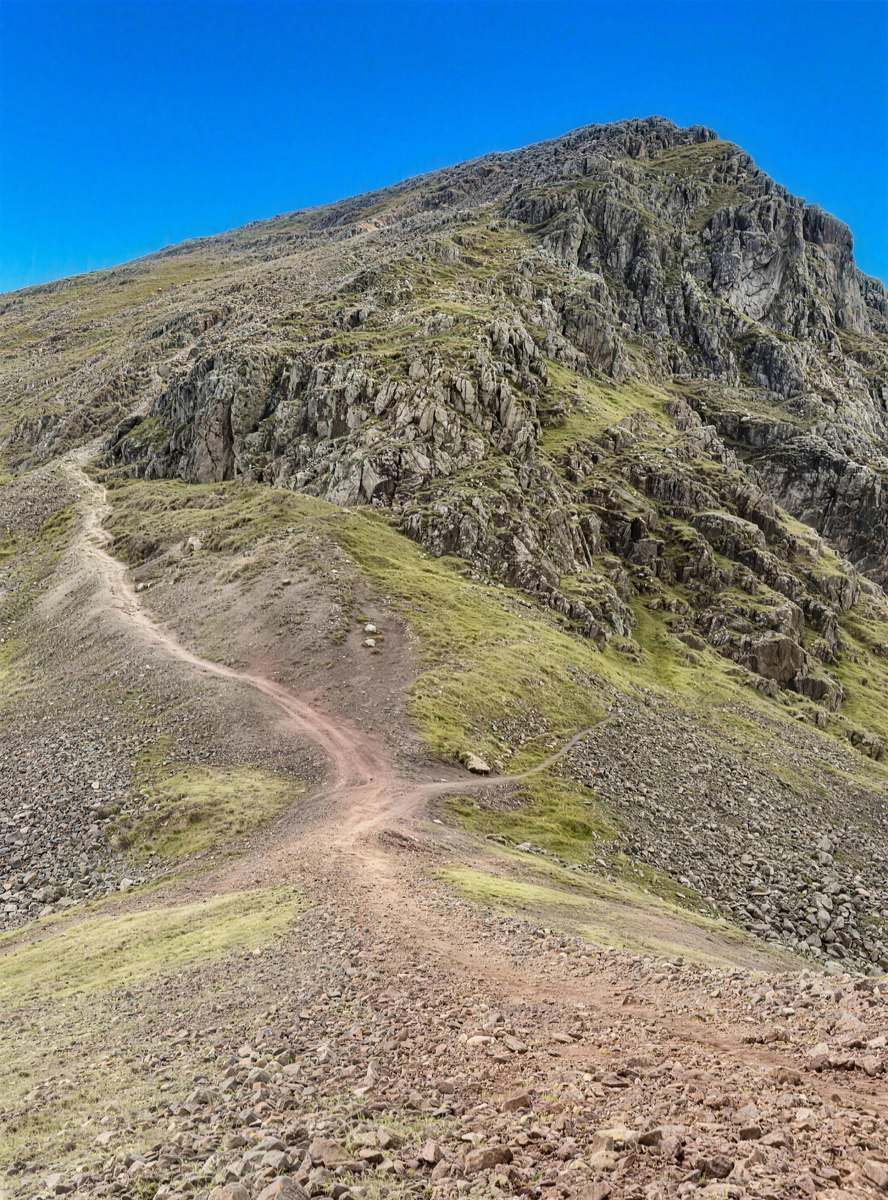
The path climbing toward Great Gable's rocky summit dome
Great Gable — a steep, rough mountain walk from every side, with a rocky top. A photo by The Lakes Planner.

The heart of the mountain

The summit war memorial & Remembrance Sunday

Great Gable's summit carries one of the most moving stories in British hill walking. After the First World War, the Fell and Rock Climbing Club bought Great Gable and a ring of surrounding summits and gave them to the National Trust in memory of club members who had been killed in the war, so that the fells they loved would be protected for ever.

A bronze memorial plaque is set into the rock on the summit, listing the fallen. And every year on Remembrance Sunday, walkers climb to the top of Great Gable for a service of remembrance — a gathering on the summit of a mountain, in all weathers, that is unlike anything else in the country.

It is worth climbing Great Gable for this alone. Whatever the weather when you reach the top, you are standing on a memorial.

The birth of a sport

Napes Needle & British rock climbing

On Great Gable's steep south face stand the Napes crags, and among them a slender free-standing pinnacle: Napes Needle. In 1886, W.P. Haskett Smith climbed it alone and without ropes — an ascent widely regarded as the birth of rock climbing as a sport in Britain. People had climbed mountains before; Haskett Smith climbed a rock for its own sake, and a pastime was born.

Reaching the foot of the Needle — “threading the Needle” — means committing to the exposed scrambling of the Climbers' Traverse across serious, steep ground. This is territory for experienced scramblers and climbers only: it is emphatically not a walkers' objective, and we do not route-guide it here. Admire the Needle from the walkers' paths and leave the pinnacle to those equipped for it.

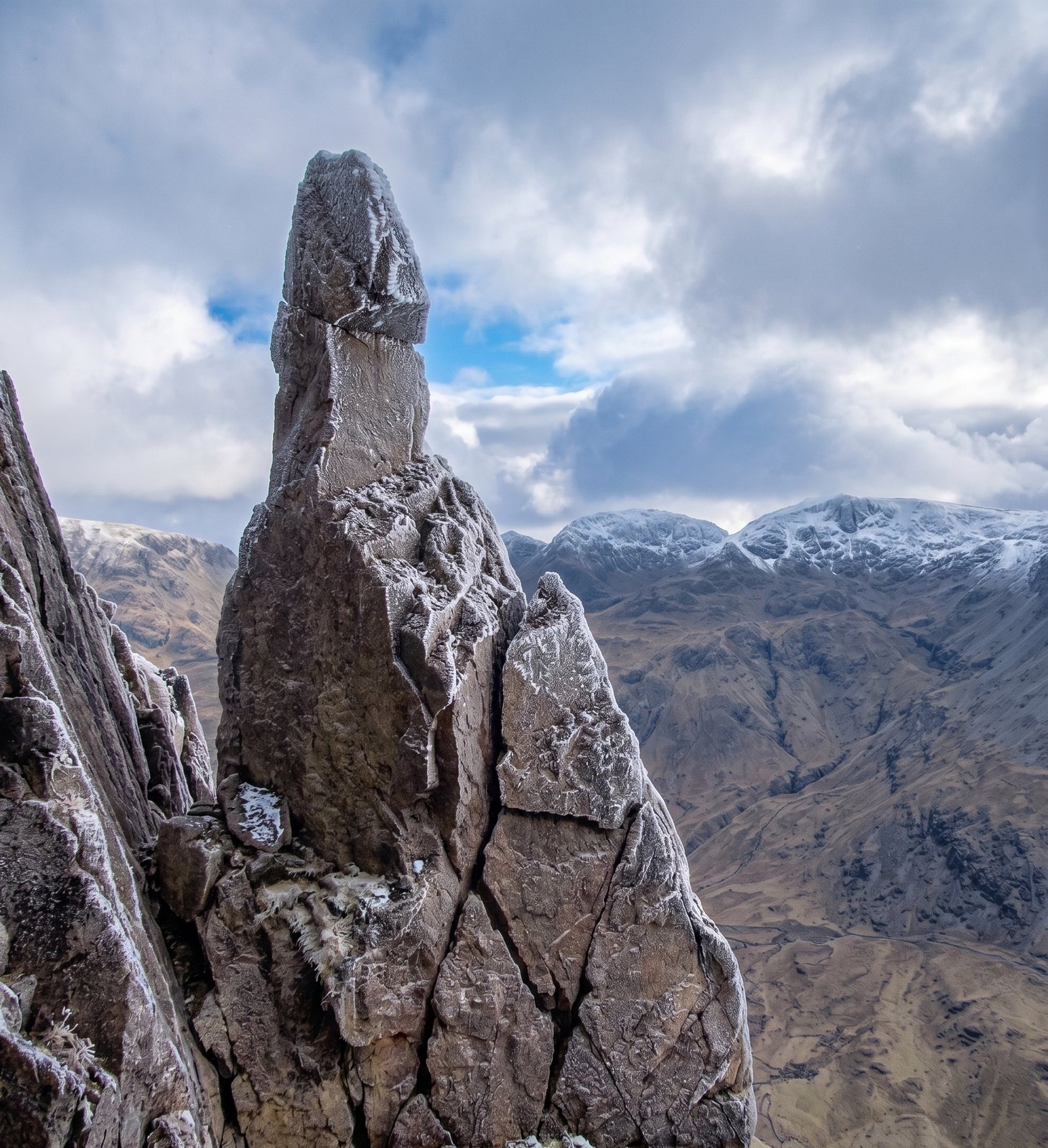
Napes Needle, the free-standing rock pinnacle on Great Gable's south face, with the snowy Scafell range beyond
Napes Needle — the pinnacle whose 1886 ascent is seen as the birth of British rock climbing.
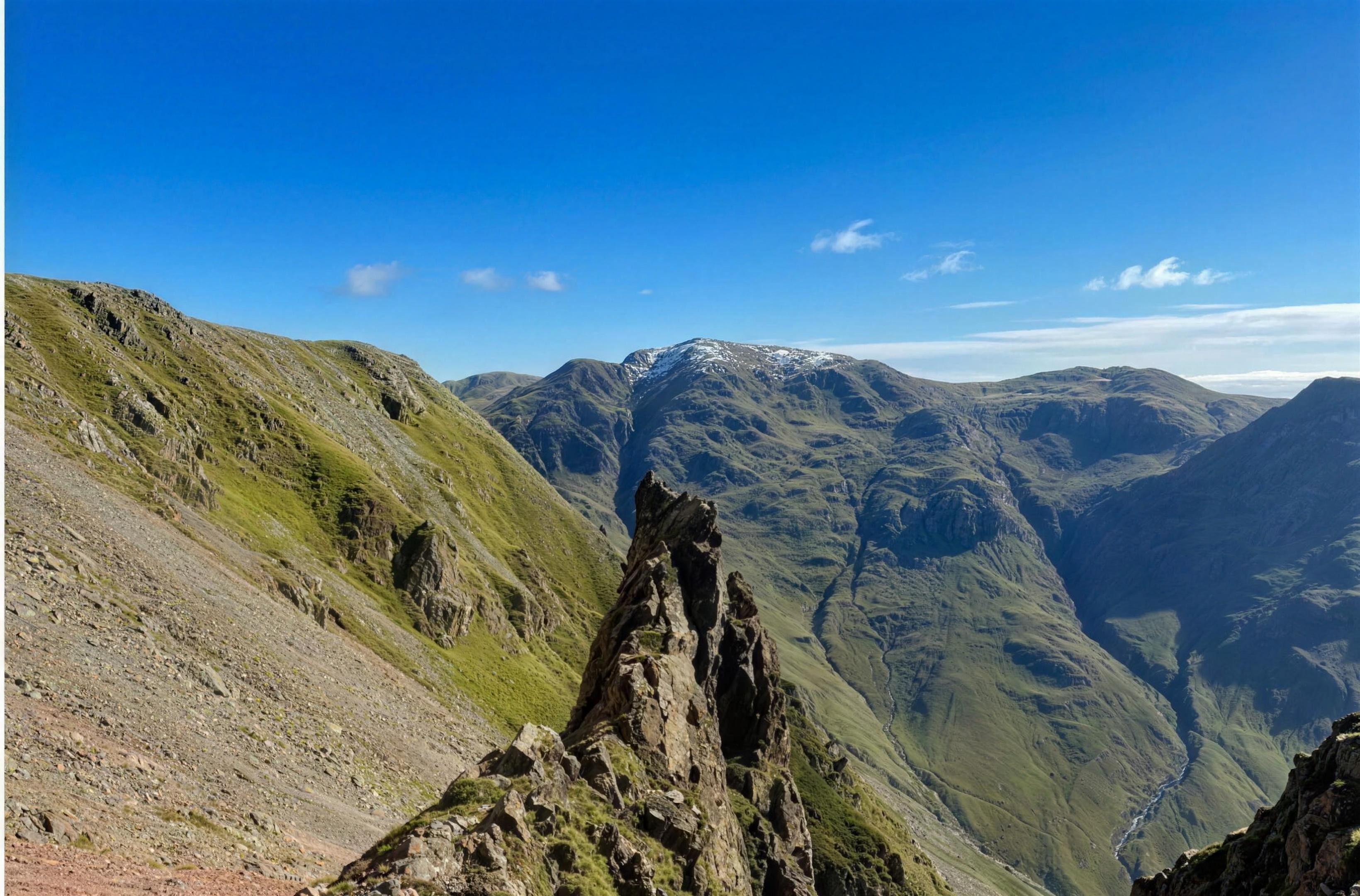
The Napes Needle and Napes crags on Great Gable's south face
The Napes crags — serious scrambling ground, for the experienced only.

The honest answer

How difficult is Great Gable?

There is no easy way up Great Gable — every route is a steep, rough mountain walk, and the honest answer to “what is the easiest route?” is “the one with the least climbing”, which is the Honister start. None of them are gentle.

No standard route involves roped climbing or serious scrambling, but all demand good fitness, sure footing on rocky ground, and care on the summit dome — which, like many of the high fells, is a confusing rocky top in cloud. Treat Great Gable as the proper 899 m mountain it is, take a map and compass, and pick your weather.

Great Gable's steep rocky flank
No easy way up — Great Gable is steep and rough from every direction. A photo by The Lakes Planner.

Logistics

Parking & getting there

Seathwaite (Borrowdale) — free roadside verge parking on the farm lane, which fills very early and gets congested; arrive early and park considerately.

Wasdale Head — the National Trust car park (pay and display, members free, check current charges), which fills extremely early on fine days.

Honister Pass — parking is at the slate mine, a paid visitor attraction with its own charges; check current arrangements before you plan to start here.

Answered

Common questions

How difficult is Great Gable?

Great Gable is a proper steep mountain walk from every direction — there is no gentle way up. None of the standard routes involve roped climbing, but all of them are steep, rough and demand a good level of fitness and sure footing on rocky ground. It is a serious 899 m mountain day, not a casual outing, and the summit is a rocky dome that needs care in cloud.

What is the easiest route up Great Gable?

There is no easy route, only a least-hard one. Starting from Honister Pass gives you the biggest height start, so it involves the least total ascent — but it is still a rough mountain walk over Grey Knotts and Brandreth. From Seathwaite via Sty Head and from Wasdale Head are both steeper and more direct. Honestly: pick Honister for the least climbing, but expect a real mountain day whichever way you go.

Is Great Gable a Wainwright?

Yes — and one of the most loved of all 214. Alfred Wainwright gave it pride of place, and it is often named among the very finest fells in the Lake District. Its distinctive pyramid shape, seen from Wasdale, is one of the most recognised mountain profiles in England and appears on the Lake District National Park's own emblem.

What is Napes Needle?

Napes Needle is a free-standing pinnacle of rock on the Napes crags, on Great Gable's steep south face. W.P. Haskett Smith's rope-free first ascent of it in 1886 is widely regarded as the birth of rock climbing as a sport in Britain. Reaching the base of the Needle (“threading the Needle”) means committing to exposed scrambling on serious ground — it is territory for experienced scramblers and climbers only, not a walkers' objective.

Why is there a memorial on the summit of Great Gable?

Great Gable and the surrounding summits were bought by the Fell and Rock Climbing Club and given to the National Trust in memory of club members who died in the First World War. A bronze memorial plaque is set into the summit rock, and every year on Remembrance Sunday walkers gather at the top for a service — one of the most moving traditions in British hill walking.

Keep exploring

More guides & nearby