Coniston's own mountain — a proper 803 m summit reached on clear engineered paths, past a hanging tarn and the remains of the copper mines and slate quarries that built the village below.
Height · 2,635 ft
Classic circular · 10.1 km
Total ascent
Walking time
Coniston's anchor fell
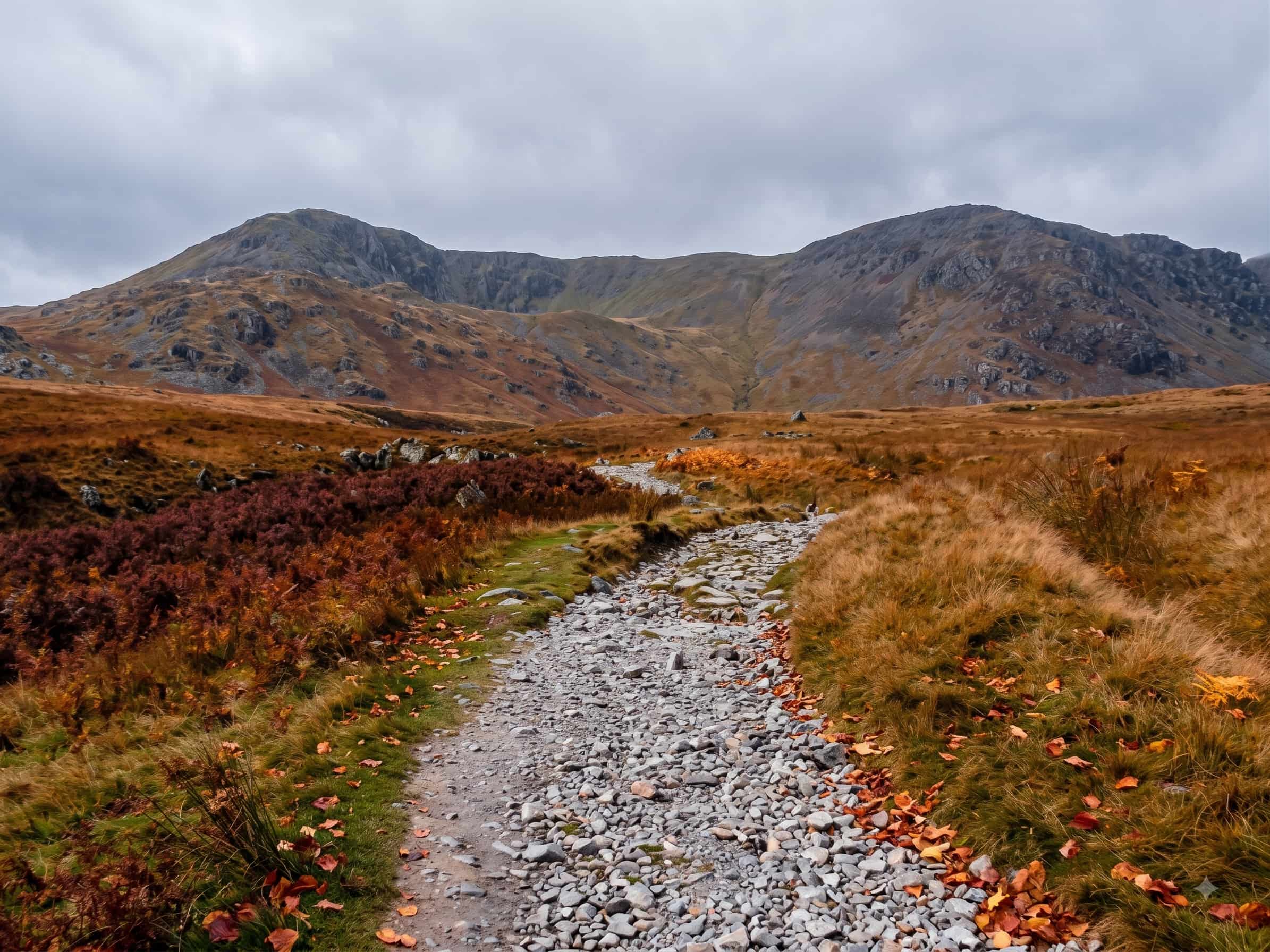
The Old Man of Coniston — Coniston Old Man to most people who live near it — rises to 803 m directly behind Coniston village, and it is the fell the whole area is built around. Copper was mined on its flanks for centuries and slate was quarried out of its side; the village below exists largely because of what came off this mountain.
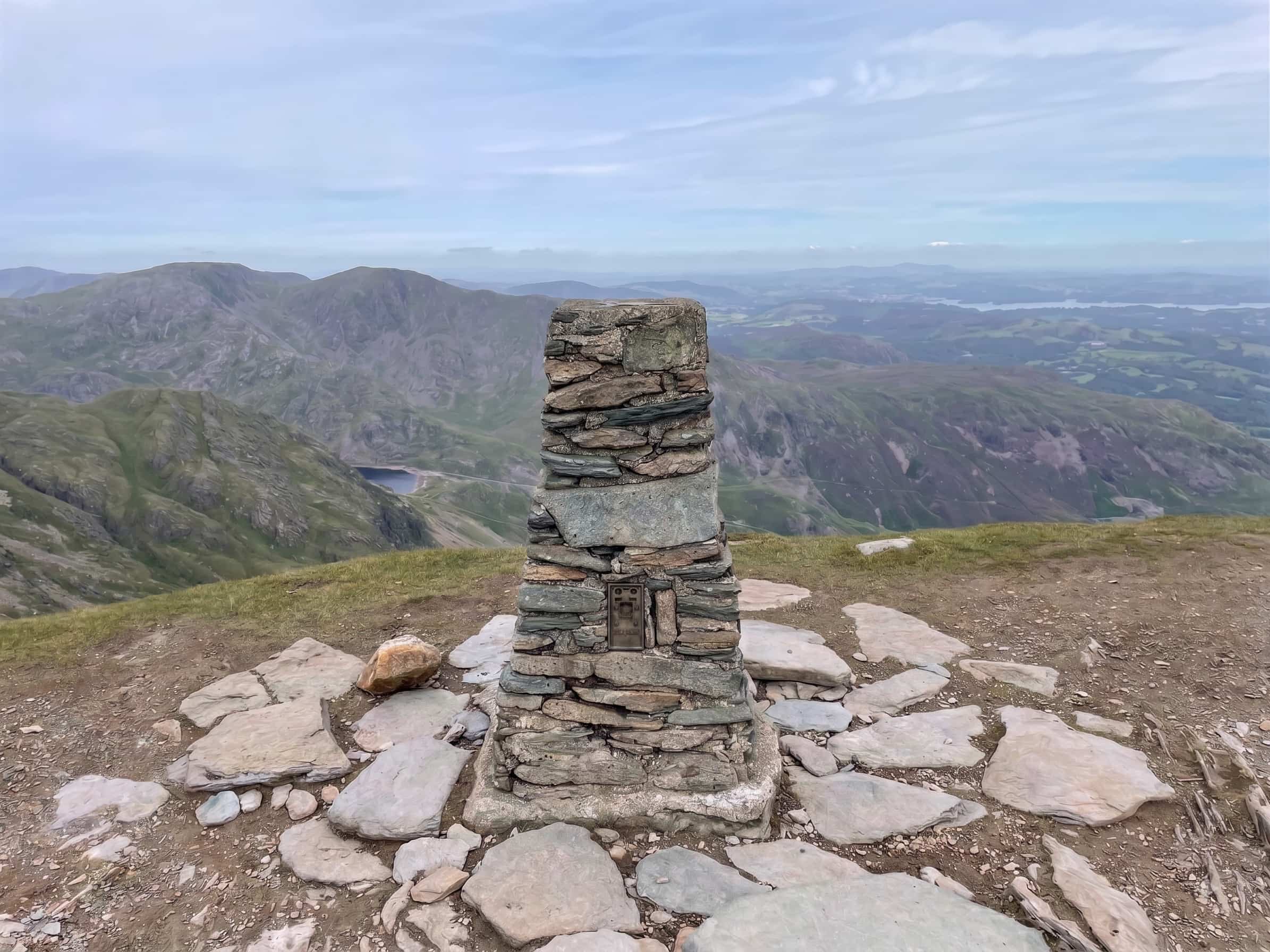
As a walk it is unusually generous. The standard route climbs on clear, largely engineered paths, past the hanging tarn of Low Water in its rocky bowl, with no scrambling at all — yet it still delivers 700 m of ascent and a genuine 800 m summit with a view stretching from the Scafells to Morecambe Bay and, on the right day, the sea.
It is also honest about its history rather than tidy. You walk up through the workings, past spoil heaps, ruined buildings and the cut slate that made this place — an industrial landscape slowly being reclaimed by the fell.
The classic
The standard ascent starts from Walna Scar car park and is around 6.3 miles / 10.1 km with roughly 700 m of ascent, taking 3–4 hours of walking — allow 4–6 hours for the whole day with stops.
From the car park, take the track heading north and follow it as it climbs steadily into the old workings. The path threads up through the quarries — this is where the mountain's history is most visible — before the gradient eases at Low Water, a small tarn sitting in a rocky hollow directly beneath the summit crags. It is the natural place to stop, and on a still day the reflection of the crags in it is the photograph everyone takes.
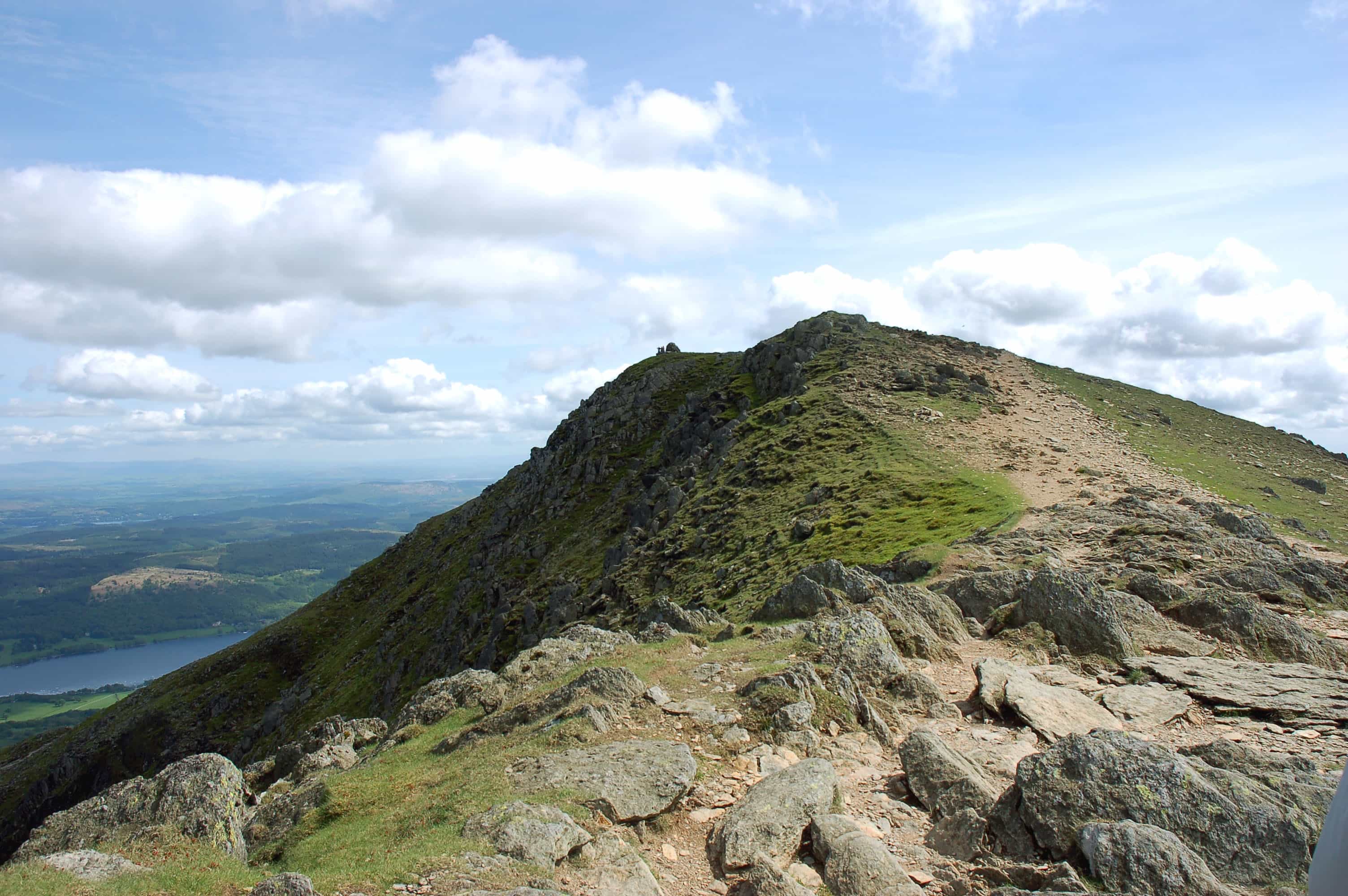
From Low Water the path zig-zags up the final slope to the summit cairn. It is steep and steady rather than difficult, and the ground is good throughout. Water runs down through Church Beck below the workings, tumbling in a series of falls — worth the short detour if you have time on the way back down.
The easiest way up
There is no secret gentle path up the Old Man; it is 803 m and you have to climb all of it. What people are really asking is which way is the least difficult, and the answer is the standard Walna Scar route described above.
It is the easy route for three reasons. It starts high — the car park saves you a chunk of the climbing. The path is engineered and obvious for most of its length, so navigation is straightforward in clear weather. And there is no scrambling and no exposure anywhere on it: the difficulty is purely stamina.
To make it easier still: go up the way you plan to come down, so you already know the ground; start early to avoid the worst of the crowds on the zig-zags; and treat Low Water as your decision point — if you are already tired there, the summit is still a stiff pull above you, and there is no shame in making the tarn your destination.
The full round
The classic circular continues past the summit along the ridge rather than dropping straight back the way you came, giving a much better sense of the range — the ridge runs on north towards Brim Fell and Swirl How, with the whole of the Coniston fells opening up around you.
The simplest circuit returns via the Walna Scar track, closing the loop back at the car park. Only take the longer ridge options if the visibility is good: the tops are broad and largely featureless, and in cloud they demand real navigation rather than path-following.
Logistics
Walna Scar car park (grid reference SD 288 970) is the closest start, with around 70 spaces. It is pay and display — check current charges, and charges apply daily including bank holidays.
Be warned about the approach. The road up from Coniston village is steep, narrow, single-track and potholed, with limited passing places. Plenty of drivers find it unpleasant, and it is not kind to a low car. If that does not appeal, the alternative is genuinely good.
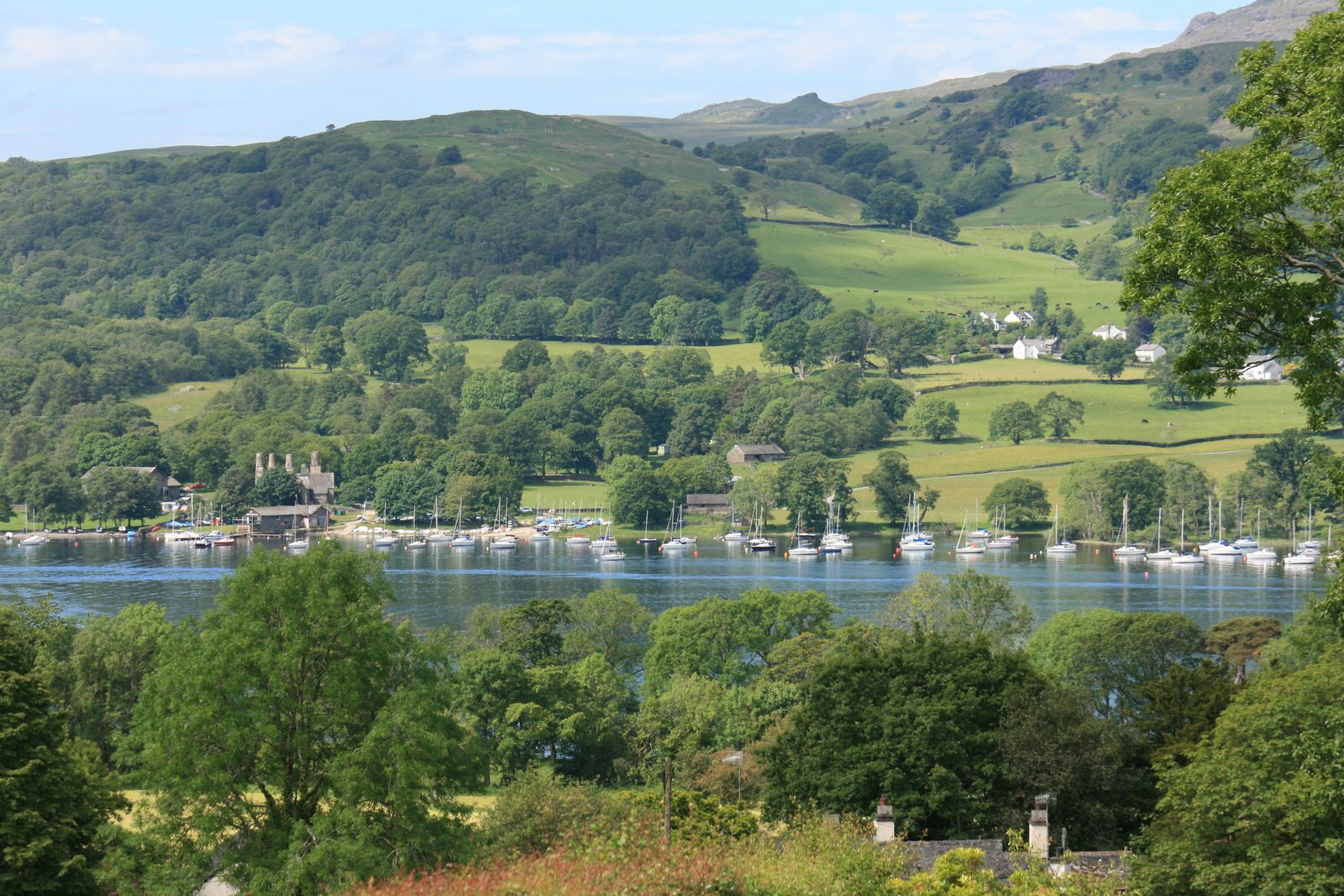
Coniston village and the Old Station car park add distance to the walk but the drive is far easier, and they put you at the pubs and cafés of the village at the end of the day. The Coniston hub has the full rundown on parking and where to eat.
Industrial heritage
You cannot climb the Old Man without walking through its industry. Copper was worked in the Coppermines Valley on a substantial scale, and slate was quarried out of the fell's flank — the levels, spoil runs and ruined buildings you pass are the remains of both.
It is worth slowing down for. The engineered path you are enjoying so much exists in part because it was built to move stone, and the terraces cut into the hillside were working platforms, not viewpoints.
Treat the workings with respect and keep out of any shafts, levels and ruined structures — they are unstable and genuinely dangerous, however inviting they look. Admire them from the path.
A one-page summary of the classic route via Low Water — distance, ascent, timings, the parking situation, and what to take. Print it for the car or save it to your phone for when the signal drops on the fell.
Download the route card (PDF)Answered
Yes, with reasonable fitness. The standard route from Walna Scar follows clear, largely engineered paths and quarry tracks with no scrambling, so the difficulty is stamina rather than technique. That said, this is a proper mountain day: around 700 m of ascent, three to four hours of walking, and a summit that can be cold, windy and in cloud when the village below is sunny. Take proper footwear, layers, food and water, and be prepared to turn back.
Around 3–4 hours of actual walking for the classic 6.3-mile circular from Walna Scar car park. Allow 4–6 hours for the day once you have factored in stops at Low Water, photographs, lunch on the summit and a look at the quarry workings on the way down.
Considerably. Catbells is a short, popular fell of around 451 m with a brief hands-on section near the top. The Old Man is 803 m, with roughly double the ascent and distance, and takes two to three times as long. There is no scrambling on the standard Old Man route, but it is a much bigger day out.
Not a person. The name is commonly explained as coming from old dialect and Norse-derived words for a summit cairn or standing stone marker — the 'old man' being the heap of stones on top rather than any individual. That is the explanation usually given locally; the fell is also known simply as Coniston Old Man.
Walna Scar car park (grid reference SD 288 970) is the nearest, with around 70 spaces. It is pay and display — check current charges — and it is reached by a steep, narrow, potholed single-track road up from Coniston village, which not every car or driver will enjoy. The alternative is to park in Coniston village or at the Old Station car park and walk up; that adds distance but the drive is far easier, and it puts the village cafés and pubs at the end of your day.
Keep exploring
The village at the foot of the fell — parking, pubs, the lake and the launches.
Read more
The obvious comparison — a much shorter, gentler fell if the Old Man sounds like too much.
Read more
The other side of Coniston's quarrying history, a short drive away in Little Langdale.
Read more
Every fell guide we've written, with heights, difficulty and the best route for each.
Read more