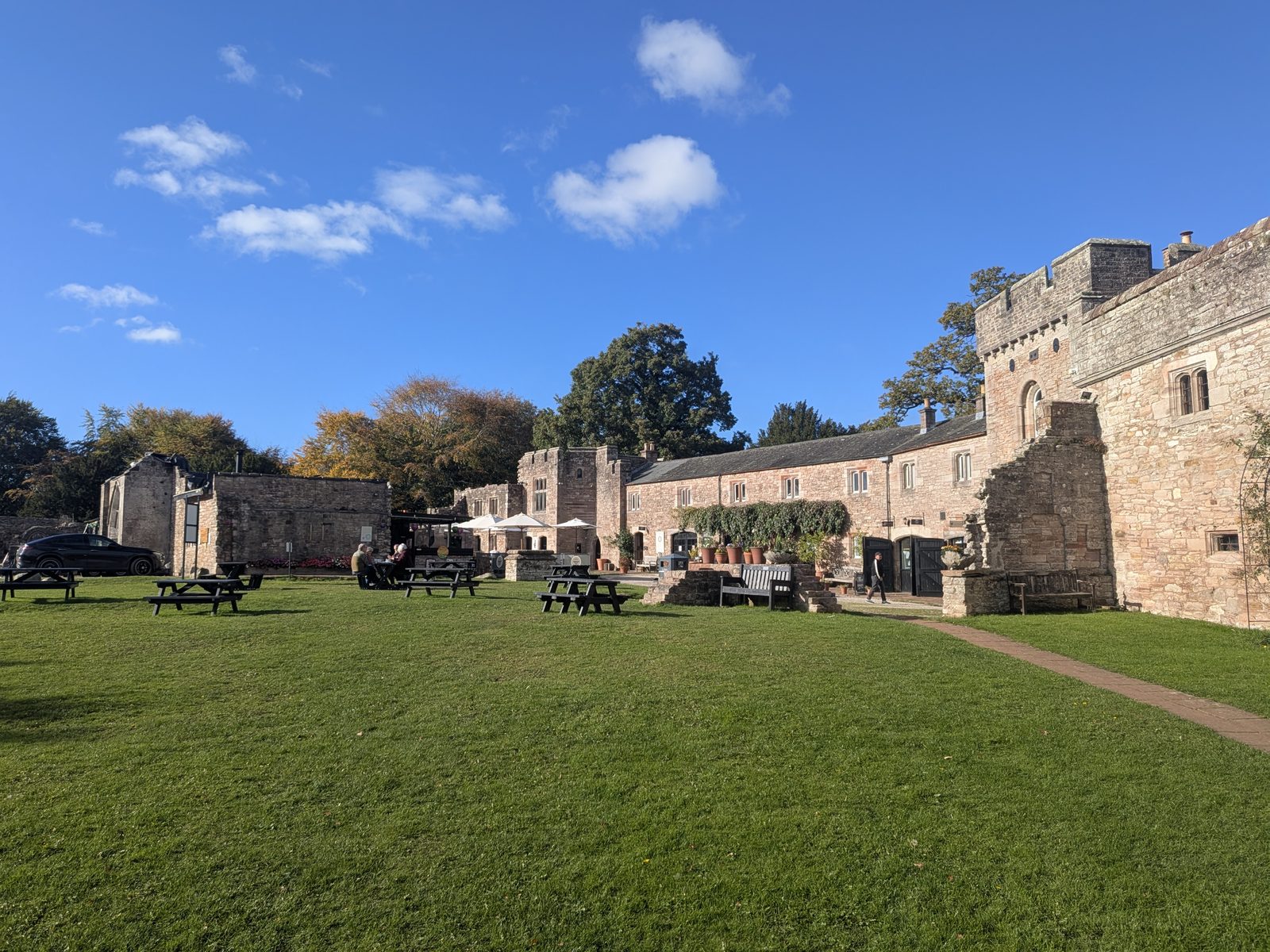
The lawn and sandstone ranges of the courtyard at Brougham Hall near Penrith, with picnic tables and a battlemented tower
Free entry · Makers · Café

Brougham Hall, Penrith

The "Windsor of the North", left a ruin, used for secret tank work in the war, and now a courtyard of makers with a café. Free to walk in. Here is where to park and what you'll find.

Written by Peter Visited Sunday 18 October 2026
Free
Entry; donations welcome
1905
Edward VII's visit
1941–45
Secret tank work
1 mi
South of Penrith
Parking Hideaway Café The makers History The arch stone FAQ

A mile south of Penrith

Is Brougham Hall free?

Yes. Entry to Brougham Hall is free. The hall relies on donations to pay for the restoration, and there is a sign at the entrance with a suggested amount and a QR code. Inside the walls is a courtyard of makers' workshops, two distilleries and the Hideaway Café.

We went in on Sunday 18 October 2026, halfway round our Eamont Bridge circular walk, and it was the place we lingered longest. It is a mile south of Penrith, just off the A6, and a short walk from Brougham Castle.

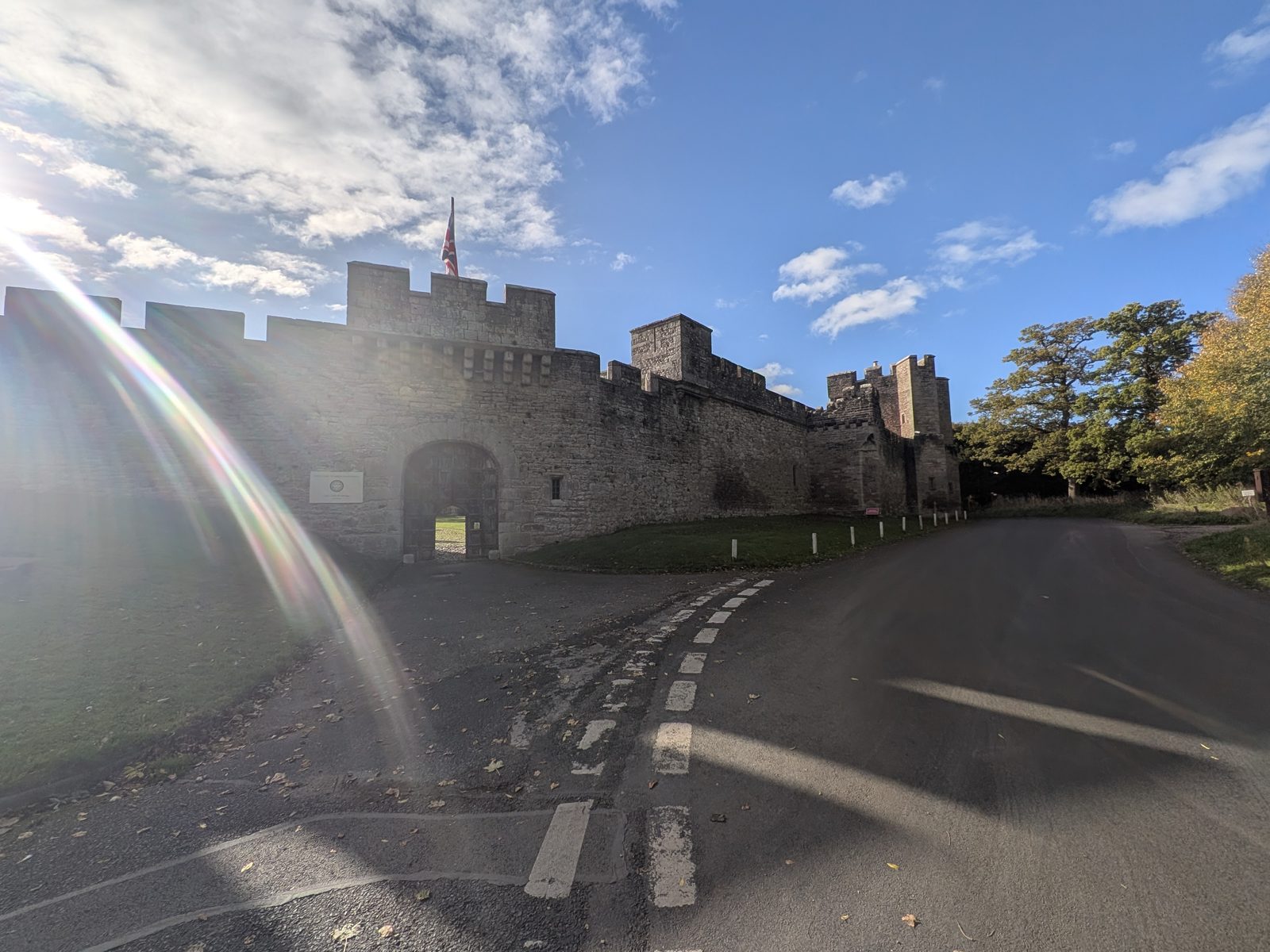
The battlemented sandstone gateway and walls of Brougham Hall beside the road, in low autumn sun
The battlemented gateway from the road.

The one thing to know before you arrive

Brougham Hall parking

Public car park

The public car park is at the back. Turn right into the housing estate by the hall and go round the back to ///chart.bypasses.organs. It takes about ten cars.

If the car park is full, you can start from the henges at Eamont Bridge and walk in. That is the start of our circular walk.

Not the front

The parking at the front is for staff. It looks like the obvious place to pull in, but it isn't the public car park.

Tea and cake

The Hideaway Café at Brougham Hall

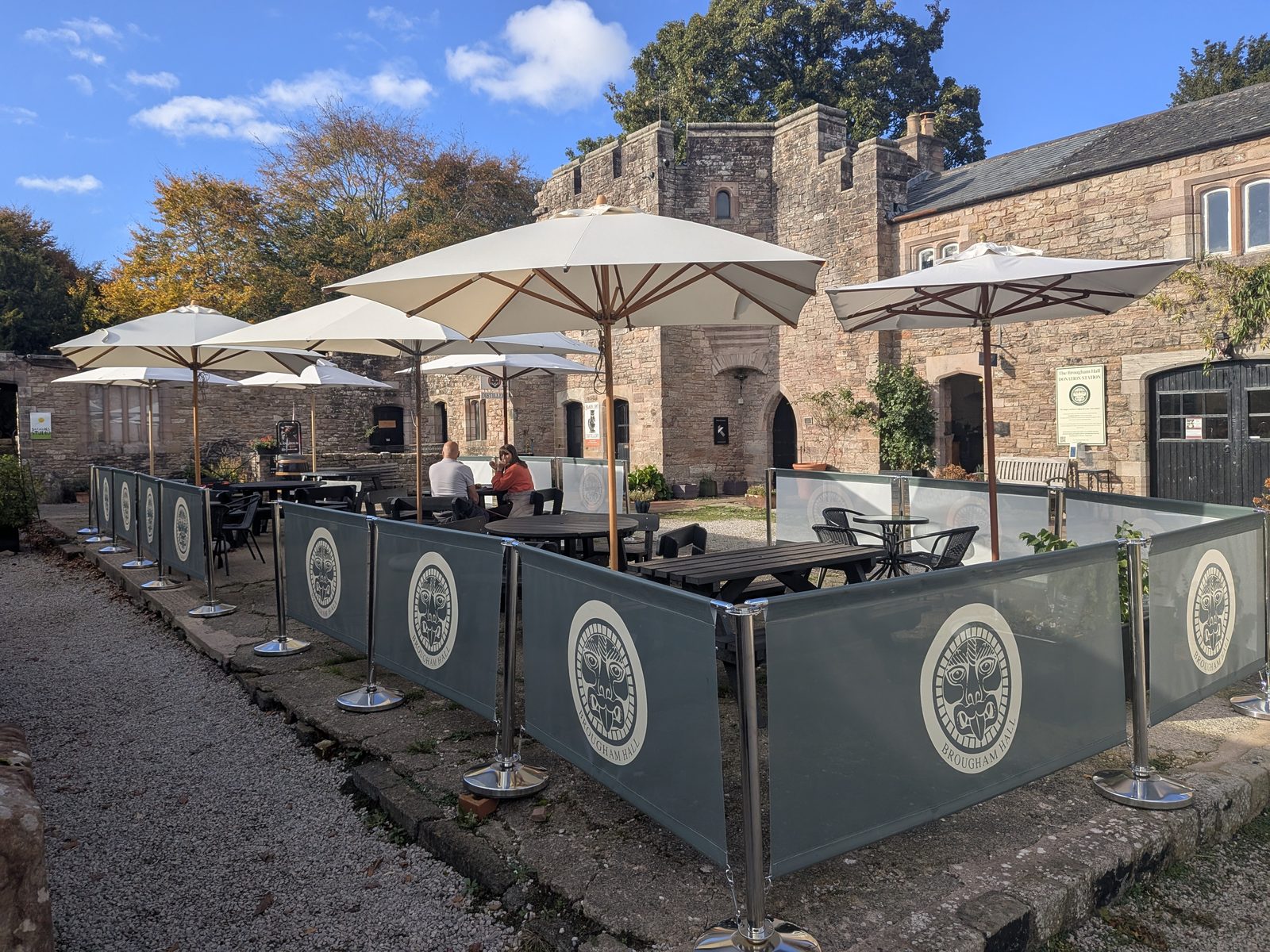
The Hideaway Café is run by Kerry and Ben. Known for: homemade scones and cakes, soups, sandwiches and daily specials, according to the hall's website. There are picnic benches out in the courtyard under big umbrellas, and seating indoors.

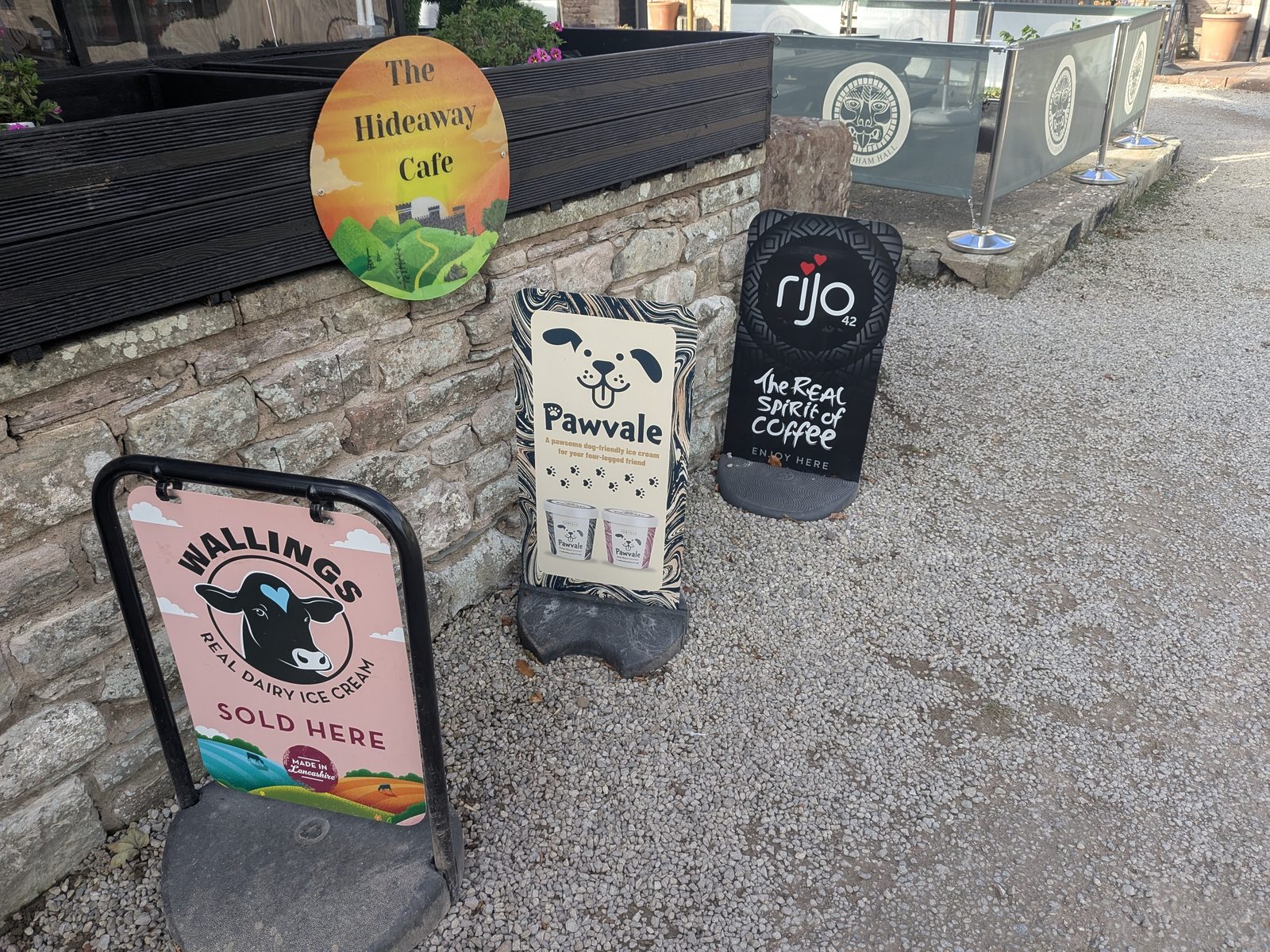
The Hideaway Café sign and A-boards outside the café at Brougham Hall
The Hideaway Café's boards.
The Hideaway Café terrace in the Brougham Hall courtyard, with tables under cream umbrellas inside screens printed with the hall's emblem
The café terrace in the courtyard.

Round the courtyard

The makers at Brougham Hall

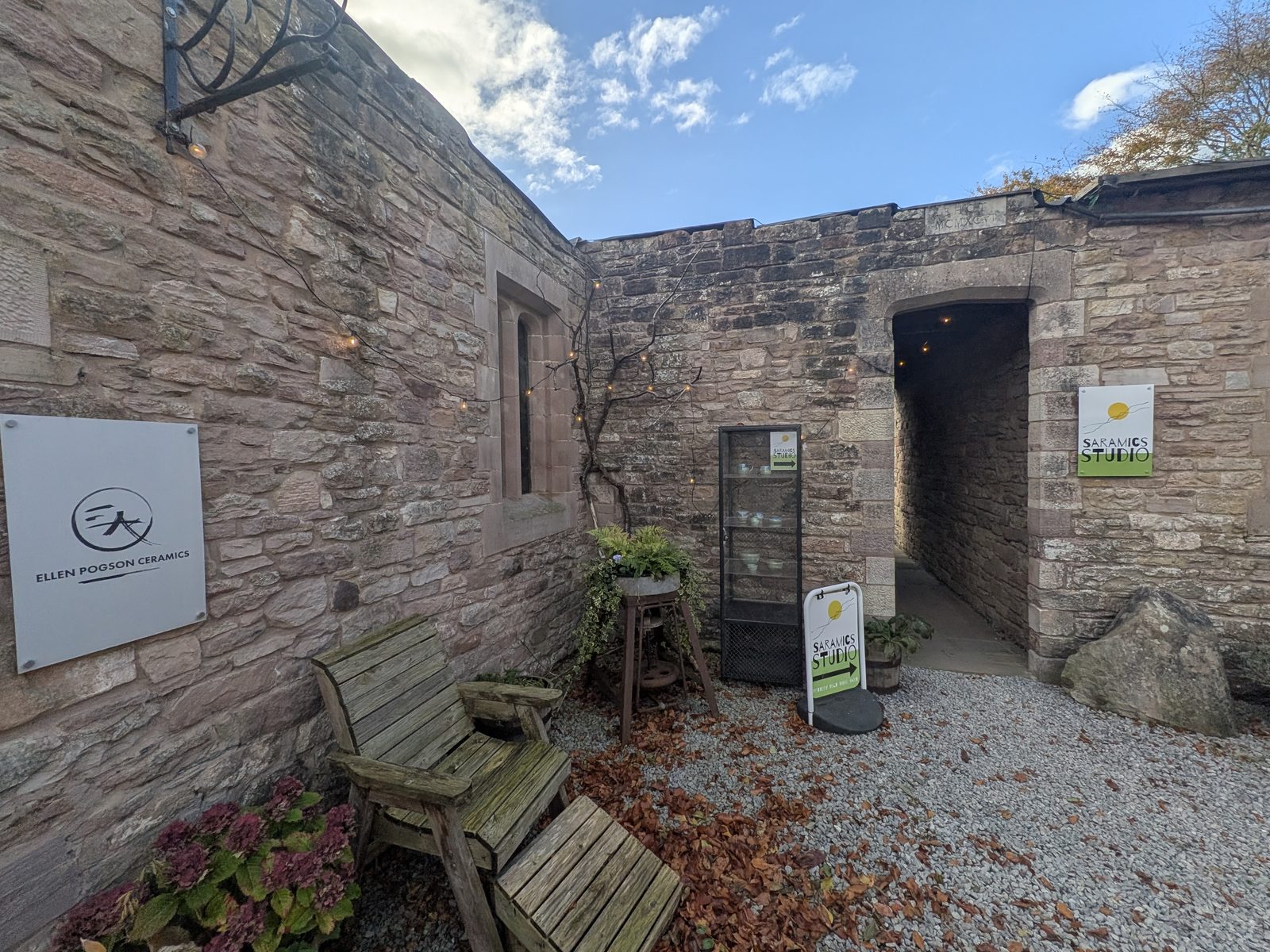
The old ranges round the courtyard are workshops and studios now. These are the ones we photographed on our visit. The hall's website has its full list of makers.

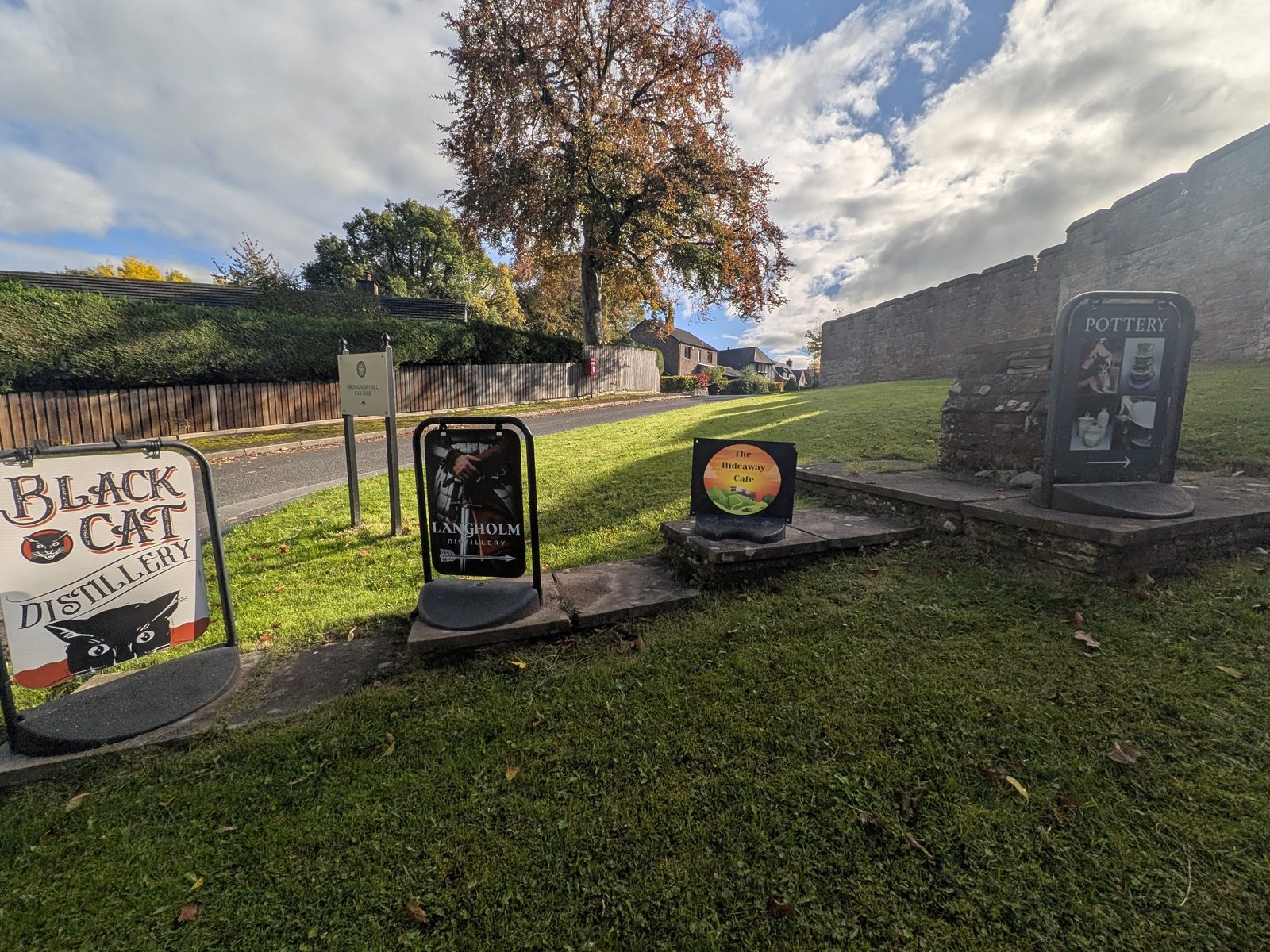
Black Cat Distillery. Known for: small-batch gin, and a gin school where you make your own bottle.

A-boards for Black Cat Distillery and other makers on the grass by the Brougham Hall car park sign
The makers' boards out by the road.

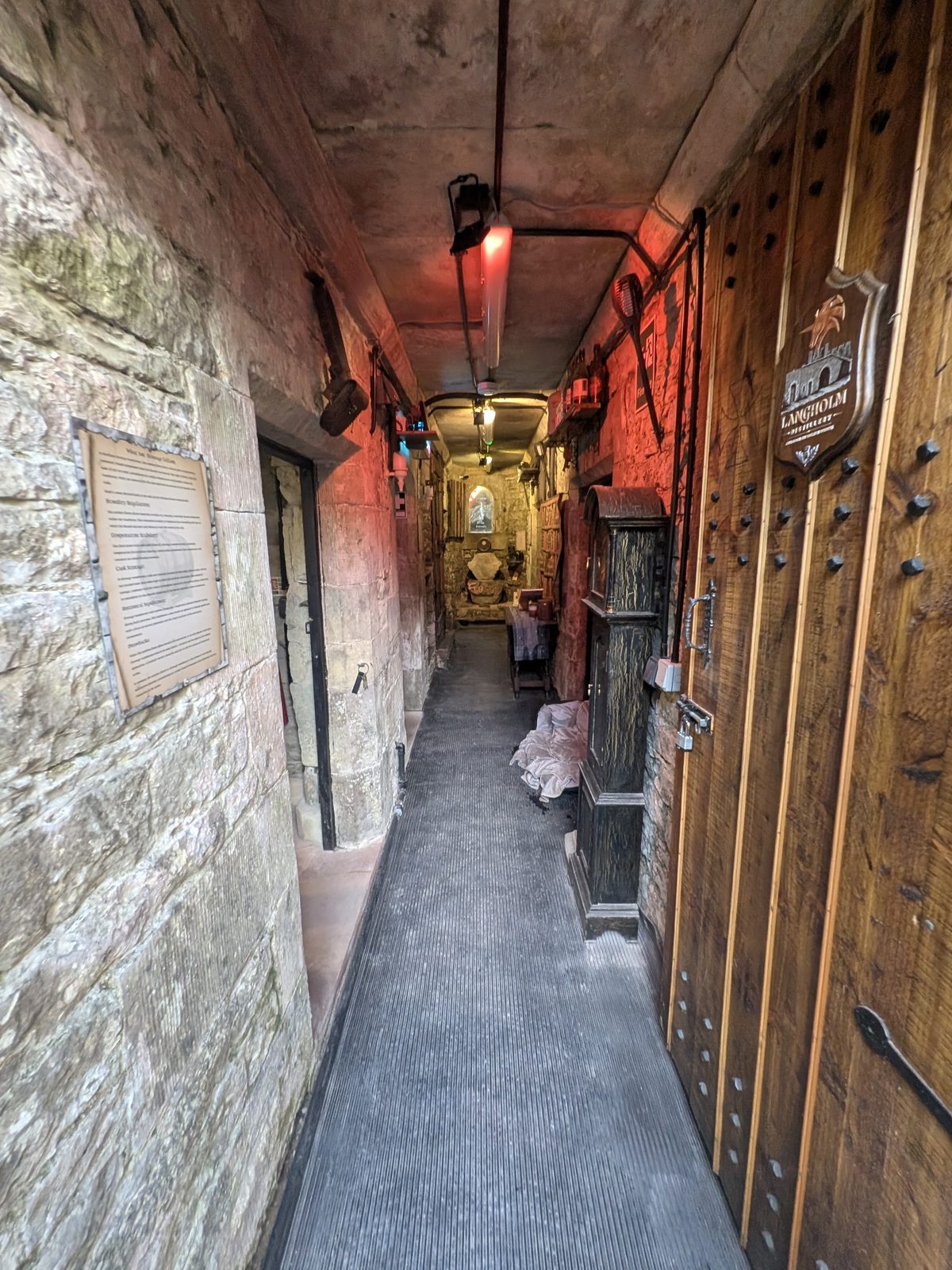
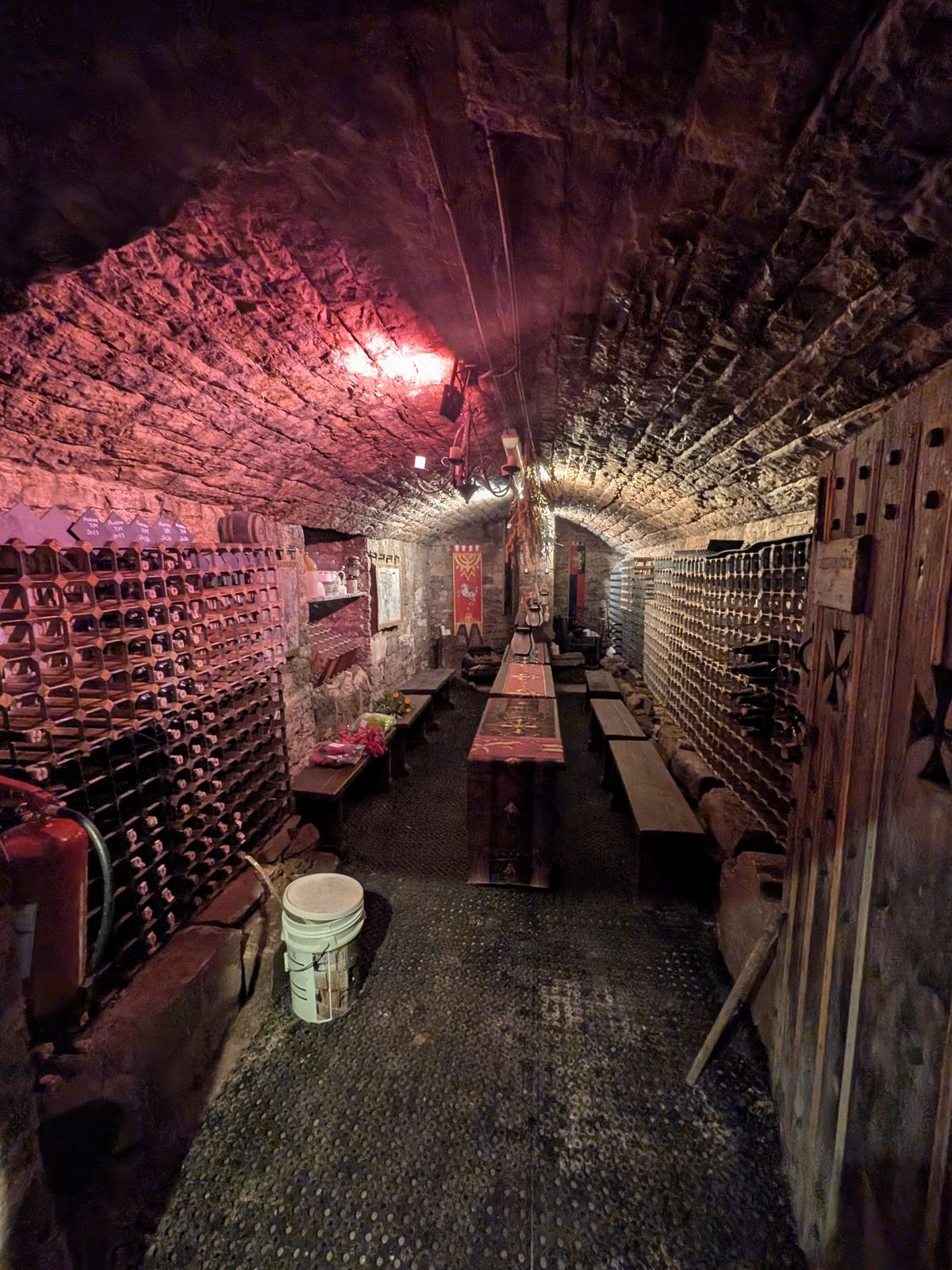
Langholm Distillery. Known for: brandy, and guided tours of its cellars.

A long, narrow stone passage at Brougham Hall lit by red lamps, with a heavy studded door and the Langholm Distillery sign
The Langholm Distillery door and passage.
A brick-vaulted cellar at Brougham Hall lit in red, with racks of bottles along both sides and a long table
The vaulted cellar.

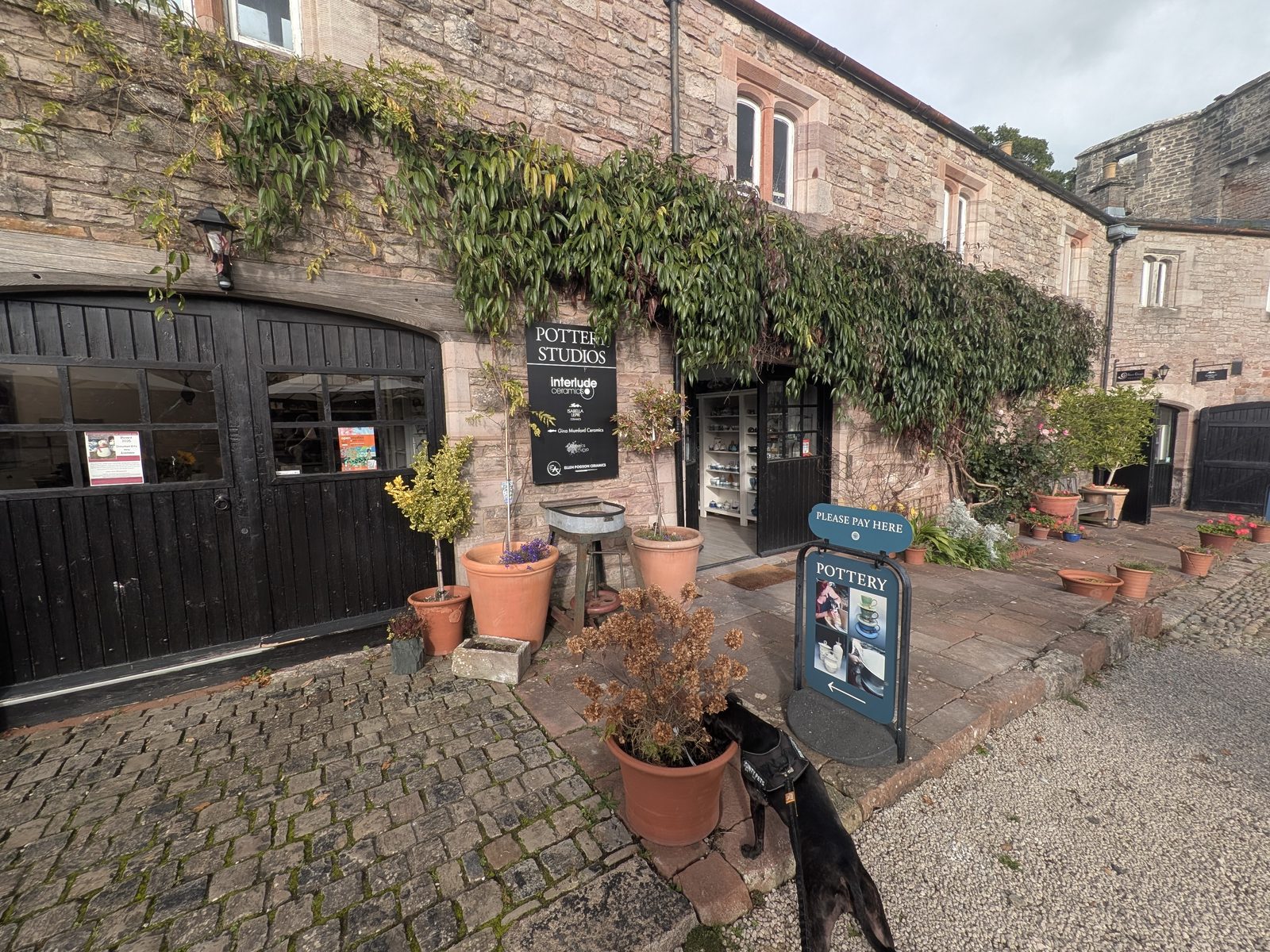
Interlude Ceramics. Known for: wheel-thrown stoneware in colours taken from the Lakeland seasons, and pottery classes.

The ivy-covered front of the Interlude Ceramics studio at Brougham Hall, with pots outside on the cobbles and Cass, a black Staffordshire Bull Terrier, on the lead
Interlude Ceramics, with Cass.
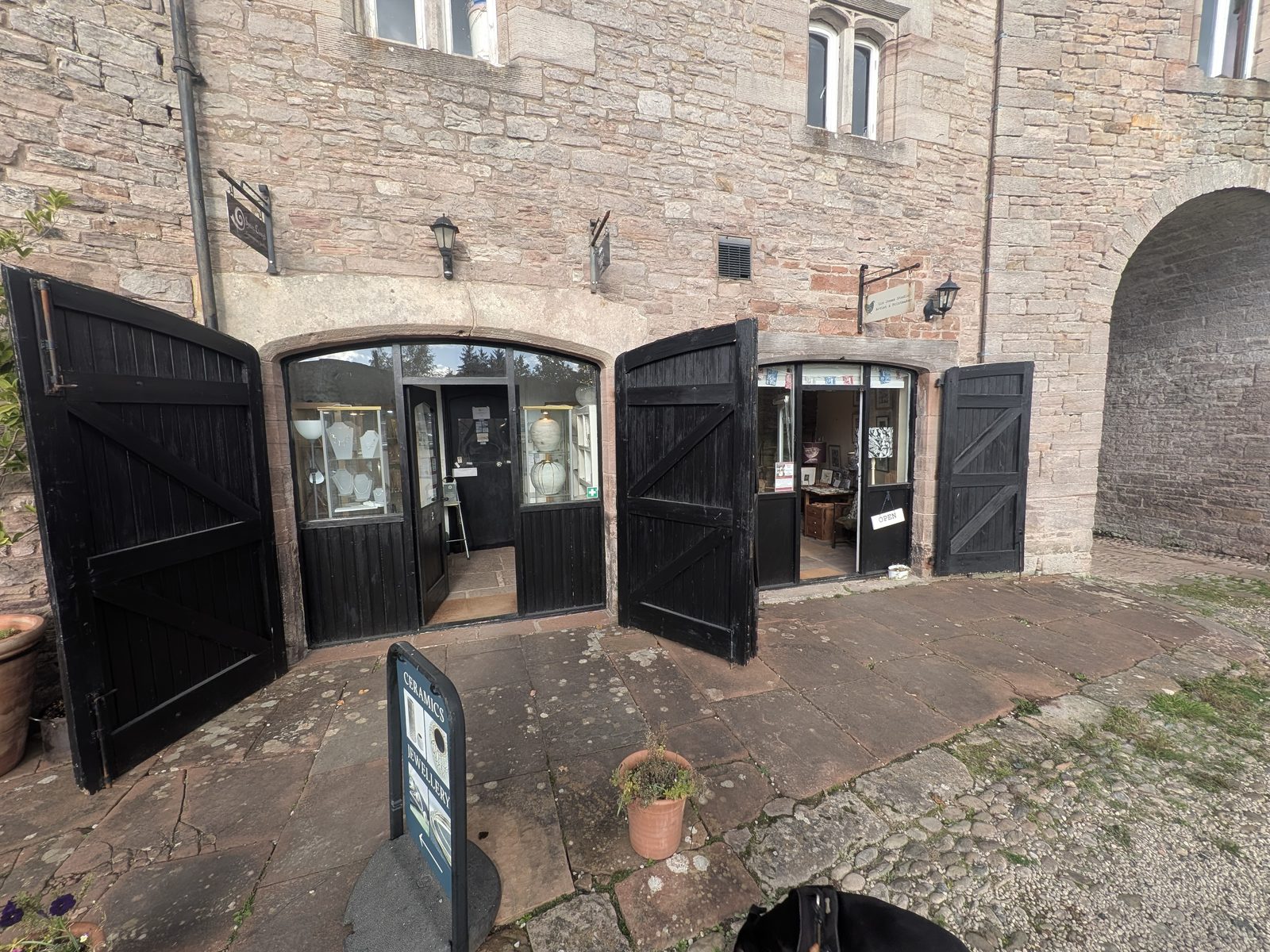
The black double doors of a pottery shop at Brougham Hall standing open onto the cobbled courtyard
The pottery shop, doors open.

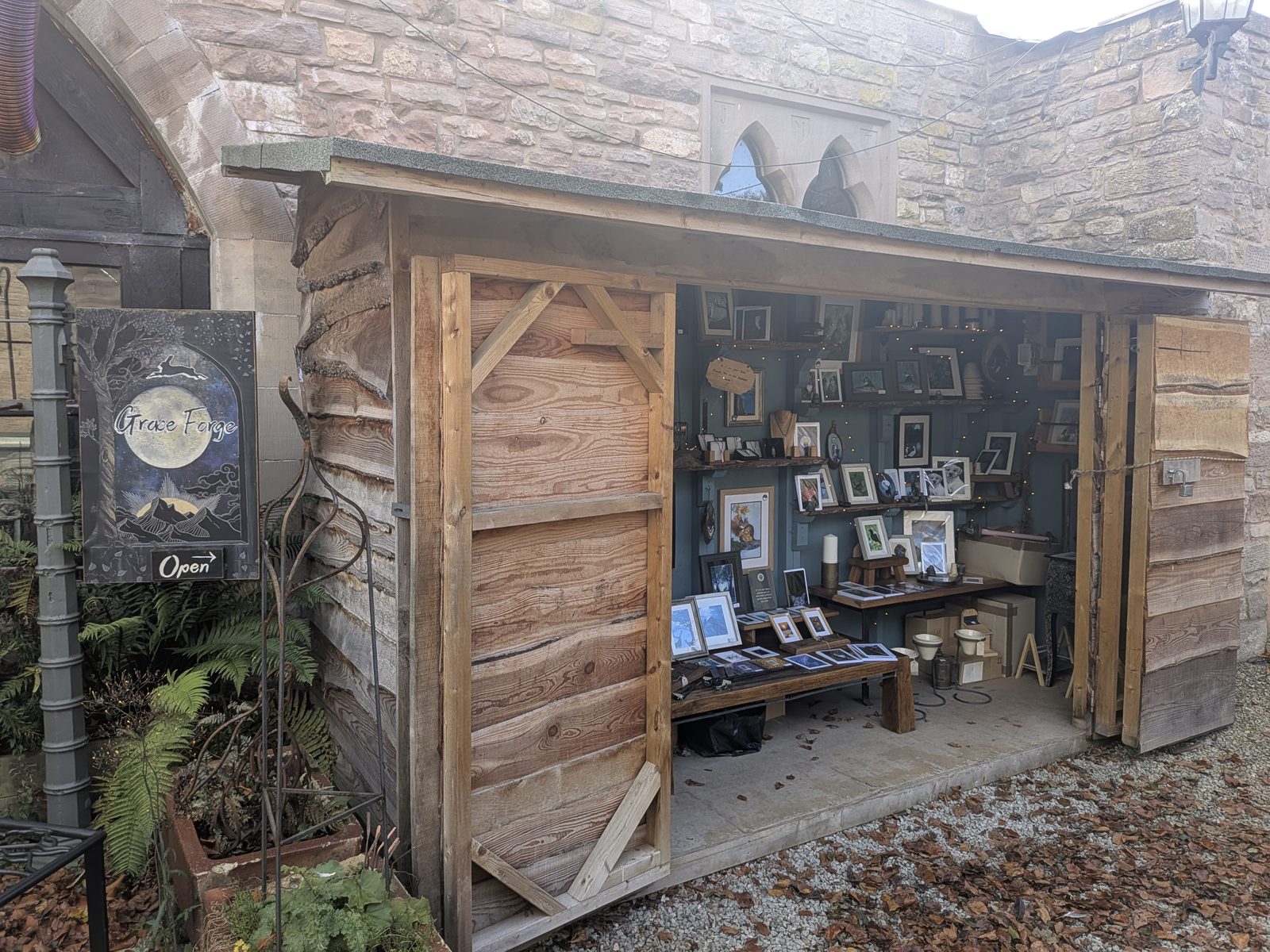
Grace Forge. Known for: metalwork inspired by the natural world, and blacksmithing courses.

An open-fronted timber workshop at Grace Forge, Brougham Hall, with framed work on display inside
Grace Forge.

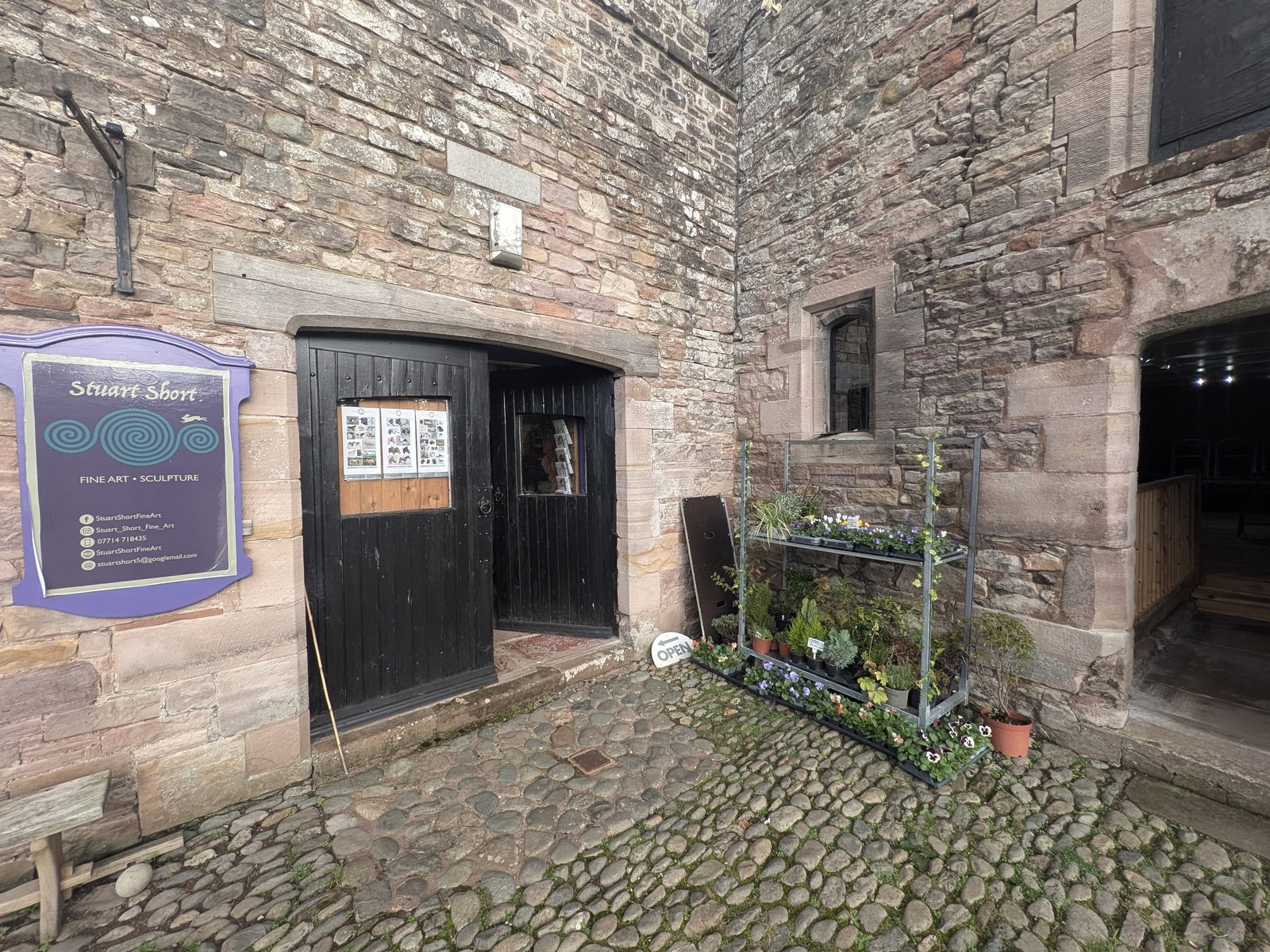
Stuart Short. Known for: fine art and sculpture exploring geometry, texture and light.

The door of Stuart Short's studio in the Brougham Hall courtyard, with his Fine Art and Sculpture sign and plants on the cobbles
Stuart Short's studio: fine art and sculpture.

The hall also runs events through the year. Its events page has listed a 1940s War Weekend with military vehicles, outdoor theatre and a brass weekend. Check it for what's on.

From ruin to workshops

The history of Brougham Hall

Wikipedia says the oldest part of the hall is the 13th-century gateway, followed by the Tudor hall of around 1480 to 1520. In the 1650s Lady Anne Clifford, who also restored Brougham Castle, bought into the estate and rebuilt the chapel, St Wilfrid's.

The hall is best known as the home of Henry Brougham, who became Lord Chancellor in 1830. The hall's own timeline credits him with inventing the Brougham carriage in 1837. Wikipedia says the house was extended and enlarged between 1830 and 1847.

In Victorian times its royal visits earned it the nickname "the Windsor of the North". The hall's timeline lists visits by the Prince of Wales in 1857 and 1894, and in 1905 he came back as King Edward VII.

The Brougham family sold the hall in 1934. Wikipedia says it was sold again for demolition, and the hall's website says it was left abandoned and roofless.

From 1941 to 1945, says Wikipedia, there was a secret tank development facility at Brougham Hall, working on the Canal Defence Light. A plaque at the hall remembers the men who worked there.

According to the hall, Christopher Terry bought it in 1985 and restoration began the following year, turning it over to artisans and artists. Since December 2024 it has been owned by the Brougham Hall CIC, which the hall describes as six creative people with businesses there. The hall is Grade II* listed.
Look for it on the way in

The engraved stone at the arch

An engraved stone at the arch records two journeys. The first: at 11:00 a.m. on 15 October 1905, King Edward VII set off through the arch to Lowther Castle on what the stone calls the first motor ride in the north of England by a British monarch.

The second: in December 1942, Winston Churchill drove through the same arch to inspect the Canal Defence Light tanks.

The Lowther Castle in question is a few miles south. Our Lowther Castle guide covers the ruins and gardens.

Kings were meeting near here long before Edward VII's motor ride. In 927 the rulers of the north and of Wales met King Athelstan at Eamont, the meeting generally seen as the founding of England, and in July 2027 the hall is due to host the Court of Athelstan for its 1,100th anniversary. The story is on Eamont Bridge and the birth of England.

The honest verdict

Is Brougham Hall worth visiting?

Yes, and it costs nothing to get in. We had a coffee in the courtyard and a look round the makers, and the engraved stone at the arch is worth stopping for. Leave a donation if you enjoyed it.

Park round the back, not at the front. If you have a couple of hours, walk it as part of our Eamont Bridge circular with the castle and the two henges.

Good to know

Brougham Hall FAQ

Is Brougham Hall free?
Yes. Entry to Brougham Hall is free. The hall relies on donations to fund the restoration, and there is a donations sign at the entrance with a suggested amount.
Where do you park at Brougham Hall?
The public car park is at the back of the hall, what3words ///chart.bypasses.organs. Turn right into the housing estate by the hall and go round the back. It holds about ten cars. The parking at the front is for staff only.
Is there a café at Brougham Hall?
Yes, the Hideaway Café, run by Kerry and Ben. The hall's website says it serves homemade scones and cakes, soups, sandwiches and daily specials, with picnic benches in the courtyard and seating indoors.
What is the history of Brougham Hall?
Brougham Hall was the home of Lord Brougham, Lord Chancellor from 1830, and was known as the Windsor of the North for its royal visits; Edward VII came in 1905. The family sold it in 1934 and it was left a roofless ruin. During the Second World War it was a secret tank development site, and from 1985 it was restored as a home for makers and artists.

Keep exploring

More around Penrith